
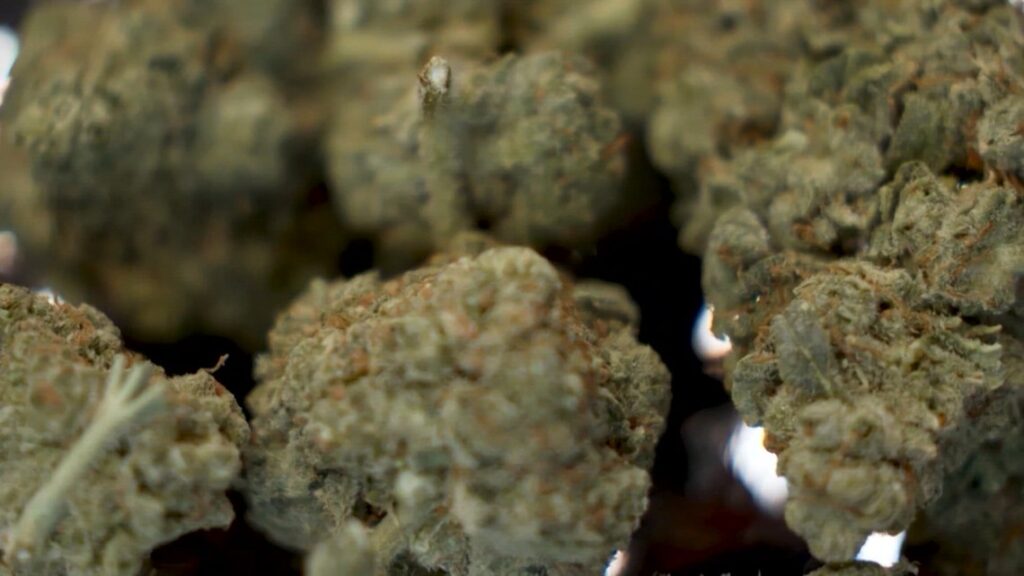
It’s been a whirlwind of a year for Texas hemp. Here’s where things stand and what the future could hold for Texas THC.
DALLAS — Texas officials are close to victory in a major fight against hemp-THC. And, depending on how things shake out with a proposed smokable hemp ban, it could be a total win for state officials looking to clamp down on the industry.
A fight to keep certain products, such as delta-8 THC, on the shelves has essentially been lost after a ruling by the Texas Supreme Court this month that said Texas can ban delta-8 THC for now. Hemp industry stakeholders are looking for rehearing on the legality of detla-8 THC.
A delta-8 THC ban and the proposed smokable hemp ban could change the Texas THC landscape for the foreseeable future.
In this total victory scenario for the state, what would be left of Texas THC for those without a medical card? The short answer? Delta-9 THC products at varying potencies.
Hemp was legalized in the U.S. in 2018, with states like Texas following suit with their own laws that mirrored the federal legislation.
Hemp is cannabis. Marijuana is also cannabis. What differentiates the two is the THC content. THC is the main psychoactive component in cannabis that can impair users. It’s what gets users high.
State and federal laws define hemp as any part of the cannabis plant or its derivatives containing no more than 0.3% delta-9 tetrahydrocannabinol (delta-9 THC) on a dry-weight basis.
There are many kinds of THC.
Generally speaking, you can consider “regular THC” to be delta-9 THC.
What proliferated in the immediate aftermath of the state and federal government legalizing hemp is hemp-derived CBD. That’s a completely different compound found in cannabis that won’t get you high, but that some people say has therapeutic properties. CBD, THC, and other substances in cannabis can generally be called cannabinoids.
Here’s what started happening, though: hemp manufacturers looked at the language and thought, “You know, this seems to legalize a lot more than just CBD.”
They figured they could make cannabis products with other cannabinoids as long as they didn’t exceed 0.3% delta-9 THC – other cannabinoids that could get you high.
That’s pretty much when the floodgates opened. Products jammed packed with delta-8, delta-10, THCP, HHC and other intoxicating cannabinoids started hitting the shelves not just in Texas, but across the country.
Some states outright banned the alternative cannabinoids after a while. A handful of lawmakers in Texas have attempted to do the same in multiple legislative sessions and have failed repeatedly.
A few years into all of this, the Texas Department of State Health Services (DSHS) posted a notice on its website in October 2021 that stated, in part, “All other forms of THC [besides delta-9], including delta-8 in any concentration and delta-9 exceeding 0.3%, are considered Schedule I controlled substances.”
A Texas hemp company called Hometown Hero sued to stop a ban on their products with delta-8 and other intoxicating cannabinoids. A judge eventually put an injunction on the ban, meaning it wasn’t in effect while the lawsuit worked its way through the courts.
That’s where things stood on delta-8 and other cannabinoids outside of delta-9 until just recently. That case went all the way to the Texas Supreme Court for consideration.
While that case made its way through the courts, delta-8 dwindled in popularity for some who replaced it with THCA.
THCA is the precursor to delta-9 THC. Heat up THCA and it turns into delta-9. Flower, joints and vapes with the substance flooded store shelves in the last few years.
A ban on all of these substances almost made it through the whole legislative process in Texas last year. Then, Texas Governor Greg Abbott vetoed the bill that would have done the deed. Abbott’s move was met with applause by a majority of the hemp industry.
Instead, he ordered state agencies to regulate the substances. DSHS, the same agency that tried to ban all the stuff with a 2021 notice on its website, is one of the agencies tasked with regulation.
One of the things the governor ordered the agency to look into was enacting a total THC test for products. Previously, products only had to be tested for their delta-9 content. Rules rolled out by DSHS included a total THC test for products, essentially wiping out the market for THCA in Texas.
When those rules went into effect in March, products with THCA were taken off the shelves in Texas.
Then, a group of organizations and businesses sued the state over the new DSHS rules.
Just to keep track here, that’s two major hemp lawsuits filed against the state with some pretty major implications. One will determine the fate of THCA, and the other will determine the fate of all other forms of THC outside of delta-9 THC.
Rulings came down on both cases on the same day, May 1. It was a win-lose situation for the hemp industry, depending on who you ask.
A Travis County court ruled that smokable hemp products such as THCA could stay on the shelves at least temporarily. There was a little back and forth between the state and hemp companies involved in the suit, pulling THCA products from shelves and putting them back on shortly after an emergency motion. That case is still ongoing.
On the flip side, the Texas Supreme Court essentially said DSHS could follow through with its ban on THC products besides those with 0.3% delta-9 or less.
That’s what’s left of the Texas hemp industry at this point if smokable hemp is banned: delta-9 THC. Liquor stores in Texas have already started selling low-potency THC beverages with anywhere between 2-5 milligrams of THC. Some Target locations are set to do the same in Texas.
Some argue they can pack a lot more THC in their products, with some drinks containing as much as 150 milligrams of THC, because products are tested on a dry weight basis.
This is the sort of regulatory environment Texas Gov. Greg Abbott called for when he vetoed a complete ban on intoxicating hemp products.
The governor’s veto received criticism from Lt. Gov. Dan Patrick, who was a main advocate for the complete ban. “I am and will always be against any pathway that could open the door to recreational marijuana in our state,” Patrick said in a release about the veto last year.
However, hemp advocates say Texas is far from a recreational state, even with regulations that could allow for delta-9 THC products.
“Texas has never resolved the enforcement gap between hemp and marijuana — law enforcement has no reliable field test that distinguishes between the two, meaning a legal delta-9 product and an illegal marijuana edible are functionally identical at the point of a traffic stop or a raid,” Jesse Williams, administrative director of the local nonprofit Texas Cannabis Collective, said.
He said, “What should resemble recreational access exists instead under what free speech advocates would recognize as a chilling effect, where consumers and retailers exercise lawful rights under the constant shadow of enforcement that cannot honor the distinction the law itself draws.”
He added: “Texas has legalized hemp-derived delta-9 (and other cannabinoids) in statute while allowing enforcement complete autonomy to be unable to tell it apart from illegal marijuana, which means the legal market exists on paper and fear exists in practice. That’s not recreational access; that’s a chilling effect dressed up as a regulatory framework.”
A federal ban is also coming down the pipeline on hemp products with THC levels above .4 milligrams, according to previous WFAA reporting.
Some, such as Sen. Rand Paul, are working to protect state hemp programs under these new federal rules, set to take effect Nov. 12.
Paul’s Hemp Safety Enforcement Act would allow states to opt-out of the new federal hemp definition, which includes the total THC test. Paul of Kentucky filed the bill with senators Amy Klobuchar, a Minnesota Democrat, and Joni Ernst, an Iowa Republican.