
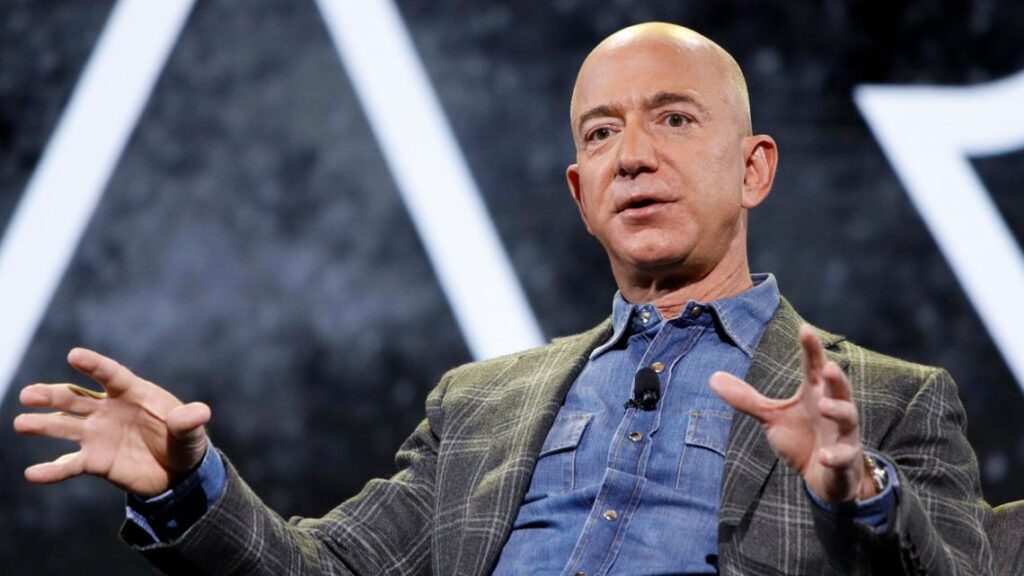
Bezos is the fourth-richest person in the world, according to Forbes.
WASHINGTON — Amazon Executive Chairman Jeff Bezos called for zero federal income taxes for the bottom half of earners in the U.S.
Bezos, speaking to CNBC’s Andrew Ross Sorkin on “Squawk Box,” said that he doesn’t believe the bottom half of taxpayers should pay income tax. He said the top 1% pay about 40% of all tax revenue and the bottom half pay 3%.

“I don’t think it should be 3%,” he said. “I think it should be zero.”
Bezos, the fourth-richest person in the world, said he would advocate the change but did not offer details on how lawmakers could go about the change.
Bezos comment comes as some states in the U.S. are eyeing more taxes on the rich.
The bottom half of taxpayers in the U.S. had an adjusted gross income of nearly $54,000 in 2023, according to an analysis by the Tax Foundation. The top 1% households made at least $676,000 that year.
Bezos said the income tax paid by lower earners is “a small amount of money for the government.”
Bezos pointed to a healthcare worker earning $75,000 a year, saying, “We shouldn’t be asking this nurse in Queens to send money to Washington. They should be sending her an apology. It really makes no sense.”
California’s labor-backed proposal “Billionaire Tax” would raise an estimated $100 billion through a one-time 5% tax on individuals whose net worth exceeds $1 billion and who were living in the state as of Jan. 1, 2026.
U.S. Sen. Cory Booker (D-NJ) proposed a bill that would make the first $75,000 of income tax-free for households filing joint returns.
“No income tax on the first $75,000 families earn would be a game changer for working people. This tax cut would immediately put more money in your pocket every month to deal with the high price of everyday expenses, an unexpected emergency, or to plan for the future,” Booker said at the time of the announcement in March.
Other states are looking to get rid of their income tax, with Missouri voters set to decide whether to eliminate their state tax this year.
Kentucky, Mississippi and Oklahoma also recently passed laws that could phase out their income tax if revenue benchmarks are met. But those didn’t go to voters.