
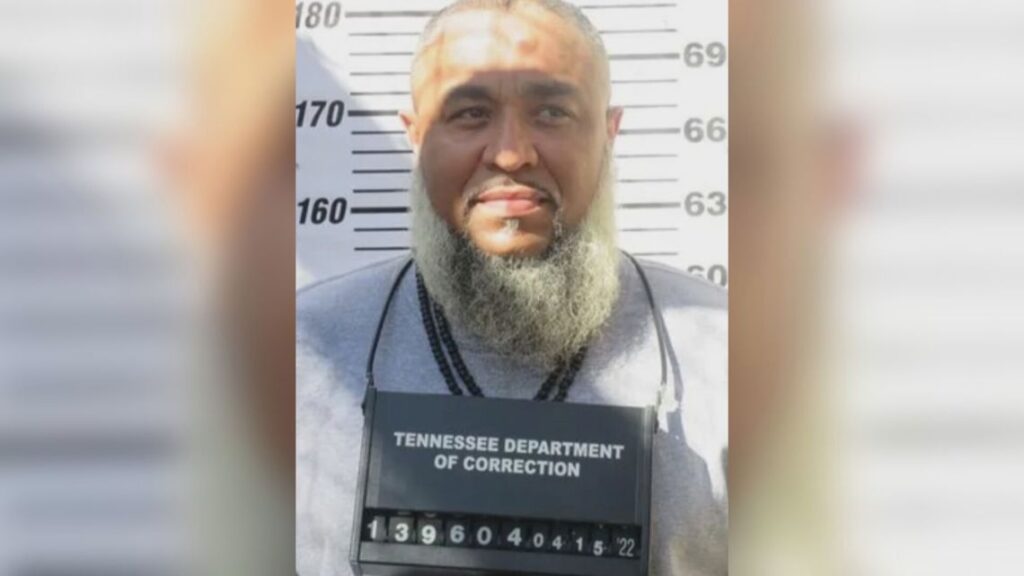
Tennessee Gov. Bill Lee granted Tony Carruthers a one-year reprieve after the failed attempt.
NASHVILLE, Tenn. — Tennessee Governor Bill Lee has officially granted a temporary reprieve for Tony Von Carruthers after medical personnel could not establish a backup IV line for his execution, set for Thursday morning in Nashville, calling off his execution for one year.
“I am granting Tony Von Carruthers a temporary reprieve from execution for one year,” Gov. Lee said in a statement.
A news release said medical personnel were able to establish a primary IV line, but could not “immediately establish a backup line pursuant to the lethal injection execution protocol.” The release also said they continued to follow protocol but could not find “another suitable vein” and tried to insert a central line, but this was not successful.
Officials said after that, the execution was called off.
The American Civil Liberties Union released a statement Thursday afternoon about the attempted execution.
“This morning, Tennessee carried out a botched and torturous attempt to execute Tony Carruthers despite the state’s continued refusal to conduct forensic testing that could prove he was wrongfully convicted,” the statement read. It also alleged that it took nearly 90 minutes before the execution was halted, and that Carruthers “groaned in pain” while the medical team attempted to set an IV line.
Maria DeLiberato, senior counsel at the ACLU’s Capital Punishment Project, released the following statement:
“Permitting Tony Carruthers’s execution to move forward without ordering DNA testing was already a profound injustice. Today, that injustice became outright barbaric after Mr. Carruthers was subject to a botched execution attempt.
We are incredibly relieved Governor Lee issued a reprieve. We will fight to ensure that the state never again attempts to put Mr. Carruthers and his family through this torture. More than 130,000 people have signed petitions joining us in this fight, including exonerees who once faced wrongful convictions themselves.
We will also continue to push the governor to use this moment to allow the forensic testing that should have happened long ago. Tennessee cannot continue torturing a man while refusing to answer serious questions about his innocence.”
Carruthers convicted of killing 3 in Memphis
Carruthers, 57, was found guilty of the 1994 kidnappings and murders of Marcellos Anderson; his mother, Delois Anderson; and Frederick Tucker. He was forced to represent himself at trial after repeatedly complaining about court-appointed attorneys and threatening to harm several of them.
There was no physical evidence tying Carruthers to the killings, and he was convicted primarily on the basis of testimony from people who claimed to have heard him confess to or discuss the crimes.
They include a man later revealed to be a police informant who told media he was paid for his testimony. A co-defendant, James Montgomery, was originally sentenced to death along with Carruthers but was later resentenced and released from prison in 2015, according to court filings.
Authorities said Marcellos Anderson was a drug dealer, and Carruthers was trying to take over the illegal drug trade in their Memphis neighborhood. Carruthers’ attorneys have said their client’s “paranoia and delusions” prevented him from being able to cooperate with court-appointed counsel, but the judge viewed this behavior as willful.
The Tennessee Supreme Court said on appeal that Carruthers’ actions before the trial jury were offensive and self-destructive but the situation in which he found himself was one of his own making.
Carruthers’ attorneys have tried to show that he is incompetent to be executed. They claim in court filings that Carruthers believes the government is bluffing about executing him in order to coerce him into accepting a plea deal that exists only in his mind. That way, Carruthers believes, the government can avoid paying him what he thinks are millions of dollars it owes him. He is convinced that his own attorneys are part of a conspiracy against him and refuses to even speak with them, according to court filings.
Executions surged last year
The number of executions in the U.S. surged from 25 in 2024 to 47 last year, driven by a sharp increase in Florida. That state carried out 19 executions in 2025, up from one the previous year, according to the Death Penalty Information Center. So far this year, four states have executed 13 people, and 11 other executions are scheduled including one Thursday evening in Florida.
It’s not unusual to see several executions over a short period of time. Last year, four people were executed over three days in March in Oklahoma, Florida, Louisiana and Arizona. Another five people were executed over a week in October in Arizona, Mississippi, Missouri, Florida and Indiana, according to the Death Penalty Information Center.
Tennessee began a new round of executions last year after a three-year pause following the discovery that the state was not properly testing lethal injection drugs for purity and potency.
An independent review later found that none of the drugs prepared for the seven inmates executed in Tennessee since 2018 had been fully tested. The state attorney general’s office also conceded in court that two of the people most responsible for overseeing Tennessee’s lethal injection drugs “ incorrectly testified ” under oath that officials were testing the chemicals as required.
Copyright 2025 Associated Press. All rights reserved. This material may not be published, broadcast, rewritten, or redistributed.