
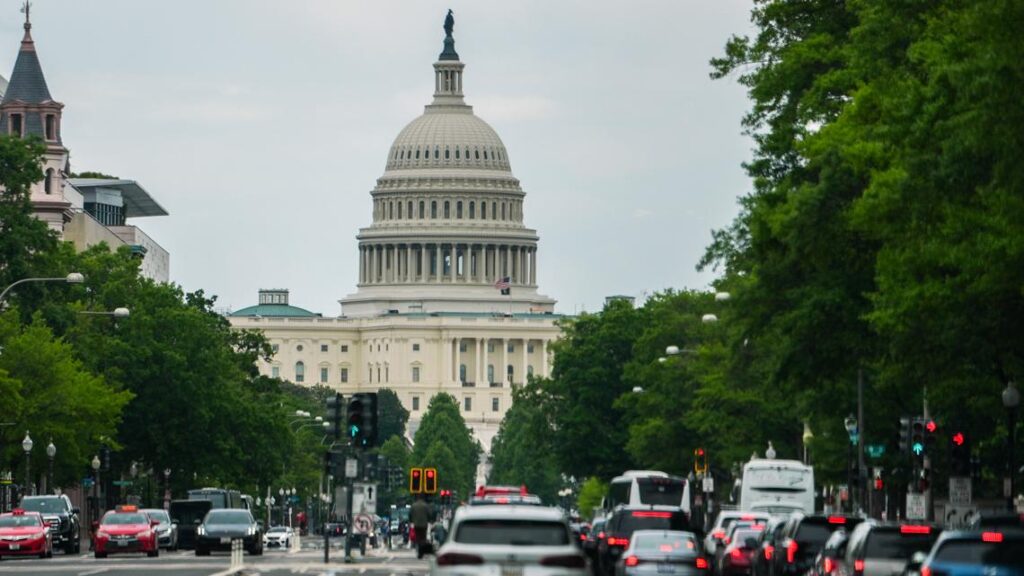
In this week’s Texas: No Filter, Natalie Haddad breaks down the longest government shutdown, reopening key DHS operations, and unresolved immigration enforcement.
PLANO, Texas — Every week on Texas: No Filter, Political Reporter Natalie Haddad breaks down the state’s latest political trends in language everyone can understand, while showcasing some of DFW’s best coffee shops. Reach out to Natalie with any suggestions for topics to cover or coffee shops to check out.
After weeks of political standoffs and funding fights, the partial federal government shutdown officially ended on April 30.
At 76 days, President Donald Trump signed bipartisan legislation reopening most of the Department of Homeland Security. The shutdown became the longest government shutdown in U.S. history — surpassing the previous record set during the 2025 federal government shutdown.
The shutdown centered almost entirely around one issue: immigration enforcement.
Lawmakers were deadlocked over how — and whether — Congress should place new restrictions on agencies like Immigration and Customs Enforcement (ICE) and Customs and Border Protection (CBP) after the January shooting death of Alex Pretti involving federal agents.
Senate Democrats pushed for reforms tied to transparency and accountability, while many Republicans argued that tying those restrictions to funding threatened border security efforts.
Now, most DHS operations are funded again. The final bipartisan deal restored funding for major Homeland Security functions, including the Transportation Security Administration, Secret Service and FEMA.
The agreement also prevented the shutdown from spreading deeper into the federal government. Earlier bipartisan deals had already funded most other agencies through September.
While the shutdown negotiations stalled, House Republicans moved forward with a separate budget resolution that could eventually provide tens of billions of dollars for immigration enforcement through the reconciliation process — a method that avoids a Senate filibuster. That move gave GOP leaders a pathway to continue pursuing border enforcement funding even without Democratic support.
Still, despite months of negotiations, lawmakers never reached a broad agreement on ICE or CBP reforms.
Democrats had pushed for measures such as body camera requirements and restrictions on masked federal agents. Republicans largely rejected tying operational restrictions to funding bills. In the end, Congress reopened much of DHS without resolving those underlying disputes.
One of the biggest sticking points — long-term funding for ICE and Border Patrol — was essentially punted.
This shutdown highlighted just how difficult it has become for Congress to pass routine government funding bills — especially when debates over immigration and border security are involved.
And while lawmakers ultimately reopened the government, the larger political fight that caused the shutdown was never fully resolved.
That means the same issues — immigration enforcement, DHS funding and border policy — could quickly become flashpoints again in future budget battles.