
Passengers from a South Atlantic cruise ship return to the U.S. as health officials monitor for illness, survey shows women fear medical bills more than cancer.
CLEVELAND —
Passengers from hantavirus cruise ship return to the U.S.
A rare and potentially deadly virus that sickened passengers aboard a cruise ship in the South Atlantic has now followed some of them home.
According to reporting by MedPage Today, approximately seven Americans who disembarked the MV Hondius at the island of St. Helena on April 24 have since returned to the United States, and state health officials are now working to locate them for testing and monitoring. Passengers are reported to live in several states, including Arizona, California, Georgia, Texas, and Virginia.
Arizona health officials confirm one resident was aboard the ship. That individual is not showing symptoms and is under public health monitoring. Georgia says two residents returned home in good health and are following CDC guidance. California health officials say they are coordinating with local health departments and report no signs of illness in returning travelers.
The World Health Organization has confirmed the strain involved is the Andes virus, which in rare cases can spread person to person. The WHO says the overall public health risk remains low at this stage.
There are now eight cases tied to the outbreak, five confirmed, with three deaths. Three passengers were medically evacuated to the Netherlands — including the ship’s doctor, who is in stable condition. Health officials are also working to trace more than 80 people who shared a flight with a passenger who later became ill. A 69-year-old woman fell ill during that flight and died on April 26; her husband was the first death aboard the ship, on April 11.
If any of the returning Americans seek medical care, hospitals are being advised to take appropriate precautions. The CDC has stood up an incident management response consistent with standard protocol for an event of this nature.
Nearly half of women fear healthcare costs more than cancer
Most women want to take care of their health. The problem is that for millions of them, something always gets in the way — and increasingly, that something is money.
A new national survey from Cleveland Clinic’s Women’s Comprehensive Health and Research Center found that nearly half of women are more concerned about affording healthcare than they are about developing cancer, heart disease, or Alzheimer’s disease. The findings paint a sobering picture of where women’s health stands in 2026 — and the very real barriers standing between women and the care they need.
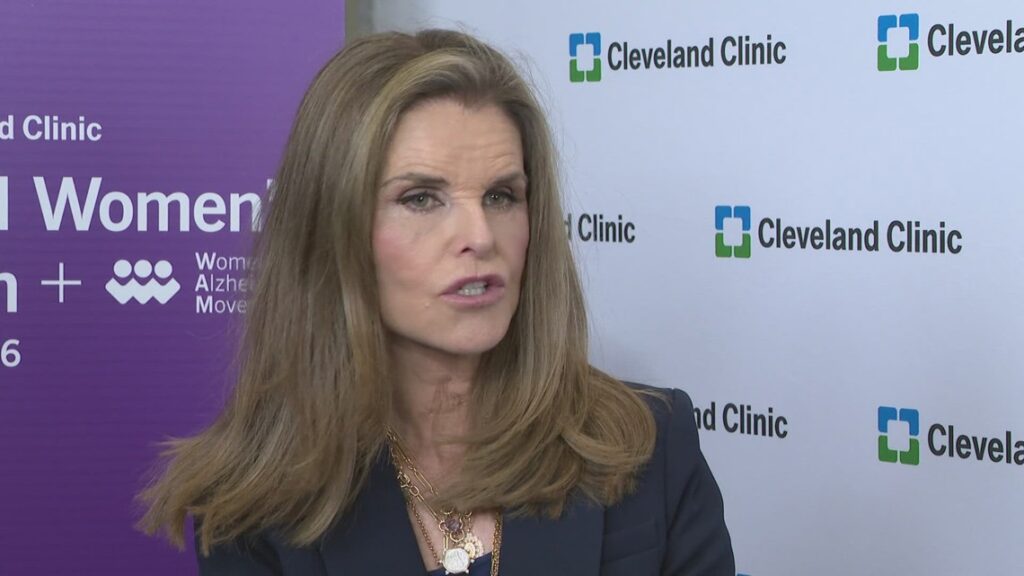
Maria Shriver, award-winning journalist, founder of the Women’s Alzheimer’s Movement, and co-founder of the Cleveland Clinic Women’s Comprehensive Health and Research Center, helped bring the survey findings to Cleveland today as part of the Cleveland Clinic Global Women’s Health + WAM Forum at the Huntington Convention Center. She had a clear message for what the data reveals.
“Women are in crisis all across this country at every generation and every race, every economic group,” Shriver said. “The fact that women are reporting they’re more concerned about their financial health and being able to afford their health care than getting Alzheimer’s, cancer, or heart disease should stop us all.”
Monica Robins’ extended interview with Shriver can be watched below:
The financial burden is real — and it’s shaping decisions
The concern isn’t unfounded. According to research from Deloitte, women spend about $15.4 billion more than men each year on out-of-pocket healthcare costs — roughly 18% more — even when pregnancy-related expenses are excluded.
Forty-five percent of the 2,000 women surveyed rate their own financial health as fair or poor. Women in financial difficulty are less likely to take preventive measures for their cognitive health, less likely to see a gynecologic specialist, and less likely to feel empowered to advocate for themselves with their doctors. Women who rate their financial health as excellent or very good are far more likely to also rate their physical health highly — 66% do. Among women in financial strain, only 14% say the same.
Shriver says this is not just a health conversation — it is an economic and political one. “Women are spending all the money that they’ve saved on other people so that when it comes time to their own care, they’re left broke,” she said.
Preventive care is falling through the cracks
Nearly one in three women who haven’t seen their primary care doctor in the past two years say they simply don’t feel the need. Another 26% say anxiety about doctor visits keeps them away.
Gynecologic care shows an even wider gap. Nearly 58% of women haven’t seen an OB-GYN or women’s health specialist in the past year — a number that climbs to 76% among Baby Boomers. Compounding the problem: 22% of women still believe gynecologists only care for pregnant women or those planning pregnancy.
Menopause: Still not talked about enough
Half of all women surveyed say menopause simply isn’t discussed enough — and the knowledge gap backs that up. Forty-two percent don’t know that menopause can affect the heart, brain, and bones. More than a third are unaware of the range of treatment options available, including hormone replacement therapy, lifestyle changes, and supplements.
Approximately 6,000 women enter menopause every day in the United States. Eighty percent of women 55 and older have at least one chronic condition. The stakes of this knowledge gap are significant.
Alzheimer’s is a woman’s disease — but most women don’t know it
About two-thirds of people diagnosed with Alzheimer’s are women. Yet only 19% of survey respondents answered correctly when asked which sex is more likely to develop the disease. Just 29% say they worry about getting Alzheimer’s as they age.
Shriver has spent years trying to change that. “We don’t know why women get the majority of misdiagnoses. We don’t know why women are two-thirds of those diagnosed with Alzheimer’s,” she said. “In order for us to know, we have to fund research into women’s health spans.”
The knowledge gap does carry a silver lining. Nearly 90% of women who know that Alzheimer’s disproportionately affects women report taking active steps to protect their brain health — including brain games, maintaining social connections, and supplements. When women understand their risk, they act on it.
Shriver’s message to women of every generation is direct: “Women have to be the CEOs of their own health. There are things they can do right now to take care of their brain health.”
Cleveland Clinic’s Women’s Comprehensive Health and Research Center offers coordinated care, menopause resources including shared medical appointments, and research initiatives focused on reducing Alzheimer’s risk in women. More information is available at clevelandclinic.org/caringforwomen.
Menopause and mental health: The connection you may not know about
The physical symptoms of menopause — hot flashes, night sweats, sleep disruption, weight changes — are widely recognized. But the mental health impact is just as real, and often less discussed.
Cleveland Clinic notes that hormonal shifts during menopause can trigger irritability, difficulty concentrating, and even clinical depression or anxiety. Self-care strategies make a meaningful difference: regular exercise, balanced nutrition, and consistent sleep can all improve depressive symptoms. Staying engaged in activities that bring joy also helps support mood.
It is also worth acknowledging: it is okay not to feel 100 percent. But if symptoms begin to interfere with daily life, talking to a healthcare provider is an important next step. Effective treatments are available, and women deserve to know about them.