
Teams will honor Kyle Busch’s legacy in Sunday’s Coca-Cola 600. Busch, 41, died after severe pneumonia progressed into sepsis.
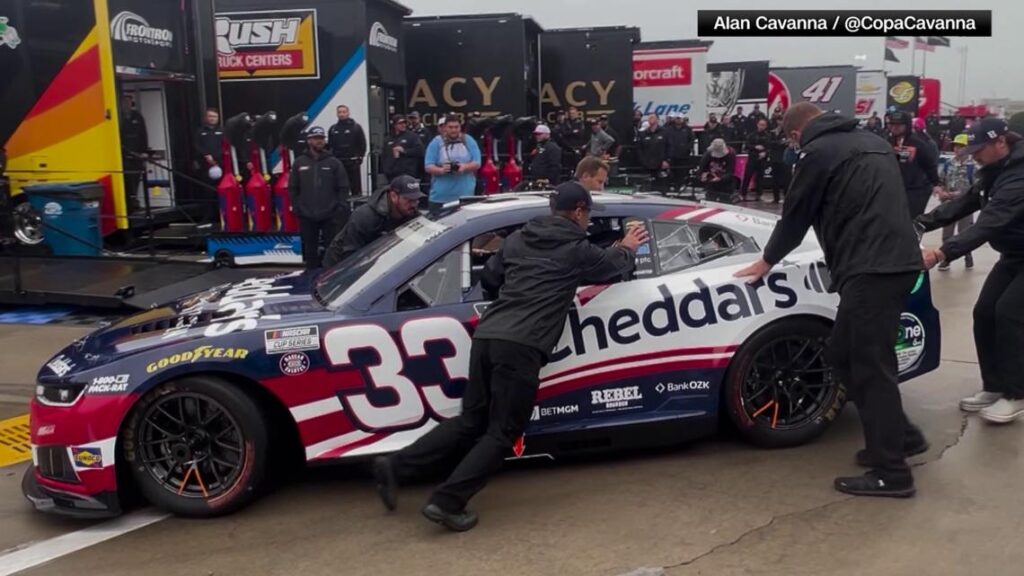
CHARLOTTE, N.C. — Video shows Kyle Busch’s Richard Childress Racing team unloading Busch’s car on Saturday, ahead of Sunday’s Coca-Cola 600 race in Charlotte, North Carolina.
Richard Childress Racing announced it will suspend using Busch’s No. 8 and that the car will now compete as No. 33. It will be driven by Austin Hill in Sunday’s race.
Busch was instrumental in the creation of RCR’s stylized No. 8, and over the years it became synonymous with his legacy, his fans, and the sport of NASCAR itself. It marks a rare move by the organization as number retirements are uncommon in NASCAR.
Out of respect for everything Busch meant to Richard Childress Racing and NASCAR, the No. 8 will remain reserved for Brexton Busch should he choose to pursue a NASCAR career in the future.
Brexton, who turned 11 just days before his father’s death, began racing in 2020.
Kyle Busch won 234 races across NASCAR’s top three series over his two-decade career, more than any driver in history.
All 39 drivers in the field for Sunday’s race will race with a black No. 8 decal on their car to honor Busch.
Busch’s cause of death
Busch died after severe pneumonia progressed into sepsis, resulting in rapid and overwhelming associated complications, according to a statement released by his family.
Dakota Hunter, vice president of Kyle Busch Companies, said in a news release the family received the medical evaluation on Saturday.
Busch, a two-time NASCAR champion, died at 41 on Thursday, a day after passing out in a Chevrolet simulator.
Sepsis is considered a life-threatening medical emergency that occurs when the body has an extreme, overactive response to an infection, causing the immune system to damage its own tissues and organs, according to the Centers for Disease Control and Prevention.
Typically the immune system releases chemicals to fight off pathogens like bacteria, viruses or fungi, but with sepsis the response goes into overdrive. The results can cause widespread inflammation, form microscopic blood clots and make blood vessels leak.