
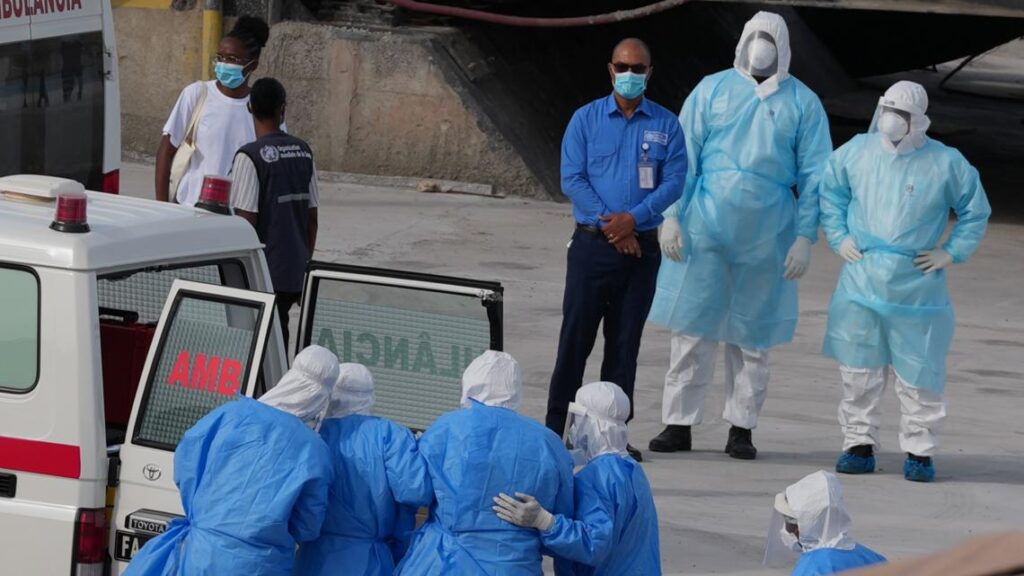
Health authorities across several countries are racing to trace and contain the outbreak after some passengers disembarked and dispersed across the globe.
CAPE VERDE, — A hantavirus outbreak aboard a Dutch cruise ship has drawn global attention to the rare but deadly virus.
Since April, an outbreak of hantavirus has been identified on the MV Hondius. The World Health Organization has now confirmed eight cases linked to the cruise. Three people have died.
Health authorities across several countries are racing to trace and contain the outbreak after some passengers disembarked and dispersed across the globe, prompting some to draw comparisons to the early days of the COVID-19 pandemic.
WHO Director-General Dr. Tedros Adhanom Ghebreyesus said Thursday that the overall public health risk remains low and that officials do not expect a large epidemic.
Nearly 150 passengers and crew members from 23 different countries remain on board, subject to strict precautionary measures. Seventeen of those passengers are from the United States, and authorities in at least three states are monitoring former passengers, none of whom have shown symptoms.
What is hantavirus? Is it treatable?
Hantavirus is a rare but potentially fatal illness spread by infected rodents. Human infection is primarily acquired through contact with the urine, feces or saliva of infected rodents. It typically appears in spring and summer, often tied to exposures in homes, sheds or poorly ventilated areas.
There is roughly a two- to three-week incubation period from exposure to symptoms. Early signs can resemble the flu — fatigue, fever, muscle aches, chills, headache, vomiting and diarrhea. As the disease progresses, it can develop into Hantavirus Pulmonary Syndrome, characterized by fluid in the lungs, low blood pressure and severe respiratory distress. The CDC says 38 percent of those who develop respiratory symptoms may die.
There is no specific treatment for hantavirus.
From 1993 to 2023, the CDC detected 890 cases of hantavirus in the United States, of which 35% were fatal.
In 2025, Betsy Arawaka, the wife of actor Gene Hackman, died of the disease before the couple were both found dead in their New Mexico home. New Mexico has historically reported the highest case count of any U.S. state.
What is the Andes strain?
The current outbreak has been linked to the Andes strain of hantavirus, which is normally found in South America and is the only known hantavirus capable of human-to-human transmission.
The Andes strain causes Hantavirus Pulmonary Syndrome with a high fatality rate. Human-to-human transmission has only been documented following close and prolonged contact.
WHO is working on the assumption that the Dutch couple who died were infected before boarding the ship, possibly during a birdwatching trip in Argentina that brought them near a landfill where the rat species known to carry the virus was present. Argentine authorities have been reconstructing the couple’s route to determine the source of infection.
The Andes strain’s capacity for person-to-person spread is what makes this outbreak particularly concerning to public health officials. Standard hantavirus strains, including those responsible for most U.S. cases, do not spread between humans.
How to protect yourself
Health officials recommend sealing holes in homes that rodents could use to enter, promptly washing dishes and removing food sources that attract rodents, clearing brush and grass near your home and airing out unused spaces while checking for signs of infestation.
For those cleaning rodent droppings, the Mayo Clinic advises wearing gloves and a mask, using disposable towels, and spraying nests, droppings or dead animals with disinfectant before handling them. Gloves and masks should be disposed of after use, followed by thorough handwashing.
There is no specific antiviral treatment for hantavirus. Supportive care — particularly early access to intensive care — is key to improving the chances of survival.