
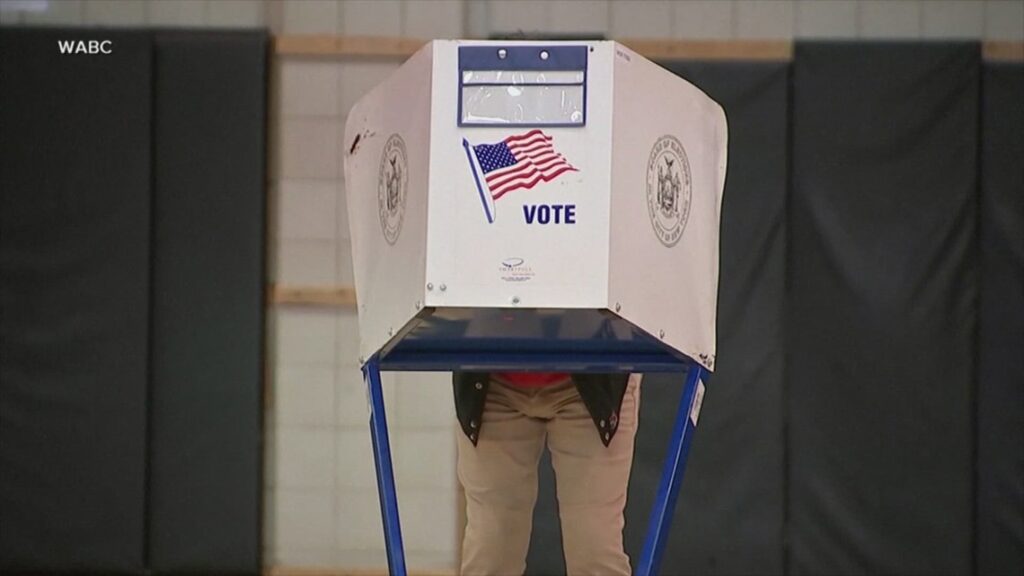
Here’s a breakdown of how political polling works — and why polls are more of a snapshot than a prediction.
DALLAS — Every week on Texas: No Filter, Political Reporter Natalie Haddad breaks down the state’s latest political trends in language everyone can understand, while showcasing some of DFW’s best coffee shops. Reach out to Natalie with any suggestions for topics to cover or coffee shops to check out.
With election season heating up across Texas, you’re likely seeing more political polls pop up in headlines, campaign emails and on social media:
One candidate is “up five points.” Another is “gaining momentum.”
But what do those numbers actually mean?
Here’s a breakdown of how political polling works — and why polls are more of a snapshot than a prediction.
What is a political poll?
A political poll is essentially a survey.
Polling companies contact a group of people and ask questions about elections, candidates and issues. The goal is to estimate how a larger population — like all likely Texas voters — may feel.
But pollsters do not ask everyone. Instead, they survey a much smaller sample of people and use those responses to estimate broader public opinion.
How many people are usually surveyed?
Most political polls survey somewhere between 500 and 2,000 people.
That may sound small compared to a state as large as Texas, but statisticians say a properly selected sample can still provide useful data about larger populations.
The key is not necessarily the size of the poll — it’s who is being surveyed and whether the sample reflects the electorate.
How do pollsters choose people?
Different polling firms use different methods. Some call cell phones and landlines. Others use text messages, online panels or email surveys.
Pollsters then try to build a sample that resembles the voting population by considering factors like age, gender, race and ethnicity, education, geography, party affiliation, and past voting history.
For example, if younger voters make up a certain percentage of expected voters, pollsters try to ensure younger voters are represented proportionally in the survey.
What does “likely voter” mean?
Not everyone who answers a poll is expected to vote. That’s why many polls focus specifically on “likely voters” — people the pollster believes are most likely to cast a ballot.
Polling firms may determine that based on past voting history, interest in the election, whether someone says they plan to vote, and registration status.
This is important because turnout can dramatically change election results.
Why can polls sometimes be wrong?
Polling is not an exact science. Even well-conducted polls can miss the mark for several reasons.
Turnout changes.
A poll can only estimate who will actually vote. If one group turns out in larger numbers than expected, the results can shift.
People change their minds.
Some voters decide late — especially in close races.
Some people don’t answer polls.
Response rates have dropped significantly over the years. Many people ignore unknown phone calls or survey requests, which can make it harder to capture a perfectly representative sample.
Timing matters.
Polls are snapshots in time. A survey taken before a debate, scandal or major news event may look very different from one taken afterward.
Should people trust polls?
Experts say polls are best used to understand trends — not guarantee outcomes.
A single poll doesn’t necessarily tell the whole story. But multiple polls over time can help show whether a candidate is gaining support, losing momentum or staying steady.
Polling can also reveal which issues voters care about most, how different demographic groups are voting, or whether enthusiasm is high or low in a race.
Polls are tools. They can provide insight into where a race stands at a particular moment, but they cannot predict the future with certainty. And ultimately, the only poll that determines an election outcome is the vote count on Election Day.