
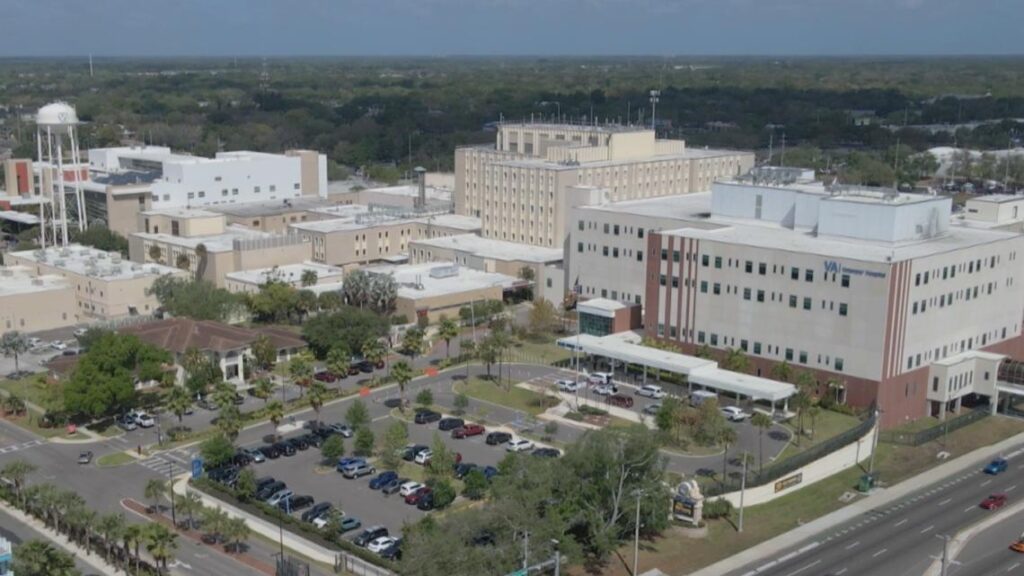
Veterans who served their country at home and abroad are finding that they have more in common than just their service. They’re developing symptoms of a very slowly progressing disease called inclusion body myositis or IBM. It can take years before it’s diagnosed. According to The Myositis Association, it’s the most common acquired muscle disease for those who are 45 years and older. It’s also more common in men than in women. The Myositis Association has been researching connections between IBM and military service.
“Veterans really are getting this orders of magnitude higher than the civilian population. And that was enough for me right there as a veteran myself, to say this, this is something we need to look into,” attorney Kerry Baker said.
After learning several veterans have had to pay out of pocket for the tools necessary to live their lives while battling IBM, a team of reporters in cities across the country listened, recorded, and documented a story of not just their fight against a rare disease, but their fight to have the U.S. government recognize the role played by their service. As veterans fight the denial of benefits, there’s a renewed effort to finally acknowledge a diagnosis denied.
IBM: INCLUSION BODY MYOSITIS
“I wouldn’t wish this on anybody” – Greg Rathburn
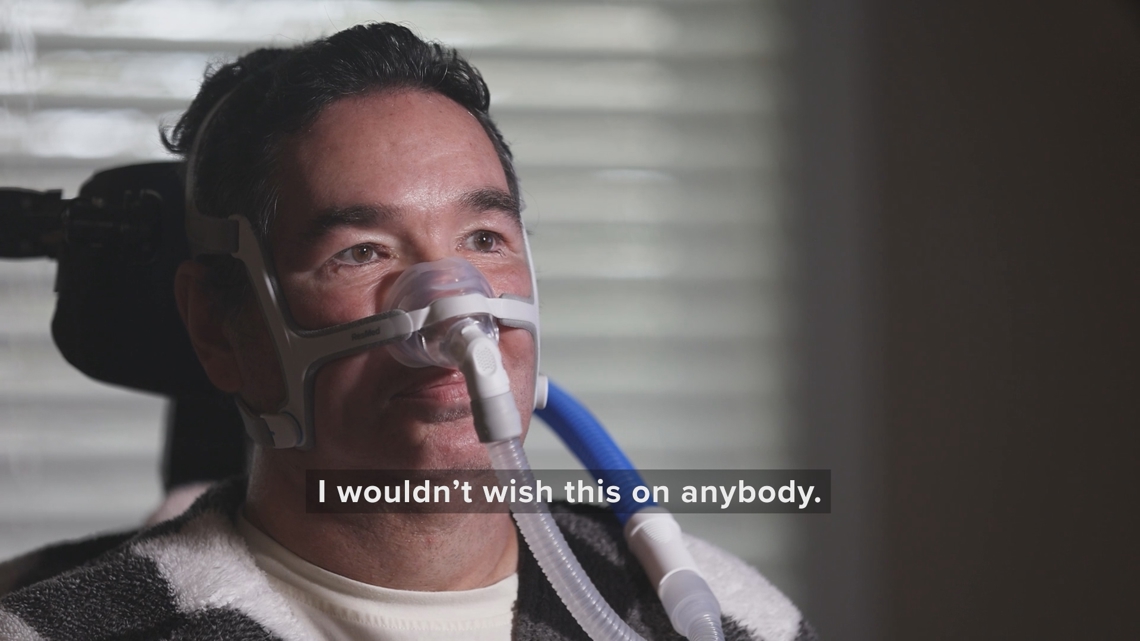
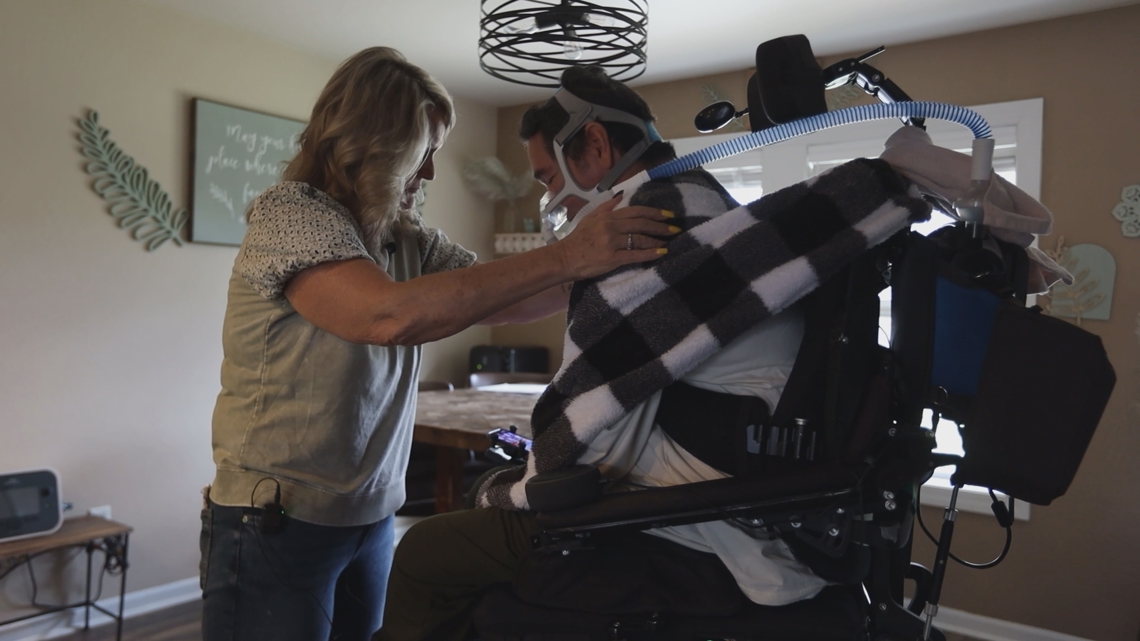
An Oregon veteran who spent 21 years serving his country is now fighting a different kind of battle — one against a rare, incurable muscle disease and a Veterans Administration that has repeatedly denied his disability claims.
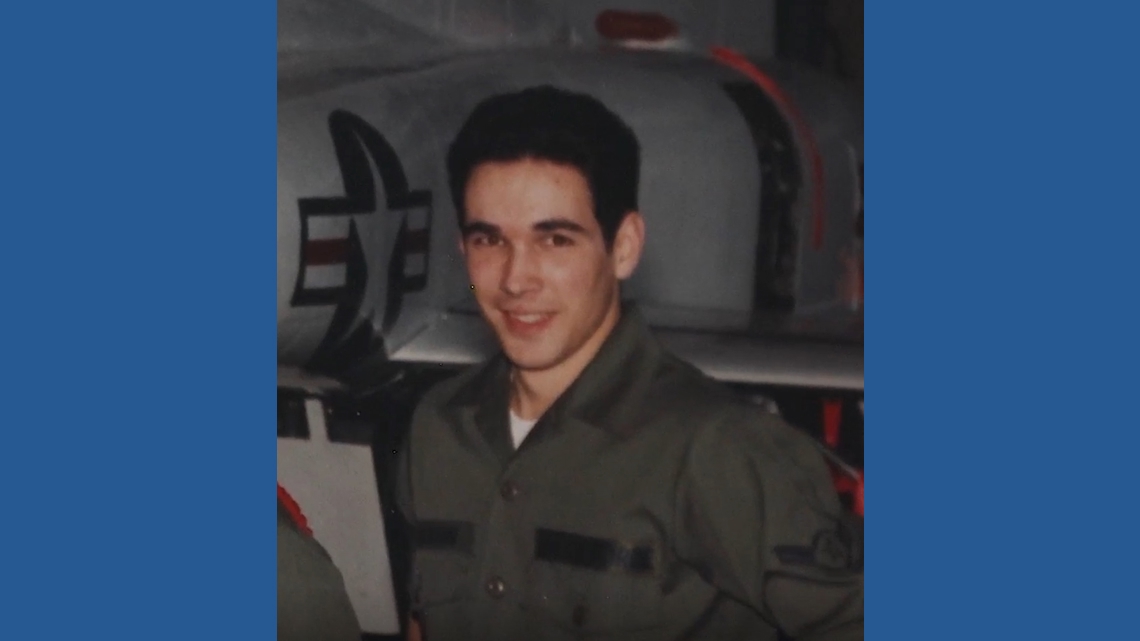
Greg Rathburn, 62, was diagnosed with inclusion body myositis, or IBM, in 2008 after years of service in the Air Force and Air National Guard, where he worked as an avionics technician on advanced aircraft, including the SR-71 Blackbird — a plane notorious for leaking jet fuel. The chemicals he was exposed to during his career, he and his wife believe, may have triggered the disease.
“I wouldn’t wish this on anybody,” Rathburn said. “Look at me, live my life for a day.”
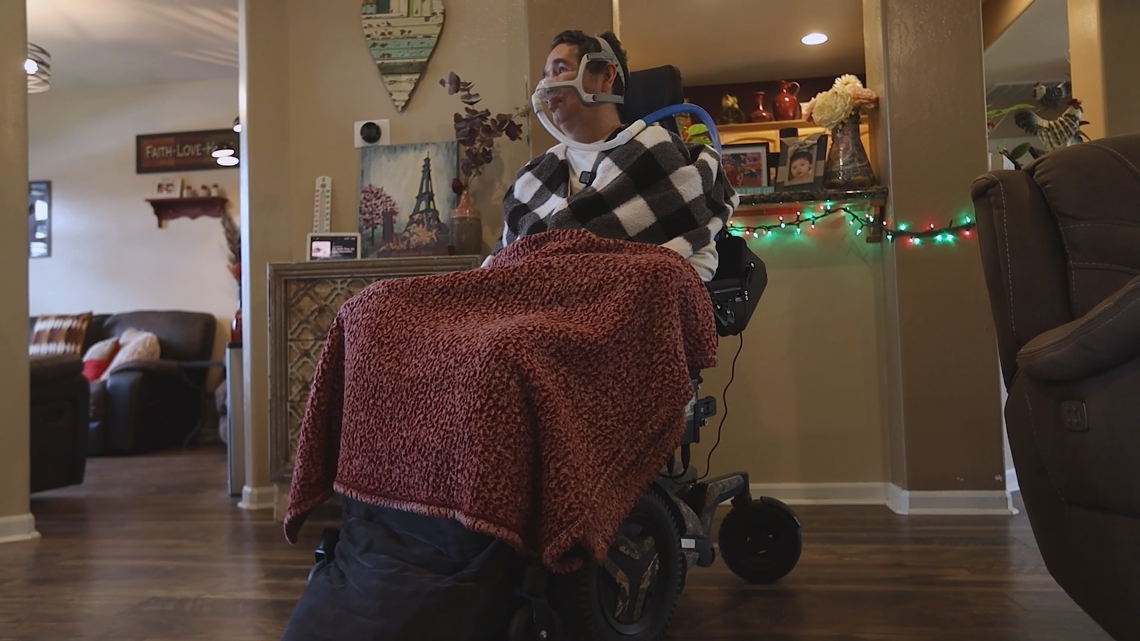
Today, Rathburn is a quadriplegic who relies on a ventilator to breathe and an electric wheelchair to move. IBM is a progressive muscle-wasting disease with no known cure. It erodes strength gradually until patients can no longer care for themselves.
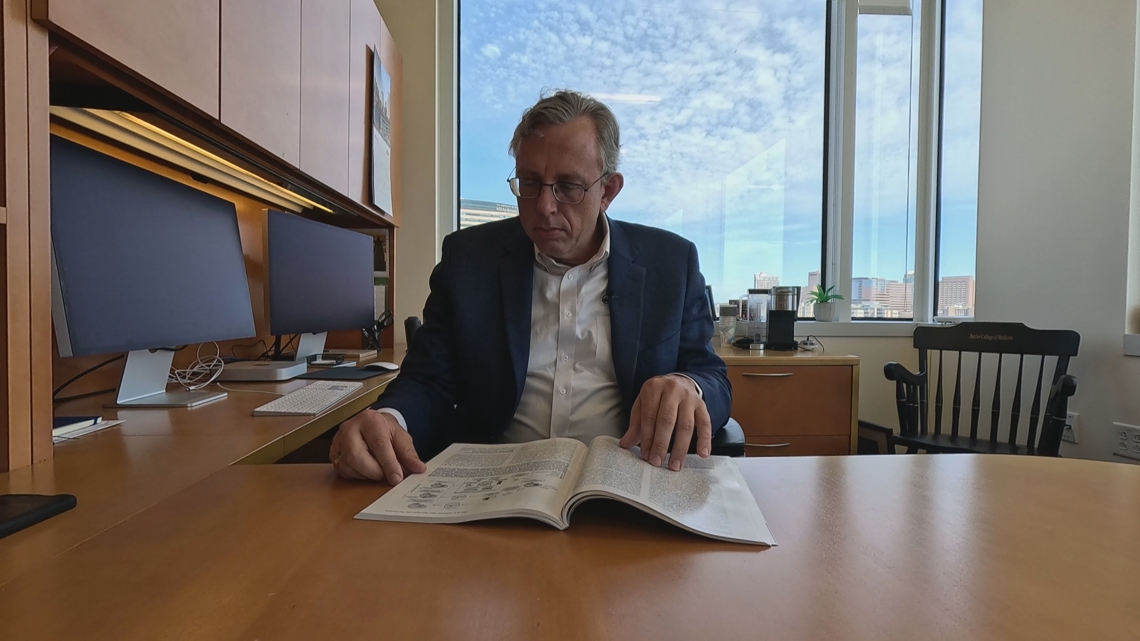
“It starts off with weakness in the hands, especially in the grip, and weakness in the upper legs,” Dr. Thomas Lloyd, chair of neurology at Baylor College of Medicine, said.
The slow progression often delays diagnosis.
“It’s extremely slowly progressive, and that leads to a delay in diagnosis,” Dr. Lloyd said.
Rathburn’s wife, Lori, retired early to become his full-time caregiver. It’s a role that demands constant attention.
“Now, he’s not even strong enough to breathe on his own,” she said. “He has no muscle that can move his arms or legs or anything.”
Small tasks, such as scratching Rathburn’s ear, have become impossible.
“Little things like that, all day long — scratch this, move my arm,” his wife explained.
Rathburn first applied for service-connected disability benefits in 2009. The VA denied his claim. An appeal failed. Years later, armed with a letter of support from a neurologist, he tried again. He was denied once more, on the grounds that “the condition neither occurred in nor was caused by service,” the VA wrote in February 2015.
There is no family history of IBM in the Rathburn family and no genetic markers that might explain the diagnosis independently of his military service.
“I fully, wholeheartedly believe that his exposures during the military service is what caused this disease,” Lori Rathburn said.
Whether that exposure triggered IBM is a question that researchers are still trying to answer.
After years of fighting the VA over benefits, the family stepped back.
“We gave up. There’s an emotional part that goes along with all of this, and you can only put so much effort into so many things,” she said.
The financial consequences have been significant. Service-connected benefits would have provided financial assistance with medical equipment, travel and home modifications — all costs the Rathburns have largely had to absorb out of pocket.
“If he was 100% service connected, I don’t know how much it is, but I know they will help with a lot more modifications and things. So, we paid out of pocket for all of this,” Lori said, pointing to the wheelchair-friendly bathroom.
The VA responded to our questions about Rathburn’s case:
“Under federal law, VA can only grant benefits when a link is established between a current diagnosed medical condition and a Veteran’s military service,” Quinn Slaven, VA press secretary, said. “In this case, Mr. Rathburn’s IBM claim was denied because the evidence presented did not establish that this disability began during active duty or was related to his military service.”
The agency added that it “continues to investigate IBM” and has asked the National Academies to conduct a new, comprehensive study on the condition, while continuing to decide IBM disability claims “on a case-by-case basis.”
Rathburn filed another claim with the VA in early April. It is currently under review.
“For us, at this point, it’s not about the money. It’s not so much about the monthly income,” Lori Rathburn said. “It’s more about what he calls vindication. It’s validation that what he did in the military mattered. To have that supported — like, yes, we know what you did for us, and it was important. That’s what is important to him.”
EDITOR’S NOTE: After years of denials, Greg Rathburn learned on May 1, 2026, that he had been granted a 100% service connection for his IBM disease — just days before the launch of “Diagnosis Denied.”
A PATTERN EMERGES
“Can we get a fix for this so the younger guys don’t have to suffer through this?” -Dennis McKinney
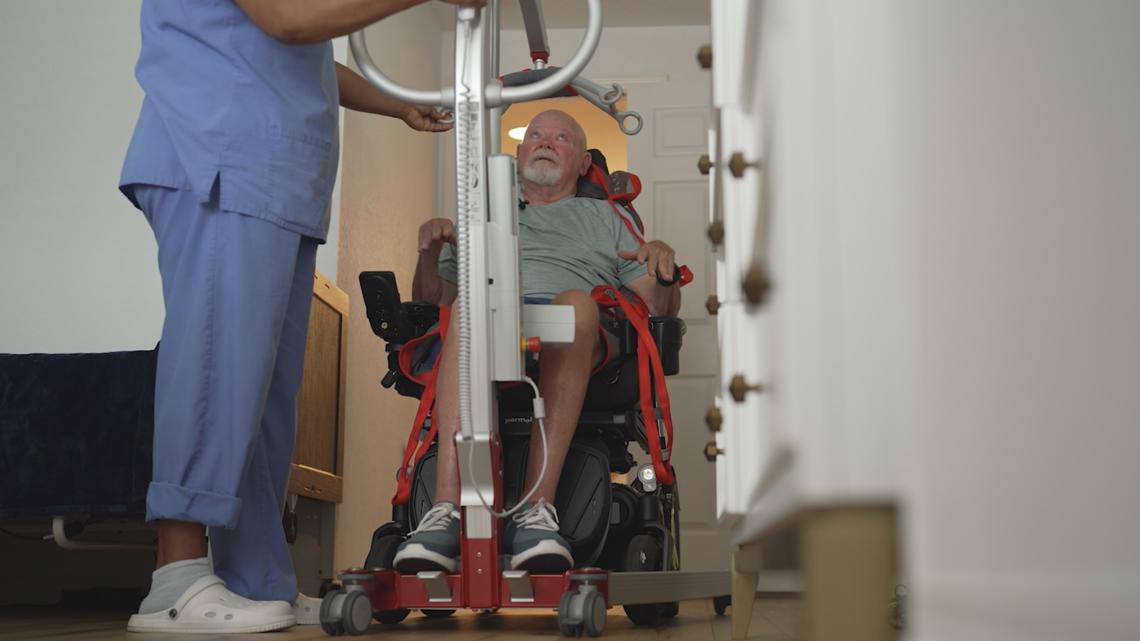
Dennis McKinney’s mornings now begin with help. Angela, his caregiver, steadies him as he moves from bed to chair at his home in Bradenton, Florida.
“Ready?” she asks.
“Born ready,” he replies.
At 82, the Army veteran can no longer manage basic tasks on his own.
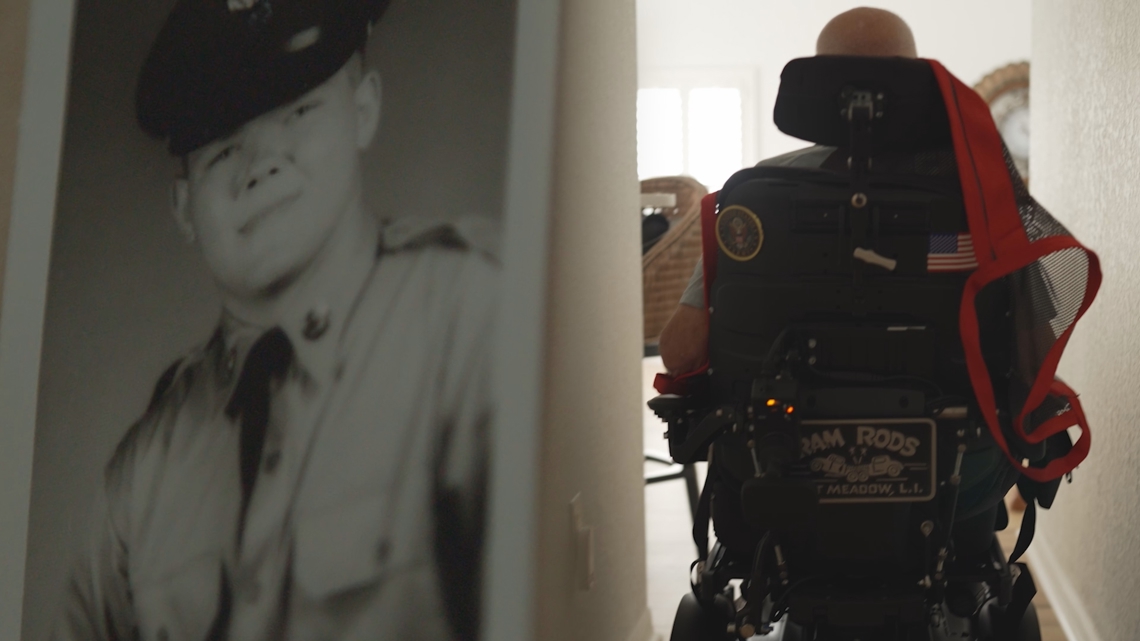
“It just started to get worse and worse and worse,” McKinney said. “Now it’s beyond. I have to have someone dress me, put me on the toilet, shower me. If you don’t think that’s embarrassing, you know it is.”
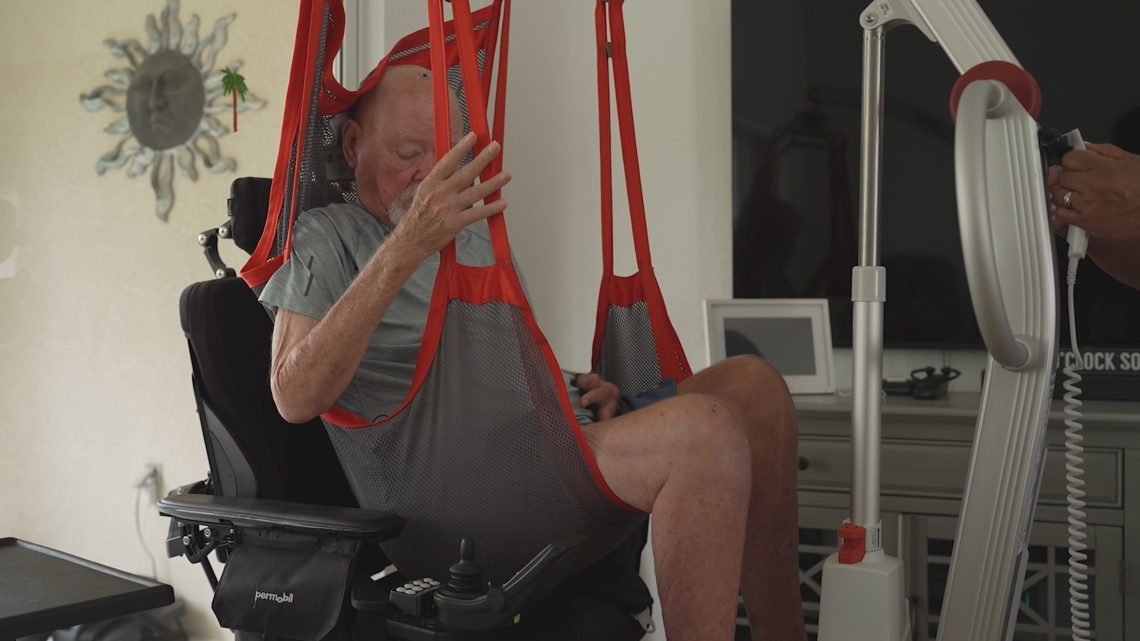
He faces the same reality as Greg Rathburn, suffering from IBM. Advocates believe veterans may be disproportionately affected. Depending on the study, the number of veterans diagnosed with IBM could be anywhere from 6 to 19 times higher than in the general population. That’s a wide range because no one formally tracks IBM diagnoses.
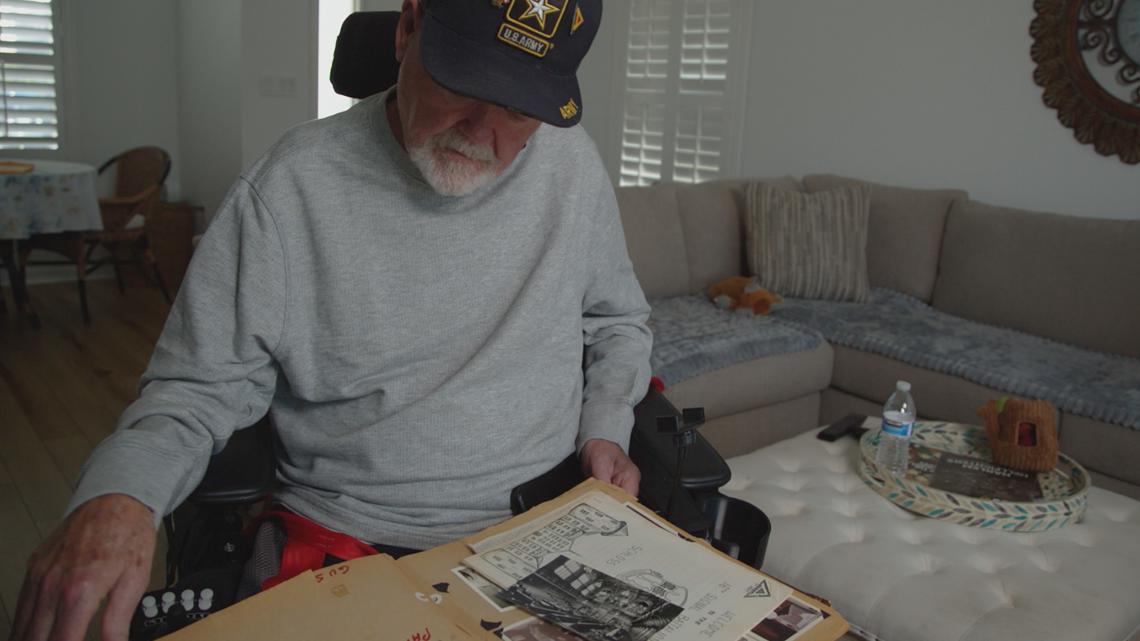
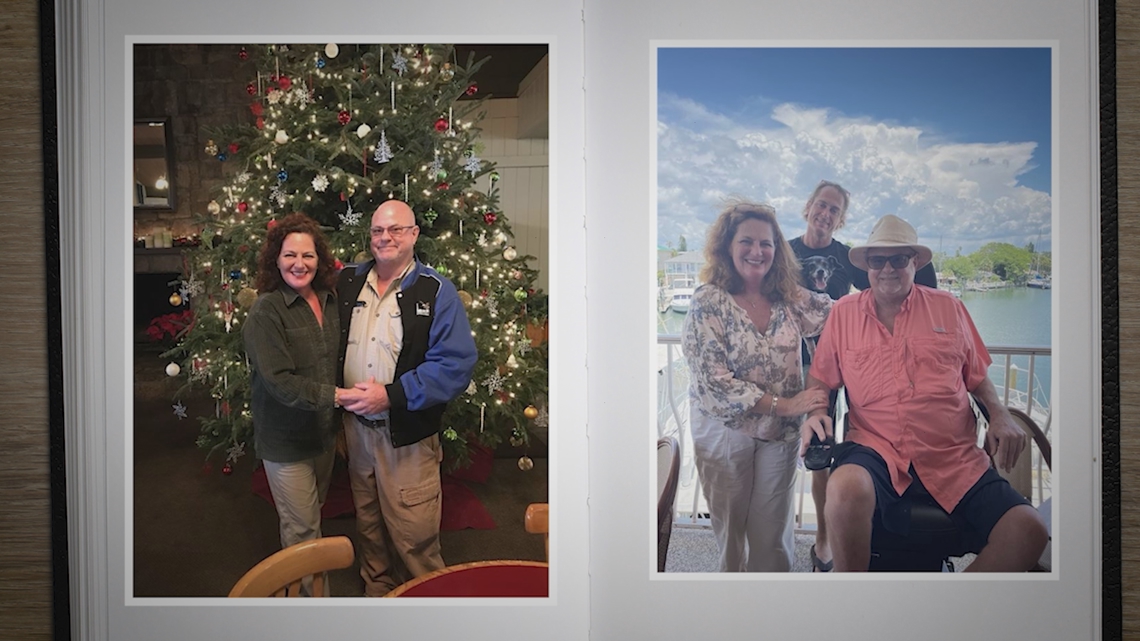
During a monthly virtual support group, veterans from across the country compare experiences. They all have IBM, and they also have another thing in common — they have all been denied disability benefits from the VA.
Among those denied is Dan Lowther. His wife, Alicia, remembers when symptoms first appeared.
“In 2017, when Dan was diagnosed, he was still walking — slowly, with a cane,” she said. “By August of this past year, he could no longer stand at all.”
Dan is now too sick to speak.
“It’s ALS in slow motion,” Lowther said.
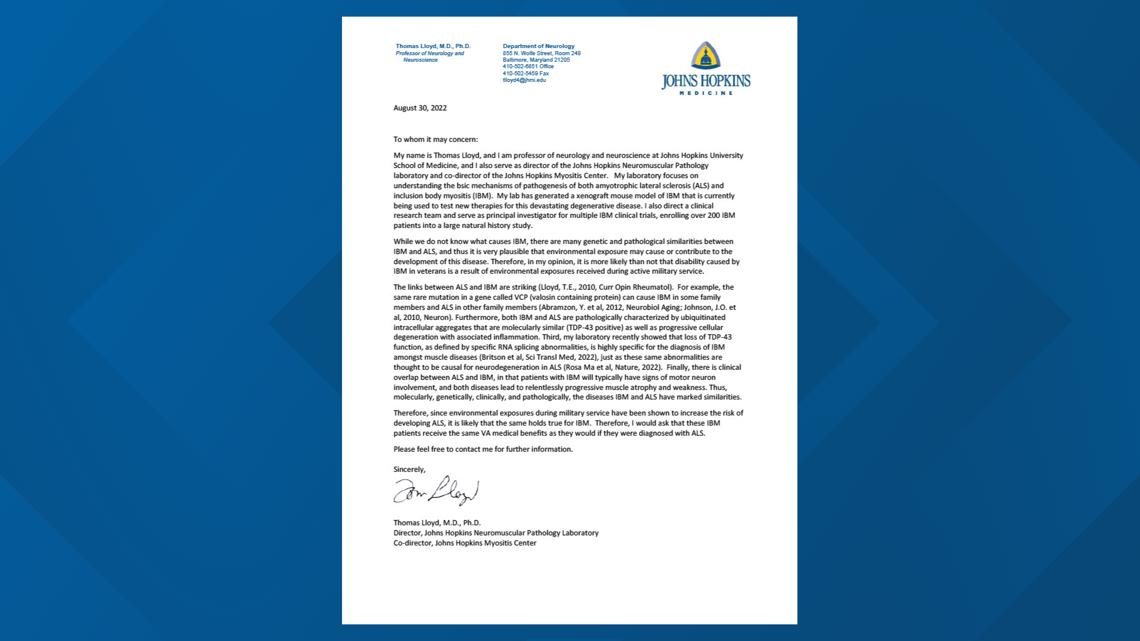
Dr. Thomas Lloyd has been studying the disease and trying to make the case for veterans to receive full benefits for over a decade. He says IBM shares key characteristics with ALS, also known as Lou Gehrig’s disease.
“The molecular change that we see in the muscle in IBM is exactly the same molecular change that’s seen in ALS,” he said.
Since the VA does not recognize IBM as a service-connected condition, there is no specific diagnostic code. Without that code, there is no standardized disability benefits questionnaire. Instead, veterans are evaluated under other conditions. For retired Navy pilot William DeAugustinis, that meant being assessed for arthritis.
“I was there for over three hours,” he said. “They went through this whole exam for arthritis.”
None of it matched his condition.
“Not at all,” he said.
Other veterans say their cases have been evaluated under fibromyalgia or even ALS.
In Lowther’s case, conflicting documentation proved costly.
“The neurologist noted that Dan has inclusion body myositis,” his wife said. “But because of the wording tied to ALS, everything was marked no.”
Attorneys representing veterans argue the solution is straightforward.
“If the VA simply recognizes the disease, finds ways to rate and evaluate it correctly, and considers adding it as a presumptive condition — just like ALS — we don’t have to wait any longer,” attorney Ursula McCabe said. “It’s a simple policy fix.”
Until that happens, veterans say they are left fighting for recognition and for support.
“Can we get a fix for this so the younger guys don’t have to suffer through this?” McKinney said.
FIGHTING BACK
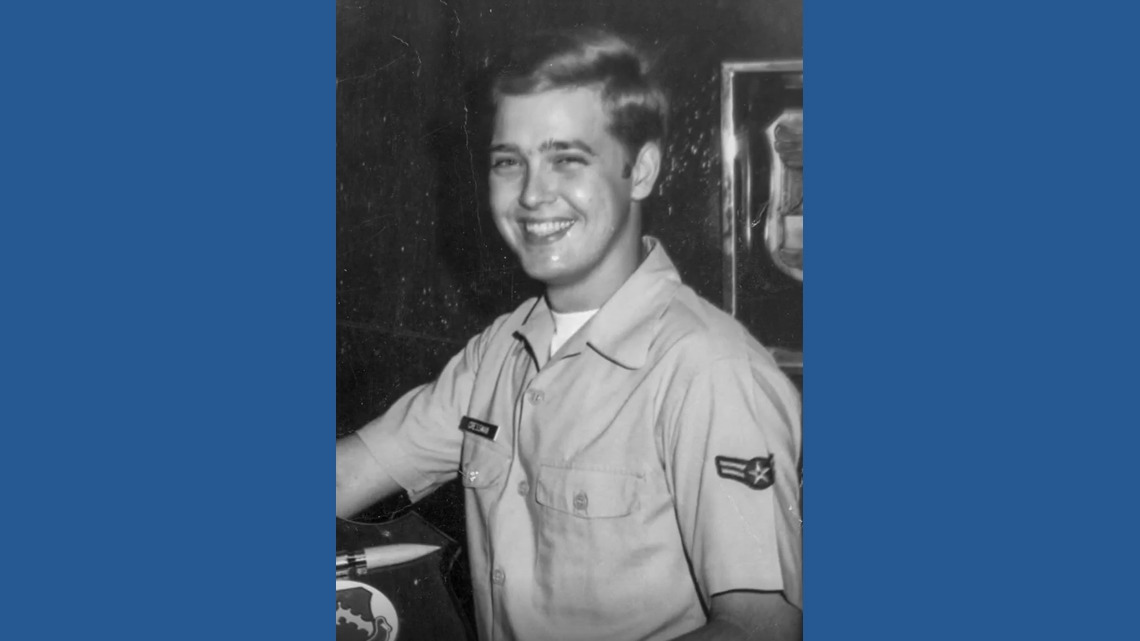
“It was an honor to serve. I’m glad I did.” – Jim Cressman
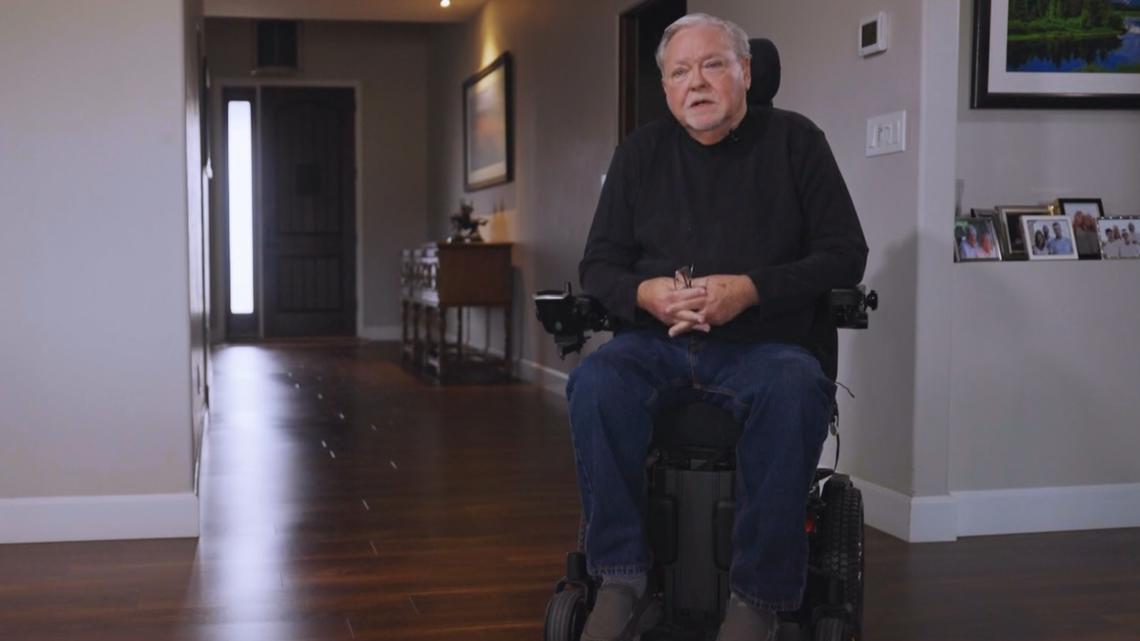
From his home in Fruita, Colorado, Jim Cressman says he’s grown used to the unreturned phone calls, letters and emails.
Not that he’s happy about that.
“We cannot get someone to listen to us,” Cressman said.
The Air Force veteran says he figured out on his own that the numbness in his body, the repeated falls, and inability to effectively use a knife and fork were likely the result of a disease most doctors had never seen up close.
“They just patted me on the head and said, ‘you’re getting older,’ but I knew very well something was going on,” he said. “The doctors didn’t know what to do with me.”
Eventually, a visit with a neurologist confirmed his suspicion.
“I inquired to her and said, ‘Are you looking for inclusion body myositis,’ and she gasped and took a step back and said, ‘Oh, you’ve been doing your homework,’” Cressman recalled.
Cressman believes his IBM is the result of repeated exposure to Agent Orange while he worked the flightlines in Thailand during the Vietnam War.
“We were never told that the area was being treated with such a devastating poison,” he said.
He put in his first claim for benefits a decade ago.
“It was denied immediately,” he said.
It took nine years for the Veterans Benefits Administration to say he’d earned them. Other veterans with IBM continue to wait, however.
“When you apply for disability benefits for inclusion body myositis, you get denied. That fact remains valid even today,” he said.
The attorneys who helped him secure benefits agreed.
“Every single veteran that comes through an initial level gets denied, and that means all of them have to fight the case on appeal,” attorney Kerry Baker said. “I run into VA employees, probably every week, and talk about these cases, and they’ve never heard of this disease.”
The VA’s own records suggest more than 2,000 veterans have IBM.
“Right now, it looks like, without a doubt, military service plays a role in people getting this.”
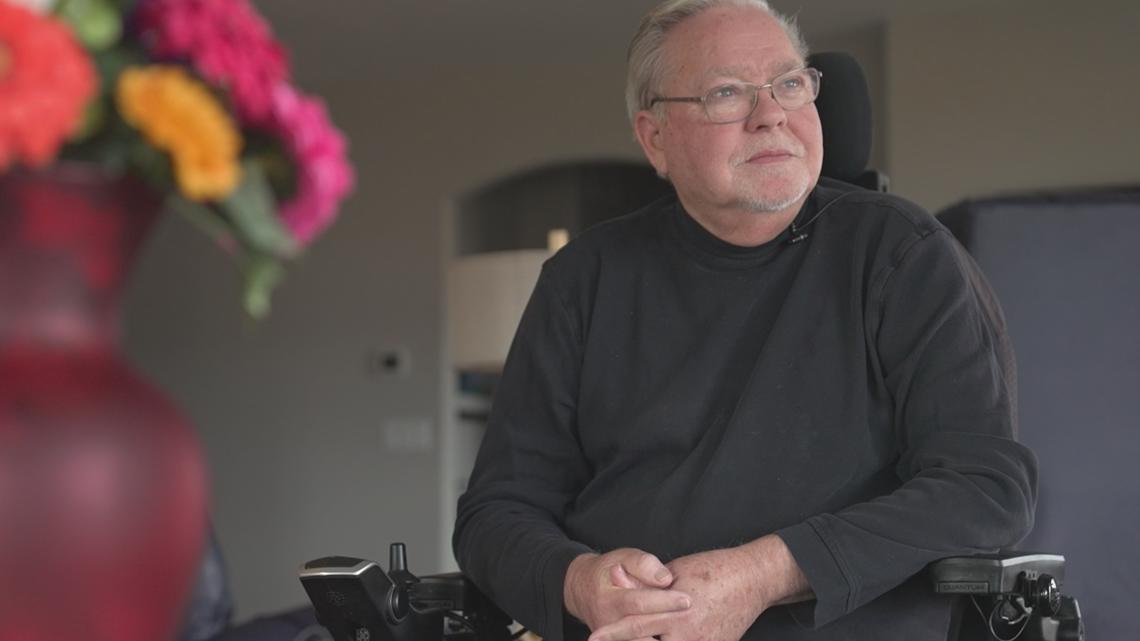
These days, you’re likely to find Cressman, from his modified home, talking to veterans across the country about claims and strategies. He organizes a monthly online meeting with a support group on Facebook.
“There’s optimism, there’s pessimism, and there’s realism,” he said. “I’m a realist.”
“I can’t get up and walk across the room now. I can’t take two steps without falling,” he said. “It was an honor to serve. I’m glad I did.”
But, he said, other veterans with IBM shouldn’t have to wait nine years to get the VA to tie their service to their disease.
“I have called our state representatives, senators. I have helped other veterans, sent letters to their senators and representatives. More than 110 of those requests went out. Not one response,” he said.
“What does it take? What does it take to get the attention, to get a response from a letter? We’ve repeatedly asked for help for years and years,” he said.
COST OF DELAY
“You know, I’ve come to grips with it. It’s not easy.” – Augie DeAugustinis
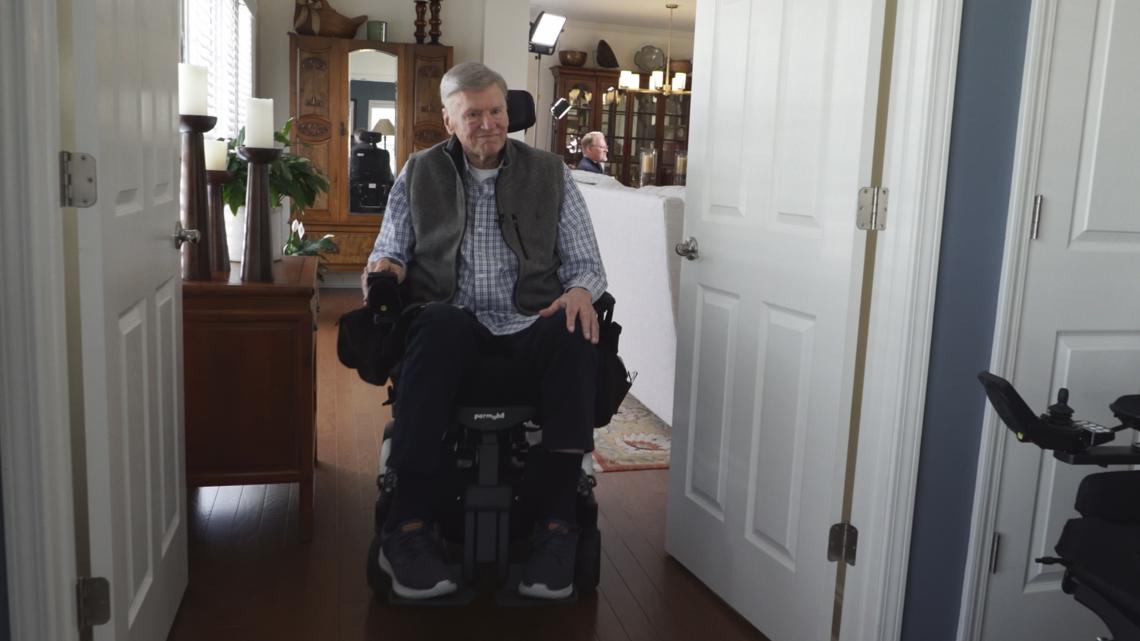
For his interview, William ‘Augie’ DeAugustinis didn’t need to pull up a chair. He was already in one. Rather than a place to pause, his wheelchair has become his tool to move around his Georgia home.
“I quickly started having problems with my legs. It’s just a straight line progression to a life in a wheelchair,” the Navy vet said, referring to his diagnosis of IBM.
But as you’ve seen, that diagnosis isn’t a straight line to disability benefits. For DeAugustinis, the process took 11 years. He believes, like ALS, it should have been automatic.
“My flying buddy in the Navy that I was on active duty with up in Iceland came down with ALS, and I was with him through that whole process. They provided him with everything he needed,” DeAugustinis said.
Same military service location.
“Our offices were inside of a hangar… there were a lot of exposures to solvents, degreaser, and jet fuel,” DeAugustinis explained. “And sometimes I went on a ten-hour mission with… my sleeve soaked in deicing fluid.”
Same exposures. But different diagnoses.
“This molecular change that we see in the muscle in IBM is exactly the same molecular change that we see in ALS,” Dr. Thomas Lloyd explained. “I feel strongly that our patients with IBM, who are veterans, really deserve those same benefits as ALS patients.”
Dr. Lloyd told the VA that directly, writing a letter to the appeals board in 2022, as several veterans, including DeAugustinis, fought for benefits. The University of North Carolina-Chapel Hill’s Department of Neurology did the same.
“Complex diseases like IBM and ALS clearly have an environmental trigger,” Dr. Lloyd said. “And we know veterans have many environmental exposures that us civilians do not have.”
While researchers are still looking at how those toxins might be connected, the veterans law judge who finally approved DeAugustinis’ claim believed that medical testimony writing, “electromagnetic and solar radiation along with deicing toxins… can be a risk factor.”
The VA says it made ALS presumptive service-connected because “veterans were 1.5 times more likely to develop ALS than the general population.”
By that standard, DeAugustinis says again, IBM should be treated the same. He’s referring to an analysis that implies the rate of veterans diagnosed with IBM may be at least six times higher than the general population.
“We have seen at least two IBM cases get approved on initial submission. That is a very hopeful sign for us, but the process definitely needs to be streamlined,” DeAugustinis said.
Whatever the exposure that led to their illness, those living with IBM say they need the VA’s help to manage the disease. During our investigation, veterans showed us specialized wheelchairs, toilets, and lifts that assist them and their caregivers in taking care of basic needs and keep them engaged in the community. They also showed home modifications such as widened walkways, motion-activated sinks, lowered counters, and ramps to help with their mobility and self-sufficiency.
“We’re still going to have IBM at the end of the day, but the IBM is much more manageable when you have the tools to deal with it,” said DeAugustinis.
He also believes giving IBM a diagnostic code, creating a disability benefits questionnaire to properly assess veterans, and making the condition presumptive would spark more research, perhaps leading one day to a cure.
“You know, I’ve come to grips with it. It’s not, it’s not easy,” DeAugustinis said. But getting benefits for IBM through the VA, he says, should be.
CALLS FOR ACTION
“We need the VA to see exactly what this disease is and what it’s done to the veterans” – Larry Leisher
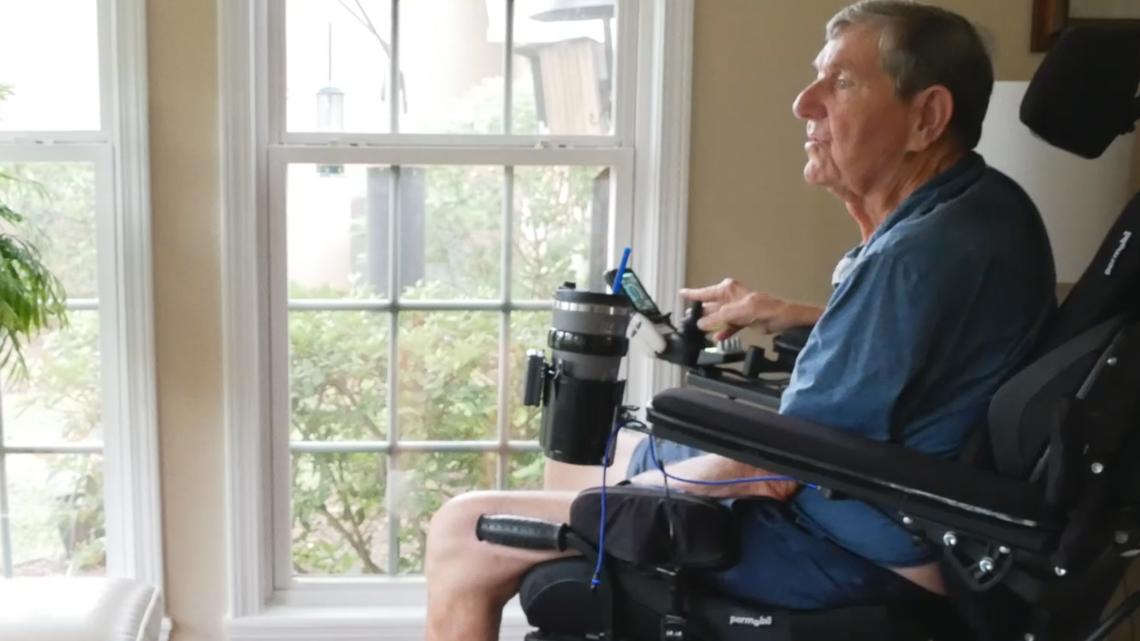
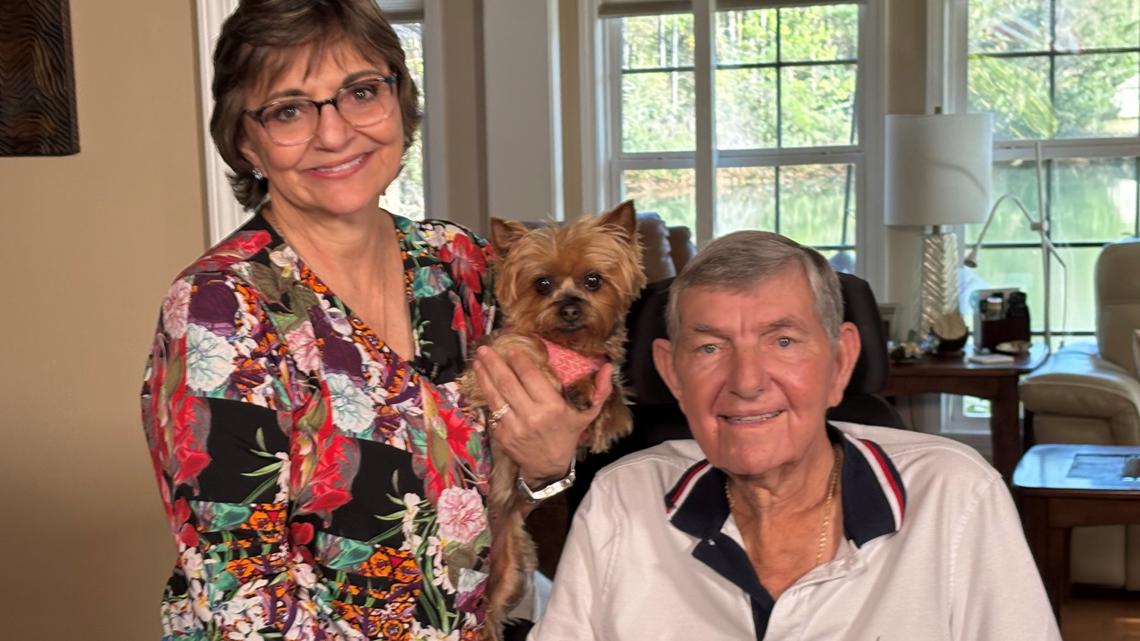
Larry Leisher never imagined retirement would become a two-front battle, not only against a rare and debilitating disease, but also for recognition from the VA that his IBM diagnosis is service-related.
“I was 58 probably when I realized that there was something wrong,” Leisher said. “I need help with just about everything I do anymore: bathing, going to bed, getting up, eating…You lose the use of your hands. Your muscles just deteriorate.”
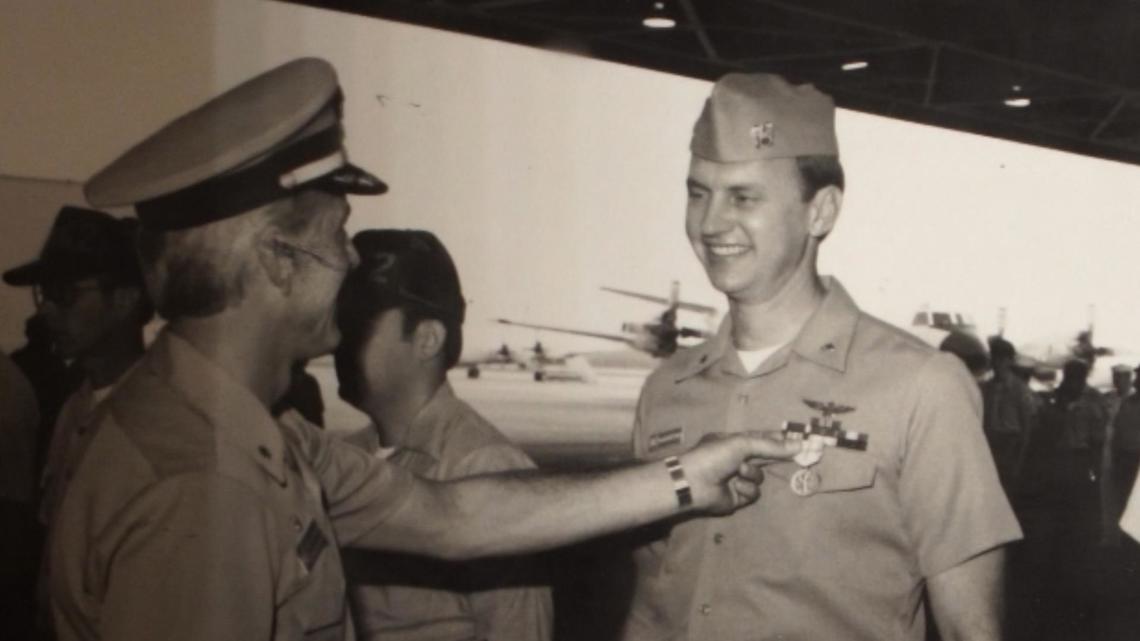
Now 82, the Florida Air Force veteran says his work as a military cryptologist included disposing of classified materials using chemical-based incendiary devices. He believes that exposure may be connected to his illness.
“We need the VA to see exactly what this disease is and what it’s done to the veterans,” Leisher said. “I believe it was service-connected. Absolutely.”
It took nearly two decades for the VA to reach the same conclusion.
“I can’t even tell you the hours that he put in. I’m not kidding you, I would have given up way, way long ago because the VA, it’s like delay, delay, delay,” Joanne Leisher, Larry’s wife, said.
The fight drained much of the couple’s life savings as they retrofitted their home to meet his needs.
“It took me 17 and a half years to have my appeals reversed, and that’s not right, just not right,” Larry Leisher said.
He finally secured VA benefits in 2023.
“And those benefits are a game changer. I mean, we have so many things from the VA we couldn’t possibly have afforded, so they provide a lot of benefit if you can get it as presumptive.”
A presumptive condition means the VA assumes a veteran’s illness is connected to their service, eliminating the need to prove it case by case.
Now, Leisher is pushing for change so other veterans do not have to wait years for help.
“Our goal, there’s 5 of us that are really pushing to get the VA to understand that it should be a presumptive disease,” Leisher said.
We took veterans’ concerns to lawmakers who are now taking action.
“I guarantee if we, if I can’t get it done in in like the next five months, then we’re really just not in good shape, but I think that we’ll be able to get something done,” Leisher said.
Congresswoman Anna Paulina Luna, a veteran herself, says the system itself is part of the problem.
“The VA system and the way that their ratings are designed, it is to force a denial, and then you have to again fight for it, and that’s not how it’s supposed to be operating,” she said.
She says fixing it could require action at the highest levels of government. Right after we interviewed her, she called the White House congressional liaison.
“I think what it’s actually going to take is getting a meeting with the new VA secretary and then also flagging it for the president. And I think once that happens, I think it’ll be an automatic thing because if we can’t get it done through Congress, we’ll just ask the president to do it via executive order, and I think this would be something he would be inclined to do,” Luna said.
Representative Gus Bilirakis, co-chair of the Rare Disease Caucus, says he was previously unaware of IBM.
“Well, you brought it to our attention, and I appreciate that very much,” he said.
He now says he is committed to finding answers and exploring presumptive status.
“Veterans are my top priority,” Bilirakis said. “You know, I think we can get it done.”
An internal presentation created in February shows the National Institutes of Health is studying possible links between toxic exposure and military service. The VA has also contracted with the National Academies of Sciences, Engineering, and Medicine to review neurodegenerative diseases, including IBM, and their potential connection to environmental exposures.
“They have an exact, prescribed way of going about the study in a rare disease and in association with the military,” Representative Rick McCormick said.
But that review is not expected to be completed until July 2027.
McCormick says he has spoken directly with VA Secretary Doug Collins about the issue and believes progress is coming.
“In the meantime, of course, they’re looking at each case. They’re trying to accelerate those cases.”
The VA has not yet provided us with the data we requested on how many veterans have received benefits for IBM without going through a lengthy appeals process.
McCormick says this is an example of why representation matters. As lawmakers, they are one of 535 people who vote. But if the office has good constituent services, the power to push an issue becomes personal.
“If your case is taking too long, keep on hounding your representative. Lawyers, a lot of times, cannot make headway. The lawyer doesn’t have a relationship with that bureaucracy,” explained McCormick. “If your representative is not responding to you, go to another representative. Go to your senator. I’ve always been told in the military, there’s always somebody who can say yes. You’ve just got to find them.”
For Leisher, who is grateful for the benefits he now receives, the mission is clear. No more waiting. No more denials. He is committed to making sure every veteran who comes after him, and those still fighting denied claims, get the life-changing support he finally secured.
“We signed on the dotted line. We gave our country everything we had to give them. It’s time that they look at what they’ve done and what they have. And, and come back to us and, and help us,” he said.
Our team contacted members of Georgia and Florida’s Congressional delegation about our IBM project. This is what they had to say:
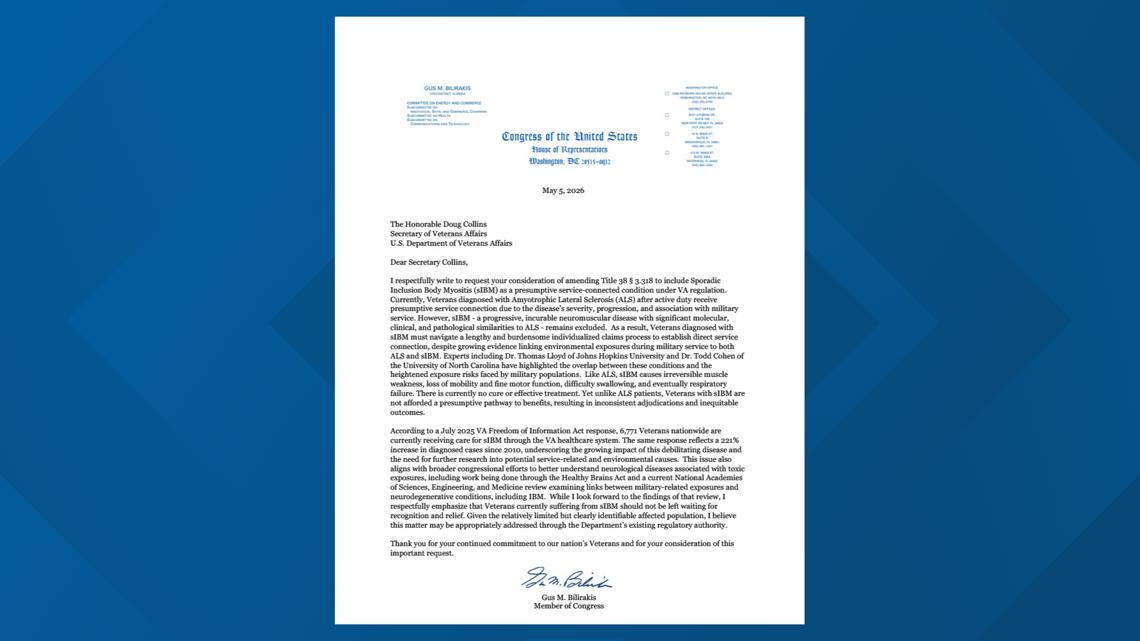
Rep. Bilirakis also sent a letter to Secretary Collins asking the VA to make the change to recognize IBM as a presumptive service-related condition under VA regulation.
Here’s the full statement we received from VA Press Secretary Quinn Slaven:
“VA recognized ALS as a presumptive condition based on evidence showing a possible association between ALS and military service. Veterans are 1.5 times more likely to develop ALS than the general population. While no similar association has been identified for inclusion body myositis (IBM), VA continues to investigate this condition and asked the National Academies this year to conduct a new, comprehensive study on IBM. VA continues to decide disability benefits for IBM on a case-by-case basis. The lack of a diagnostic code for IBM in no way hinders VA’s ability to make decisions regarding service connection.”
Heather Crawford at WTLV in Jacksonville, Florida; Ciara Frisbie and Rebecca Lindstrom at WXIA in Atlanta, Georgia; Libby Hendren and Jennifer Titus at WTSP in St. Petersburg, Florida; Kyle Iboshi at KGW in Portland, Oregon; and Chris Vanderveen at KUSA in Denver, Colorado contributed to this report. You can watch “Diagnosis Denied” streaming on this news app.