
According to the American Cancer Society, about one in three adults who are eligible for screenings are not tested.
WASHINGTON — The American Cancer Society updated its screening guidelines for a common cancer in the U.S.
The recommendations are aimed at expanding screening options for colorectal cancer, which is the leading cause of cancer-related deaths in both men and women. Early detection significantly raises the odds of survival.
According to the updated guidelines, those at average risk will be advised to take two at-home stool tests every three years. One of them tests for DNA mutations, looking for hidden blood and for certain genes, proteins, and molecules that could indicate cancer in stool samples.
People are considered at average risk if they do not have:
- A personal history of colorectal cancer or certain types of polyps
- A family history of colorectal cancer
- A personal history of inflammatory bowel disease (ulcerative colitis or Crohn’s disease)
- A confirmed or suspected hereditary colorectal cancer syndrome, such as familial adenomatous polyposis (FAP) or Lynch syndrome (hereditary non-polyposis colon cancer or HNPCC)
- A personal history of getting radiation to the abdomen (belly) or pelvic area to treat a prior cancer
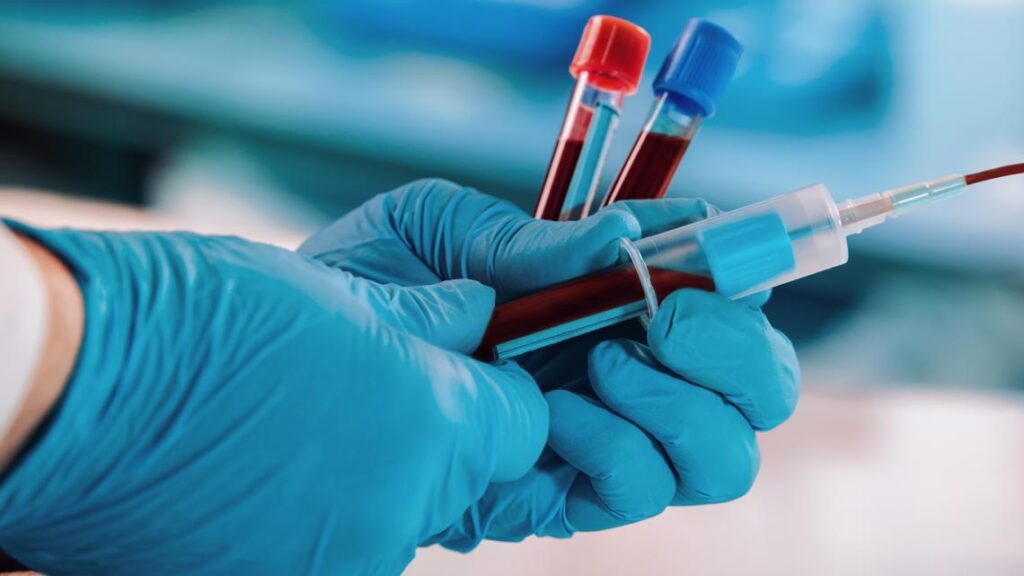
For the first time, the guidelines now call for a blood-based screening test taken at a doctor’s office. While it may be less effective, it does open the options for testing.
The blood test screens for tumor DNA in the blood. It is only recommended for those who decline or do not complete the preferred screening tests, such as the at-home stool tests and the colonoscopy. Those who get an abnormal test result should follow up with a colonoscopy.
“Colonoscopy still remains, you know, a test that’s, that’s where there’s no test that’s better, but there are folks that are unable or unwilling to undergo a colonoscopy,” Dr. William Dahut, Chief Scientific Officer, American Cancer Society said.
In 2026, more than 55,000 deaths are expected from colorectal cancer. Studies show that early detection helps save lives.
According to the ACS, about one in three adults who are eligible for screenings are not tested.
“We need to increase our emphasis on colorectal cancer as a highly preventable disease as much as a treatable one,” Dr. Robert Smith, senior vice president, early cancer detection science at the American Cancer Society, said in a news release. “By offering more screening tools in our guideline update, more eligible adults will be able to participate in lifesaving colorectal cancer testing, helping to close the screening gap and catch more cancers at an earlier, treatable stage.”
The updated guidelines reaffirm that average-risk adults should start screenings at 45 through 75.
Those with an increased risk of colorectal cancer should start screening before 45 or be screened more often.
The American Cancer Society provides an “online calculator” to help people assess their risk for colorectal cancer.
CNN Newsource contributed to this report.