
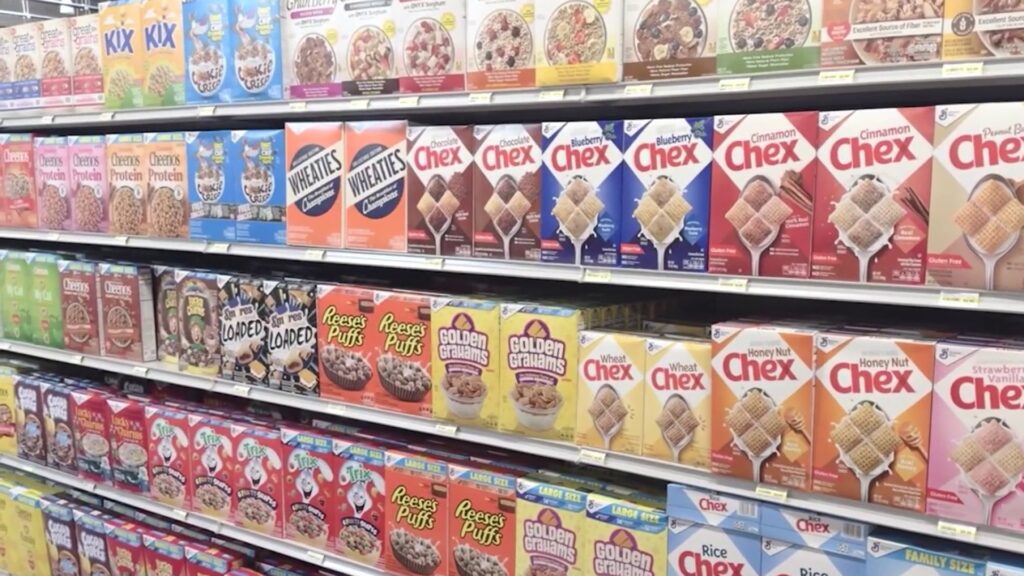
SAN ANTONIO – Target is planning to remove cereals containing certain synthetic food dyes from its shelves by the end of the month, amid growing debate over artificial coloring between parents, health experts and federal regulators.
The move stems from new U.S. Food and Drug Administration regulations and recommendations to phase out specific artificial dyes commonly found in brightly colored cereals, candies and snack foods.
Dr. Dina Tom, a pediatric hospitalist with University Health and UT Health San Antonio, said some artificial food dye studies are linked to behavioral issues in children.
“Children are particularly susceptible to any kind of ingredient, really, because they’re developing and growing,” Tom said. “Their intestines and their bodies are really absorbing as much nutrients as it can to grow.”
While some countries have already restricted or banned certain dyes, the United States started taking steps toward tighter regulation domestically.
Synthetic dyes, including Red 40, Yellow 5, Yellow 6 and Blue 1, are often added to foods to make them more visually appealing, especially products marketed toward children.
“It has been shown in human studies to have potentially harmful outcomes in behavior for children,” Tom said, “specifically in different types of diagnoses like autism and ADHD, and also in children who may have some behavioral concerns.
Tom said research has associated artificial dyes with issues such as hyperactivity, sleep problems and behavioral changes in some children.
Rather than relying on packaging claims displayed on the front of the box, Tom suggests looking at the ingredients label to parents looking to avoid artificial coloring.
“If you look at ingredients, which is underneath the nutrition facts, it will list out everything that’s included in that food label,” Tom said. “It will call out the words ‘artificial flavor’ or ‘artificial food coloring.”
Some food companies now use natural alternatives, Tom said, including coloring derived from beet juice and other plant-based ingredients.
Tom also encourages families to focus more on fresh foods found around the outer aisles of grocery stores, where produce, dairy and other less-processed products are typically located.
“Those ultra-processed or packaged foods tend to be in the center of the grocery store, in the boxes,” Tom said. “They have a lot of preservatives and artificial ingredients, including dyes.”
Parents looking for alternatives to traditional colorful cereals may find dye-free versions on store shelves, though they can cost more.
Some brands marketed as natural alternatives to cereals like Froot Loops can range from $1 to $3 more, depending on the retailer.
Tom said another option is to buy plain cereal and add fresh fruit, such as strawberries or bananas, for natural color and flavor.
Read also:
Copyright 2026 by TheTXLoop – All rights reserved.