
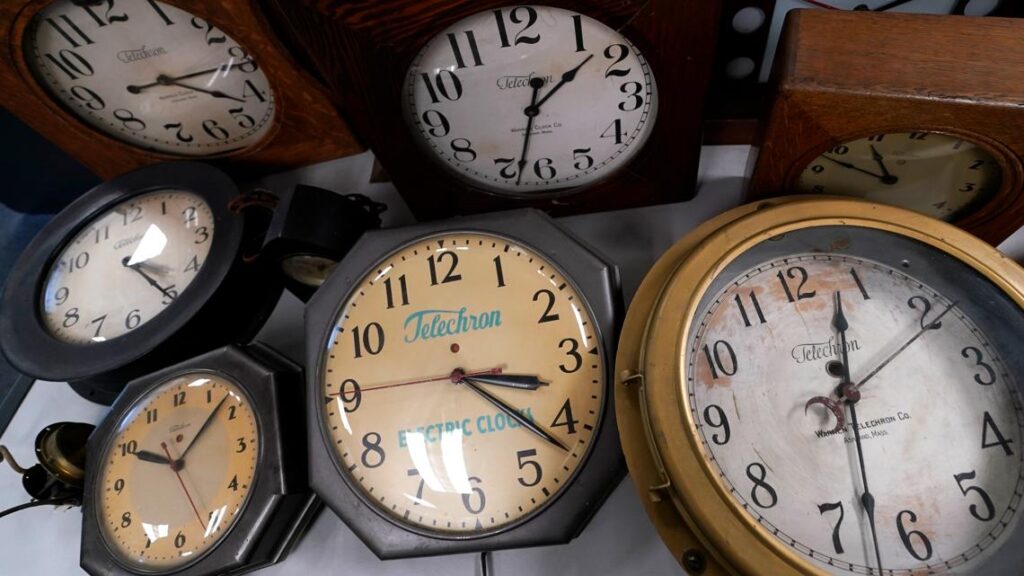
A House committee’s 48-1 approval of the “Sunshine Protection Act” reignites the debate over making daylight saving time permanent.
WASHINGTON — The debate around Daylight Saving Time has reignited after a House committee recently voted in favor of a bill to make daylight saving time the new, permanent standard time.
Last week, the House Energy and Commerce Committee voted 48-1 in favor of the “Sunshine Protection Act,” which would make the change part of a five-year transportation bill.
While the act and similar legislation have been tried and failed before, they’re now under renewed pressure from President Donald Trump.
“This is so important in that Hundreds of Millions of Dollars are spent every year by people, Cities, and States, being forced to change their Clocks,” Trump wrote in a Truth Social post. “I am going to work very hard to see The Sunshine Protection Act signed into Law.”
Trump has made several digs at the semiannual changing of clocks over the years, and in 2024 backed off his call for the Republican Party to eliminate daylight saving time – calling it a “50-50 issue.”
In Thursday’s Truth Social post, he said it would be a “very nice WIN” for the Republican Party.
“We are going with the far more popular alternative, Saving Daylight, which gives you a longer, brighter Day — And who can be against that — This is an easy one,” he wrote.
This isn’t the first time the clock change has been overwhelmingly supported. In 2022, the Senate unanimously approved a measure to make daylight saving time permanent across the United States, but the bill did not advance.
Over the last seven years, 18 states have passed legislation or resolutions in support of year-round daylight saving time, according to the National Conference of State Legislatures. In 2025, at least 31 states considered or were still considering legislation related to daylight saving time.
However, none of those bills or laws aimed at making daylight saving time permanent can take effect until there is a federal repeal of the congressional act. In essence, Congress needs to change the law for the U.S. to keep daylight saving time year-round.
Why was daylight saving time created?
The practice has been implemented in some form since World War I, when Germany originally introduced it to conserve power and energy by extending daylight hours.
The Standard Time Act in 1918 was the first introduction of daylight saving time to American clocks. The temporary measure, which once held the nickname “war time,” lasted from spring to fall and was intended to cut energy costs during World War I. The act is also responsible for the five time zones still in place today.
In 1966, the Department of Transportation was created and given regulatory authority over time zones and daylight saving time. To correct confusing and alternating time zones, the Uniform Time Act of 1966 sought a nationwide standard for daylight saving time, from the last Sunday in April to the last Sunday in October.
Few changes have happened since then. Most recently, daylight saving time was extended by a few weeks in 2005 when former President George Bush changed the law. It is now observed from the second Sunday in March until the first Sunday in November.
Despite the national observance, Arizona and Hawaii don’t observe daylight saving time. Under federal law, states are allowed to opt out of daylight saving time and remain on standard time, but are not allowed to remain on daylight time.
The U.S. has implemented year-round daylight saving time twice: once during World War II for fuel conservation and once in 1974 as a “trial run” during an energy crisis.
The Associated Press contributed to this report.