
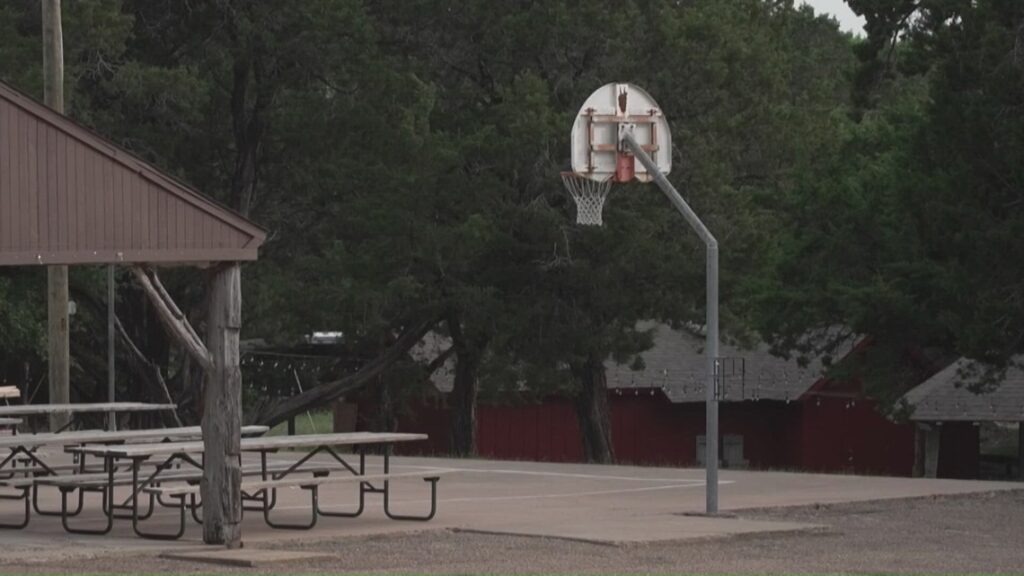
Nineteen camps sued the state, arguing fiber is not available in rural and remote parts of Texas and some camps can’t afford it.
AUSTIN, Texas — May is usually a busy time for summer youth camp operators who are planning to welcome campers in a matter of weeks.
But an overwhelming majority of camps across Texas are wondering if they’ll be able to open at all.
Less than a dozen have received a license to operate from the Texas Department of State Health Services.
More than 200 others are in limbo, and some are scrambling to comply with the new requirements and rules.
Starting June 1, more than 2,000 campers will spend part of their summer at Camp Doublecreek.
“I think the biggest challenge for us has been the unknown, not knowing when we are going to get something? When is the state going to do something?” Camp Doublecreek Camp Director Dan Neal said. “Is there going to be a change that comes at us at the last minute? We’re really navigating these waters as camps.”
Last year, state lawmakers passed new regulations for camps after 27 campers and counselors died during a flash flood at Camp Mystic in Kerr County.
Senate Bill 1, also known as the “Heaven’s 27 Camp Safety Act,” and House Bill 1, known as the “Youth CAMPER Act,” require youth camps to add several safety measures, which includes installing and maintaining emergency alert systems, training staff on evacuation routes and procedures, banning cabins from being located in floodplains and requiring state inspections to ensure camps are complying with emergency procedures.
“It’s been busy. A lot of tedious work. A lot of preparation and learning,” Neal said. “A lot of learning curve for us because we’re not safety experts, but we have become safety experts over the course of the last six to eight months.”
Since last year’s tragedy at Camp Mystic, Neal said he has been reviewing safety procedures.
“Every single one of our emergency plans has been thoroughly gone through, not just by us, but by outside consultants to make sure that we have the very most robust emergency plans,” Neal said. “I would even put our emergency plans up against that. That’s in the oil and gas industry we are. We are on top of it.”
According to the Department of State Health Services, many camps with pending applications have received notice of deficiency letters from the state detailing changes they need to make to their emergency action plans.
“A lot of that has been corrected,” Eddie Walker, the Executive Director of Mt. Lebanon Camp in Cedar Hill and the President of the Christian Camp and Conference Association. “Now, camps are on their second and third revisions.”
Walker said Mt. Lebanon has spent more than $100,000 on a new public address system and a two-way radio system.
They took down their playground, installed new lighting, and are installing ladders in cabins, so campers can escape to the roof in case of a flood.
“It’s a small rule, but within that rule, there’s an 86-page standard of what we have to do for inspections and for standards,” Walker said. “We didn’t have the wherewithal with emergency PA and egress lighting to address that, so we pulled our playground out of operation. That’s sad, but we have other things that we’ll do, and we’ll raise the money, and we’ll get another playground down the line.”
With less than three weeks to go, Walker said his staff is still making final touches on the camp property to ensure it is compliant with the new rules.
“Our guys are out today working on our egress lighting, and we have plenty of lighting around camp, but there are more requirements, and so we’ll work on all the requirements right up until we get going,” Walker said.
The cost of Mt. Lebanon Summer Camp’s application to the state went up from $465 last year to $19,500 this year.
“Some of these camps might have 20 or 30 campers with autism and two or three adults per camper,” Walker said. “We can absorb that, but for a small camp, facing those similar kinds of increases, that’s devastating.”
Walker said the camp’s emergency action plan went from five pages long to 45.
“We’ve gotten camps to beef up their emergency action plans, and they needed help because we’ve never used those. I can’t think of a camp anywhere that’s used those EAPs. We’re 80 years in and a million campers, we’ve never needed our EAP, and hopefully we never will for 80 years forward, but we do now know you have to be prepared,” Walker said. “Our team met the day after the disaster, and we pulled our EAP and said, ‘ Is there any place we’re lacking? We’re not in a floodplain, but what else could affect us? You just want to be prepared. I believe that camps will be safer than they’ve ever been.”
For Camp Doublecreek, it has been less about infrastructure and more about planning and thinking about things in a different lens.
“This has been one of those we have to take our mission, and we have to make sure that mission stays as focused with the safety in mind,” Neal said. “My grandfather used to say camp is about keeping them safe, having fun, and when they learn something, it’s icing on the cake. I think that’s the way that we have looked at it, especially this year.”
For parents, Neal said these changes will give them more peace of mind when it comes to safety, but much of what has changed is things campers won’t see.
“The campers are going to see the same results. They’re going to see the same positive camp experience, and we’re going to know on our end, we’re going to have confidence that we’re going into it and we have our I’s dotted, t’s crossed and things in a much safer, supportive way,” Neal said. “We all have blind spots as a business, and to be able to be humble enough to say, okay, let me look at where my blind spots are, so I can make sure that I can look apparent in the face and say, this is 100% safe. That’s what we had to do this year.”
At Mt. Lebanon Summer Camp, the story is similar.
“We do want them to know where you go and what happens in the time of an emergency?” Walker said. “We can do that training quickly, and every camper will receive that when they get here. But we’ll focus on fun. It’ll be a great summer for them and a safe summer.”
According to DSHS, youth camps can continue to operate while their applications are pending.
Youth camps across Texas say one of the new rules the state enacted after the tragedy at Camp Mystic, requiring them to have fiber internet access, is unreasonable and impossible to follow.
They argue that kind of internet access isn’t available in remote or rural areas, and even if it is, it’s not economically feasible for them to get access.
The bill requires youth camps to have a backup broadband internet connection as well.
“We cannot get fiber, and the fiber was a financial burden as much as it was a frustration because we want to comply with everything that’s in those regulations,” Neal said. “We feel like the law was very good and well-written, but we couldn’t comply with the technological issue.”
Camp Doublecreek was one of 19 youth camps that are suing are suing several state agencies. They are suing the Texas Department of State Health Services, the Texas Health and Human Services Commission and the Texas Attorney General’s Office. According to the lawsuit, it will cost some camps $1 million or more to install, plus thousands of dollars in monthly fees.
“It’s up the hill, but to bring the construction down here to me, where there are no other residents that are going to buy into it, it’s just a burden,” Neal said. “It’s a task. It’s an undertaking for everybody, and then that expense comes back on me.”
On Thursday evening, the camps involved in the lawsuit announced they have reached an agreement with the state that will allow them to operate this summer using other forms of internet connections besides fiber-optic. Camp will still have to have two connections, so they could for instance use broadband internet and Starlink.
“This agreement keeps camp doors open for children and families across Texas,” Brian Anderson, Executive Director of Camp Peniel said. “Camps are places where kids grow, build confidence, and form lifelong friendships, and this outcome makes sure those experiences continue this summer. Camps and campers across Texas are grateful to the state for agreeing to this temporary solution.”
Earlier this week, Lt. Gov. Dan Patrick, who leads the Senate, and Texas House Speaker Dustin Burrows (R-Lubbock) issued a joint statement aimed at offering some relief to camp.
However, the two Republican leaders said, “there may be means other than fiber to provide reliable, redundant internet access, which would satisfy the purpose and spirit of the law.”
State Rep. Wes Virdell (R-Brady), who represents Kerr County, and 11 other state lawmakers recently sent a letter to Gov. Greg Abbott, asking him to call the legislature back to Austin for a special session to address issues with the law.
Walker said he went to the governor’s office in February to ask them to call a special session to address legislative issues, but it does not look likely.
“There’s a lot of good that came out of these laws and a lot of things we’re doing well, but there’s just a few things that really need to get changed to enhance camper safety,” Walker said. “I hope we get the chance to do that.”