
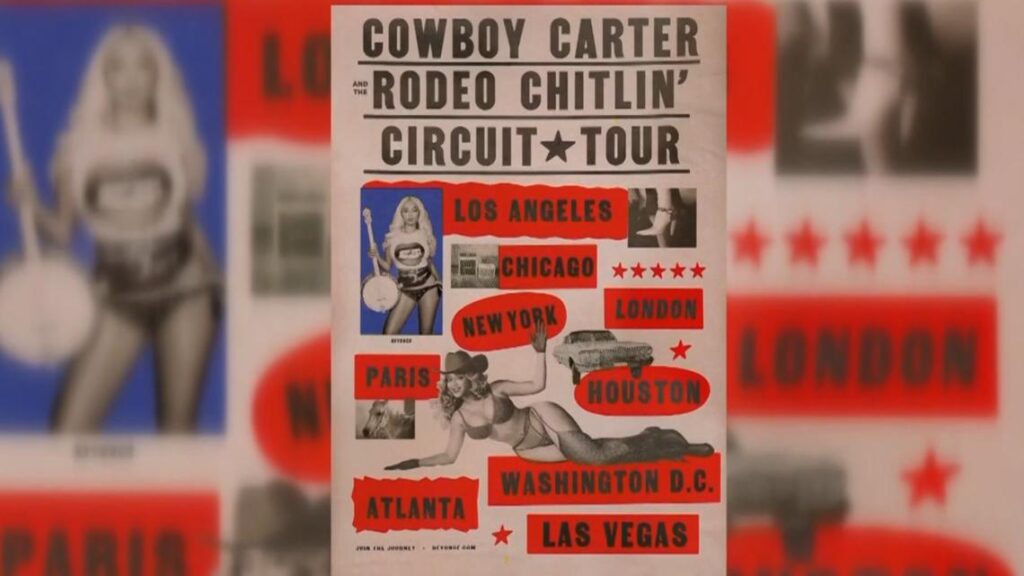
The Chitlin’ Circuit was an underground decades-long movement for venues that allowed Black entertainers to perform during segregation.
HOUSTON — Beyoncé is reclaiming her Texas roots and an important part of history with her Cowboy Carter album and Rodeo Chitlin’ Circuit Tour.
When racial segregation was widespread during the Jim Crow era, Black performers were often banned from performing at white-owned venues — especially in the South.
That led to an underground movement for theaters, clubs and other venues that provided a safe space for Black performers back in the 1930s and up until the 60s.
“The Chitlin’ Circuit is this way to describe this underground movement that happened, among Black communities, promoters and musical institutions all over the country, where Black performers could perform before different audiences where they could perform nowhere else,” Houston artist and anthropologist Marlon F. Hall explained.
The circuit is credited with the development of musical genres, including jazz, blues, rhythm and blues and rock and roll.
It helped launch the careers of Ray Charles, Cab Calloway, James Brown, Little Richard, Louis Armstrong, Dizzy Gillespie, Ella Fitzgerald, Sam Cooke, Aretha Franklin, Tina Turner and many others who performed on the Chitlin’ Circuit.
“It’s important that we recognize this part of history and those innovators’ contribution to history, because I want to reiterate this, Ron, this is classic American music.”
The El Dorado Ballroom in Houston’s Third Ward was one of the popular venues for these artists.
“Erected in 1939, by the Duprees, it was a place where people were known to have happy feet; it was a destination or home of happy feet,” Hall said.
The name chitlin’ comes from a dish made of pig intestines.
“A dish that was once seen as nasty, that was disdained, but was turned into a new destiny for a delicacy,” Hall said.