
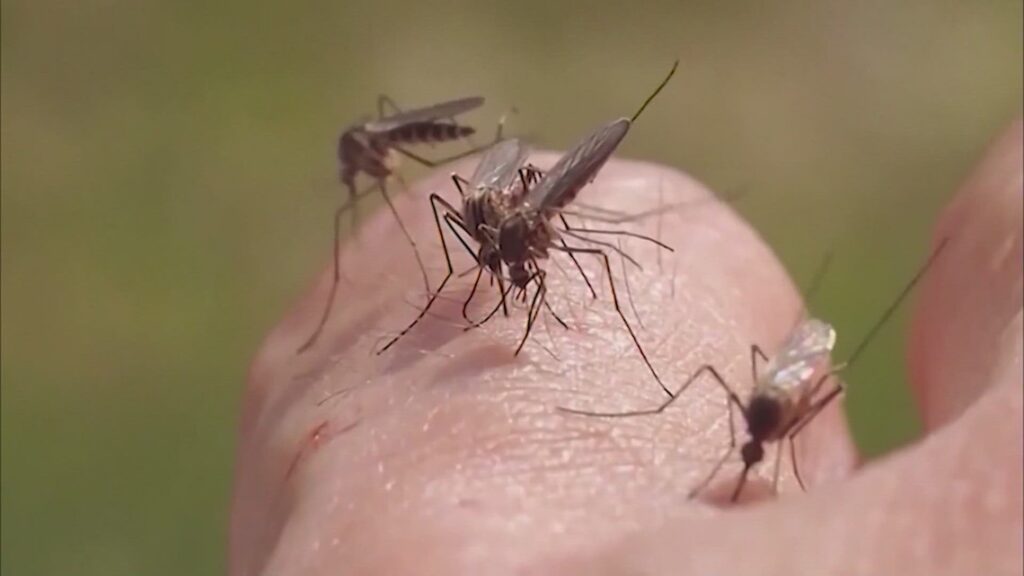
Fort Bend County begins spray operations after detecting West Nile Virus in mosquitoes.
FORT BEND COUNTY, Texas — Fort Bend County Health and Human Services has confirmed the first positive mosquito sample for West Nile virus in 2025.
The sample, collected from a mosquito trapping site in Katy’s 77494 ZIP code, was confirmed by the county’s Environmental Health Division’s Mosquito and Vector Control Program. Officials said they will continue surveillance in the area until no further positive samples are found.
In response, evening mosquito spray operations began July 9 in the affected area and surrounding neighborhoods. Spraying will continue for three consecutive nights, weather permitting, following the Environmental Health Division’s standard procedures.
As of now, no human cases of West Nile virus have been reported in Fort Bend County.
“After the recent rains and warmer first months of the year, we are seeing an increase in mosquito populations,” said Dr. Jacqueline Minter, director and local health authority for Fort Bend County Health and Human Services. “We remind our residents to enjoy the outdoors but to protect themselves and their families from diseases transmitted by mosquitoes.”
Mosquitoes are present year-round but become more active during warmer months, typically peaking from June through October. West Nile virus is spread through the bite of an infected mosquito.
About 80% of people infected with the virus do not show symptoms. The other 20% may experience fever, headache, nausea, fatigue, and muscle or joint pain. Fewer than 1% of cases develop into West Nile neuroinvasive disease, a severe condition affecting the nervous system. Symptoms can include neck stiffness, tremors, paralysis, convulsions, disorientation, and, in rare cases, death.
Health officials urge anyone who suspects they may be infected to contact their healthcare provider immediately.
Protection measures
Fort Bend County advises people to follow the “4-Ds of mosquito safety” to “Fight the Bite”:
Dusk and Dawn: Mosquito activity increases during these periods, so residents should take extra precautions when outdoors.
Drain: Remove standing water from flowerpots, pet dishes, blocked gutters, or any containers that could serve as mosquito breeding grounds. Treat any water that cannot be drained.
Dress: Wear long sleeves and pants when outdoors to minimize exposed skin.
Defend: Use EPA-approved insect repellent to protect against mosquito bites.
For more information, visit here