
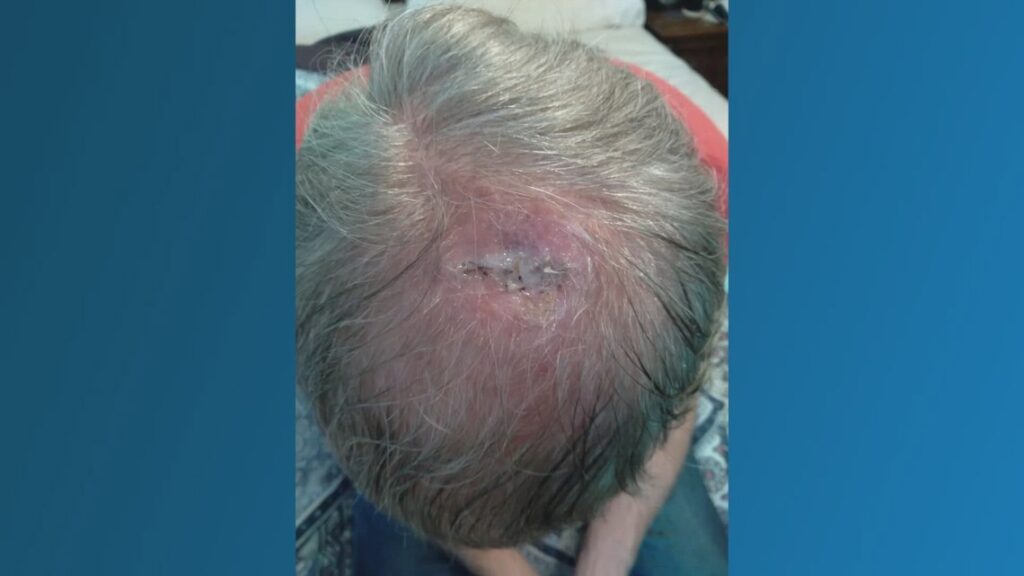
Know the signs and go see a doctor if you notice any of them.
HOUSTON — Skin cancer is the most common type of cancer in the United States. We went to an expert to see what you can do to protect your skin while enjoying fun in the sun.
Alan Fairclough is an active outdoorsman, building and biking, flying and fishing. In his younger days, he lathered on the suntan oil.
“You might as well put barbecue sauce on you for all that,” he said.
Now at age 75, he is paying a price for all that sun exposure. Last year he had a bump on his scalp that wouldn’t heal, so he went to the doctor.
“She just gave one look, yeah, it’s a squamous cell carcinoma,” he said.
It is the second most common type of skin cancer in the U.S.
Dr. Megan Rogge with UT Physicians shares the warning signs.
“If you have a lesion on your skin that is bleeding, painful, growing abnormally quickly, and that persists for at least several weeks,” she said.
Most of us love being outdoors, but it comes with a risk.
“One in five Americans will get skin cancer during their lifetime,” Dr. Rogge said.
By now, we know sunscreen with an SPF of 30 or higher is the best baseline. Then look for broad spectrum.
“That means that the sunscreen protects you against both ultraviolet A and ultraviolet B,” Dr. Rogge said.
If you’re active and sweating, look for water resistant and reapply every 40 to 80 minutes. Sunscreen prevents more than cancer and wrinkles.
“Tinted sunscreens block visible light or light from, not from the sun, but from even light sources in your home and that could actually help prevent some brown spots and pigmentation conditions such as melasma,” Dr. Rogge said.
Fairclough knows he’s vulnerable.
“My grandfather died of skin cancer. My father died of skin cancer,” he said. “I’m light-skinned, blue eyes, so I’m, yeah, I have all the, everything against me.”
So, he’s very careful these days. In addition to sunscreen, Fairclough wears hats, sunglasses, and because he’s had cancer on his scalp, he wears clothes that have a hoodie on it.
“The cloth is actually blocking the radiation from the sun,” he said.
Times have changed and Fairclough is changing with them.