
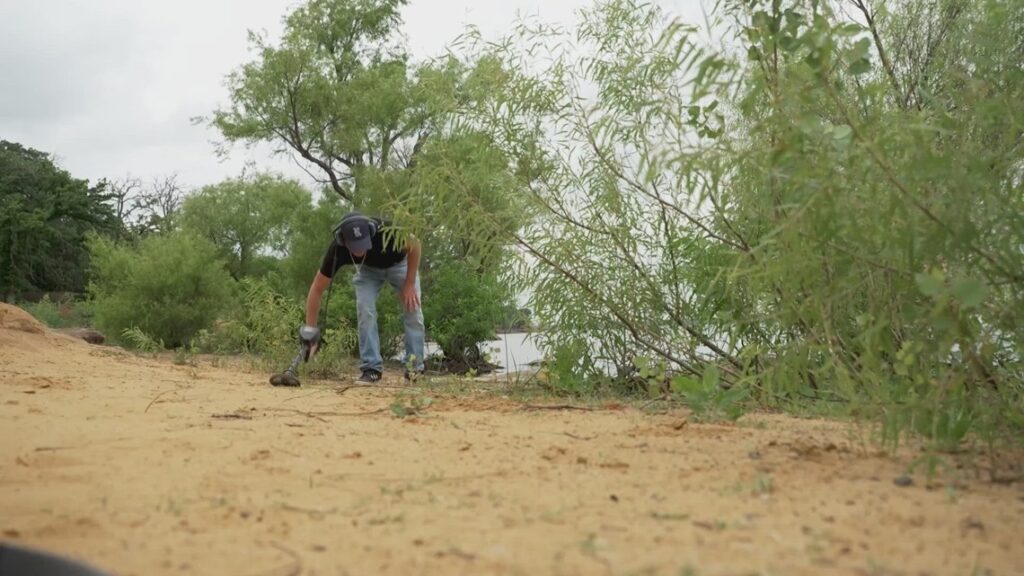
While wading through a Texas lake, the man’s metal detector uncovered what authorities later confirmed was an explosive device.
LEWISVILLE, Texas — A metal detector hobbyist searching a Texas lake this week got the surprise of a lifetime when he says he uncovered what authorities later confirmed was a pipe bomb hidden underwater.
Mike Reiter said he was wading waist-deep through a local lake using his metal detector when he picked up a strong signal and began digging the object out with a metal scoop.
“Big signal in the water. I start kicking it into my metal scoop,” Reiter said. “And when I pulled up, that’s when I saw the pipe bomb.” Reiter said he immediately recognized the device.
“It’s 100% a pipe bomb,” he said.
He brought the device to shore and called first responders.
Police and fire crews responded to the scene and confirmed the device was an explosive, later bringing in a bomb squad to safely detonate it after officers cleared the area.
“You felt the concussion through your whole body. Just BOOM!” Reiter said.
Authorities said devices like the one recovered have sometimes been used illegally to kill fish in lakes and waterways.
“Why the heck are there bombs in a park?” Reiter said. “Angry is an understatement.”
Reiter said the discovery left him shaken for hours afterward. “It was a top-three scariest moment in my life,” he said.
Looking back, he acknowledged pulling the device from the water was dangerous.
“It was pretty stupid,” Reiter said, adding that he felt he needed to remove it so authorities could safely handle the situation.
Is blast fishing legal?
Using a pipe bomb fish is illegal on at least two fronts.
Explosive fishing is considered a “destructive” form of fishing by the Marine Stewardship Council. It is banned under state law in several states, including Texas, Florida, South Carolina, Virginia, and Maine.
Federal law also prohibits explosive fishing in coastal waters of the Caribbean, Gulf of Mexico and South Atlantic, stretching up to 200 miles offshore.
Pipe bombs are also prohibited under federal law, regardless of intent. The Bureau of Alcohol, Tobacco, Firearms and Explosives classifies them as illegal improvised explosive devices, the manufacture or possession of which requires a federal license that recreational fishers would not hold.