
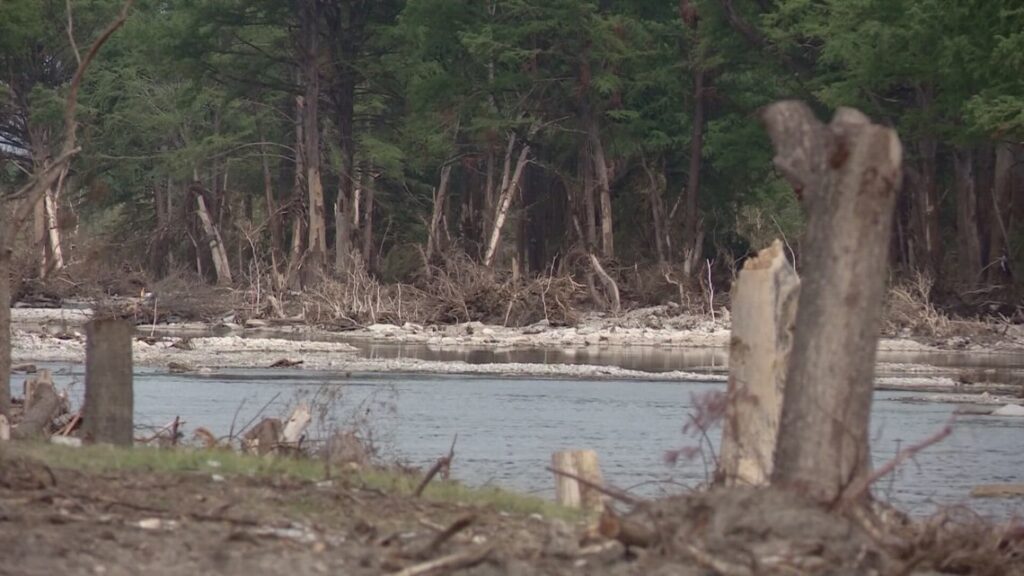
Governor Abbott has granted the University of Texas at Arlington and Rice University $4 million to develop a new flood-warning system following the deadly 2025 flood
ARLINGTON, Texas — Governor Abbott has granted the University of Texas at Arlington and Rice University $4 million to create a new flood-warning system following the deadly 2025 flooding in the Texas Hill Country, according to a release.
The real-time flood warning system will be created and designed to help prevent future loss of life after over 130 people died due to the catastrophic 2025 flooding in Central Texas.
“The number one priority of our state is the safety of our fellow Texans,” Gov. Abbott said. “This grant will provide critical funding to enhance emergency alert systems. I thank UT-Arlington for working to implement improved weather monitoring systems to provide Texans with accurate emergency warnings. Together, we will work to protect Texans and deliver a safer future for all.”
UTA’s Water Engineering Research Center (WREC) is working closely with Rice University’s Severe Storm Prediction, Education and Evaluation from Disasters (SSPEED) center to create a system that will give residents extra time to respond during critical weather incidents.
UTA’s WREC will deploy high-resolution, Texas-focused monitoring to deliver faster and more precise warnings in flood-prone areas of the Hill Country. It is expected that the system will give residents and emergency managers extra time to respond to rapidly changing weather conditions.
The collaboration with Rice University’s SSPEED Center will bring expertise in storm prediction, flood modeling, and emergency response planning, the release states.
“This investment allows us to move from research to real-time action,” said Nick Fang, the Robert S. Gooch Endowed Professor and director of WERC. “By combining advanced forecasting, high-resolution weather monitoring, and proven flood modeling techniques, we can provide communities with faster, more accurate warnings that help protect lives and property.”
The two universities have already developed advanced storm surge and flood modeling protections in Houston and along the Gulf Coast for decades. The pair will now work to create a comprehensive flood plain map that will support the operation of the state-wide warning platform.
Instead of sirens or text alerts, the new system will begin earlier, using radar-derived rainfall data to forecast flood water depths in specific locations. Emergency officials will then be notified of the predictions before flood waters reach a critical level.
“Early warning doesn’t start with a siren—it starts with science,” said Dr. Bedient. “By combining radar rainfall, stream measurements, and predictive modeling, we can forecast how deep the water will be and where it will go, giving communities the lead time they need to make life-saving decisions.”
The project also hopes to strengthen collaborations among state agencies, local communities, and regional water authorities to help with life-saving emergency response strategies. Researchers will also work with state agencies to help refine communication protocols for severe weather incidents, so warnings are clear and easy to act upon.
“This is about giving communities the tools they need to stay ahead of the next storm,” Fang said. “With the right science and the right partnerships, we can make Texas more resilient.”