
RED ROCK, Texas (Nexstar) — A parasitic fly that devastated Texas livestock in the 1960s is spreading north through Central America and potentially toward the state’s $15 billion cattle industry, prompting state and federal officials to launch emergency preparations for what could become an economic catastrophe.
The New World screwworm embeds its larvae into the living flesh of warm-blooded animals, including cattle, wildlife and pets. The fly has spread through Central America into southern Mexico and is currently about 700 miles from the U.S. southern border, according to U.S. Department of Agriculture reports.
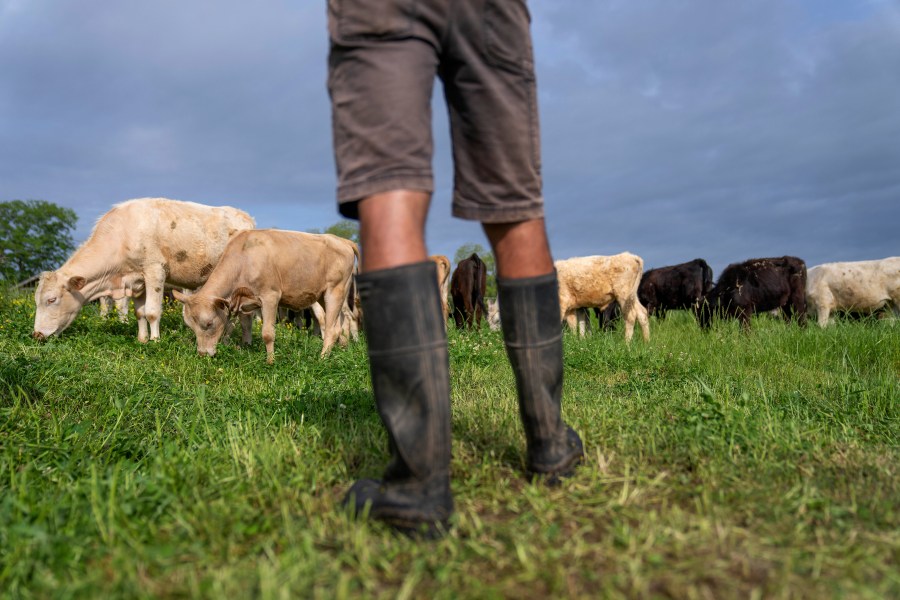
“Obviously, a flesh-eating fly gets everybody’s attention,” said Kenny Landgraf, a Wagyu rancher who has been operating his ranch in Red Rock, southeast of Austin, since 2015. Landgraf already uses standard fly prevention measures, including insect growth regulators in his cattle’s mineral supplements and regular herd monitoring.
Gov. Greg Abbott on Tuesday directed the Texas Parks and Wildlife Department and the Texas Animal Health Commission to jointly establish a Texas New World Screwworm Response Team to coordinate prevention efforts among state, federal and industry partners. The move signals the escalating concern as the parasite moves closer to Texas borders.
Economic Impacts
A screwworm outbreak could cost Texas around $1.8 billion annually, with cattle producers alone facing $735 million to $745 million in losses each year, according to Peyton Schuman, senior director of government relations for the Texas and Southwestern Cattle Raisers Association. The state’s $9.6 billion hunting industry also faces risk, as 80% of Texas white-tailed deer were wiped out during the 1960s outbreak.
“You’re going to feel it at the grocery store,” Schuman said, noting that U.S. cattle herds are already at their lowest levels since the 1950s due to drought and other factors.
The screwworm threat has already prompted the USDA to suspend live animal imports from Mexico multiple times this year. The border closure in November has contributed to rising cattle prices, creating what Landgraf describes as a supply crisis.
“You can’t get a cattle coop to put in your backyard,” Landgraf said, comparing the situation to the recent egg shortage when consumers could raise backyard chickens to offset high prices. “There are just limited areas where cattle can be raised.”
Facilities and Federal Response
Federal officials are preparing two types of facilities to combat the threat, though confusion has emerged about their different purposes. The USDA announced an $8.9 million dispersal facility at Moore Air Force Base, slated for completion by December. This facility would receive sterile fly pupae shipped from Panama and release them after hatching.
The dispersal facility is different from a proposed $300 million sterile fly production facility that would breed and sterilize the flies domestically. That larger facility requires Congressional approval through the Strengthening Tactics to Obstruct the Population of Screwworms (STOP Screwworms) Act, introduced by Sen. John Cornyn and Rep. Tony Gonzales.
“That number sounds big, but really pales in comparison to what could happen,” Schuman said of the $300 million price tag. The sterile fly technique, developed in the 1950s and 1960s, uses radiation to sterilize male flies before releasing them into the wild.
When sterile males mate with females, no offspring result, eventually collapsing the population. Currently, Panama’s COPEG facility is the world’s only source of sterile screwworms, producing about 100 million flies.
Historical precedent and lessons
The last time the U.S. saw a screwworm outbreak of this magnitude was in the 1950s. It took decades, billions of dollars and significant international cooperation to eradicate the pest from the United States by 1966. However, the parasite remained in Mexico, leading to periodic outbreaks including one in the 1970s that infected 1.4 million cattle and 332,600 sheep and goats in Texas alone.
The barrier that kept screwworms contained in Central America began failing during the COVID-19 pandemic when inspectors had to quarantine, allowing infected animals to migrate north. The loss of institutional knowledge has also hampered response efforts, with some Central American countries lacking guidance on prevention and treatment.
“Mexico right now has done zero surveillance of wildlife in the whole country,” Schuman said, expressing concern about wildlife crossing the Rio Grande without inspection.
Rancher preparedness and industry gaps
Landgraf represents ranchers who already employ standard fly control measures but acknowledge the unique threat screwworms pose. He sources his fly prevention supplies from the Livestock Nutrition Center in Gonzales and emphasizes staying informed without panicking about the approaching threat.
“I think the main issue is just to be concerned, not panicked, but obviously aware of the situation,” Landgraf said. “They defeated it once before. I think they’ll be successful.”
However, significant preparedness gaps remain. The industry lacks established movement protocols for cattle and treatment protocols for infected animals. Many drugs that might be used would be considered off-label because screwworms haven’t been present in the U.S. long enough for formal approval.
Texas is home to about 12 million cattle and calves, the largest population in the U.S. The convergence of low cattle numbers, border closures and the potential screwworm threat creates what industry officials describe as a perfect storm for the nation’s food supply.