
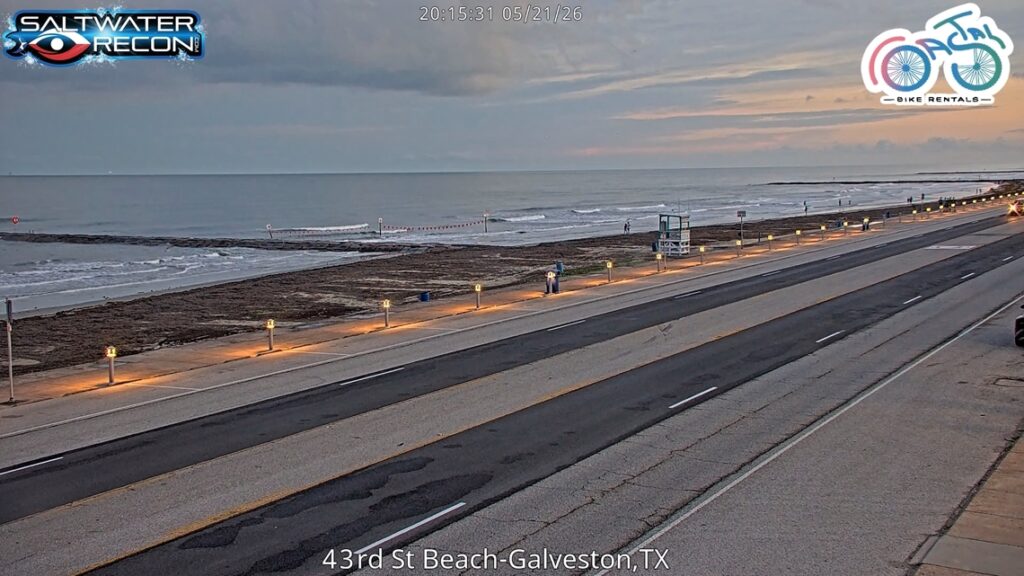
The annual seaweed landings have returned to the Gulf coast.
SURFSIDE BEACH, Texas — If you’re heading to Galveston or Surfside Beach this holiday weekend, you’ll probably notice it: the seaweed is back. Large amounts of sargassum have been washing ashore along the Gulf coast, and federal scientists say this is part of a pattern that’s been repeating every year since 2011.
Sargassum is a brown seaweed that starts its life in the Sargasso Sea, a stretch of the North Atlantic Ocean, then gets carried west by ocean currents into the Gulf of Mexico and the Caribbean. Warmer water and extra nutrients make the blooms bigger, and when conditions are right, the seaweed forms enormous floating mats that eventually wash up on beaches across the region, including right here in Texas.
NOAA and the University of South Florida are keeping a close eye on things. They publish a daily map that tracks how much sargassum is near the coast and flags areas at low, warning, medium, or high risk of inundation. It’s part of a bigger push to help beach managers know what’s coming before it arrives.
The May 20 report showed Galveston Bay at “Medium” risk for seaweed. The coast from Bolivar Beach to McFaddin National Wildlife Refuge was at “High” risk.
For Galveston, the question of what to do about all that seaweed isn’t simple. The Galveston Island Park Board actually holds the only permit on the island that allows sargassum to be moved off federally managed beaches. But they don’t break it out unless things get extreme. The reason: sargassum isn’t all bad. It provides habitat and food for marine animals, and when it lands on the beach, it can actually help build up sand and hold off erosion.
The standard for “extreme” was set back in 2014, which remains the worst sargassum year on record for Galveston. That summer, researchers from Texas A&M University at Galveston spent months measuring the buildup and found that more than 8,400 tons of seaweed landed on just a 3.3-mile stretch of beach in a single day. The seaweed smelled, it covered the sand, and it cost local communities thousands of dollars to deal with. Robert Webster, the Texas A&M researcher who developed an early warning system for sargassum, put it bluntly at the time: “One of my fears is that what’s happening now will become the norm instead of the exception.”
Whether this season reaches anything close to 2014 levels is still unknown. But NOAA is asking anyone who spots sargassum to report it through an online form and upload photos. The data goes to scientists working to improve forecasting, so the next time a bad year rolls around, coastal communities have a little more warning.
Thanks to Saltwater Recon for the photo of Galveston beach.
Got a news tip or story idea? Email us at newstips@khou.com or call 713-521-4310 and include the best way to reach you.