
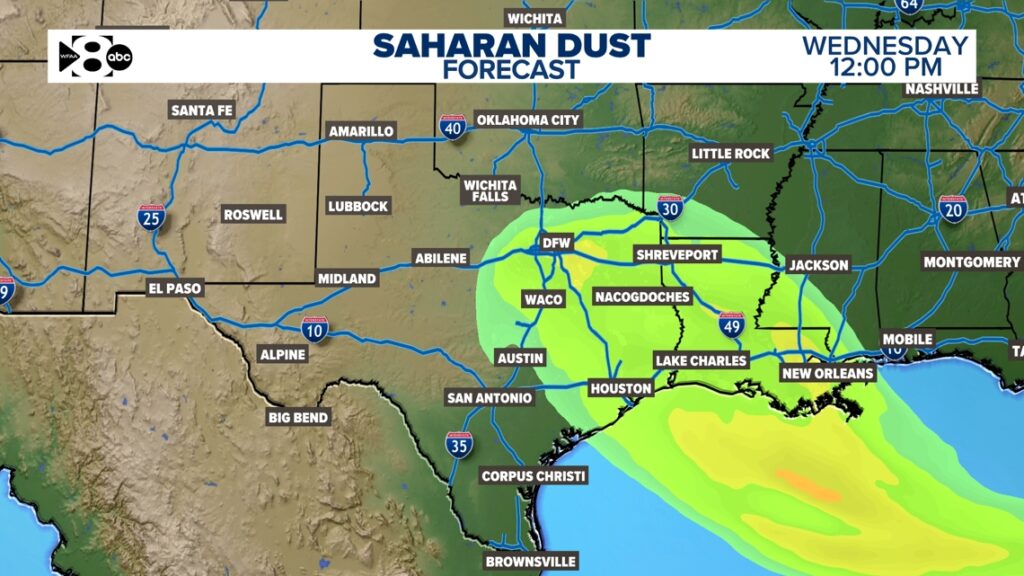
The best chance of noticing this plume of dust will be Tuesday, July 1 and Wednesday, July 2.
DALLAS — Watch live radar and regular forecast updates from our meteorologists on our Smart TV streaming app WFAA+ and download the WFAA mobile app for alerts from our weather team as they come.
In the week ahead, strong winds from the Sahara Desert will pick up its mineral dust, and the jetstream will carry it more than 5,000 miles west to the U.S. For North Texas, the best chance of noticing this plume of dust will be Tuesday, July 1, and Wednesday, July 2. There is a chance this dust does not arrive. A cold front is forecast to stall somewhere near the Red River. If it happens to stall a bit farther south, it’ll keep this dust farther south.
There are pros and cons to this phenomenon.
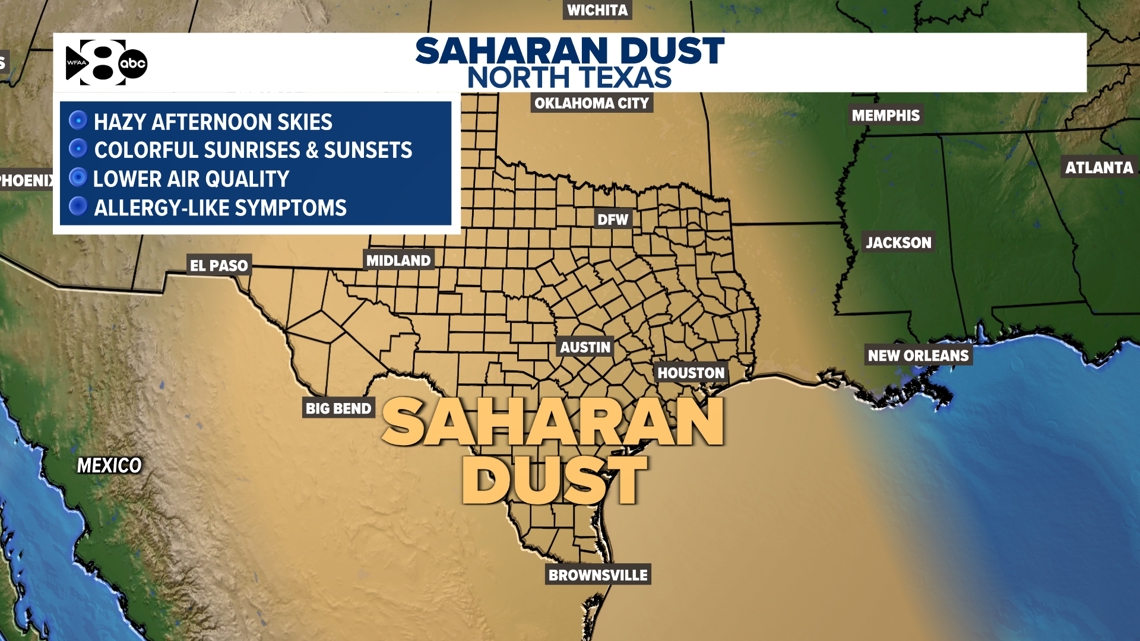
Saharan dust is known to bring hazy skies, as well as colorful sunrises and sunsets. Unfortunately, it also brings potential respiratory issues.
It is important to note that it won’t look like a wall of dust moving in. Rather, it will look a bit more like a haze settling in.
What is Saharan Dust?
Saharan dust refers to fine particles of sand and mineral dust lifted from the Sahara Desert. The dust particles are small enough to be carried by strong winds (often referred to as the trade winds) along great distances. Saharan dust can travel thousands of miles, even the 5,000-7,000-mile trek to Texas.
How Does It Travel So Far?
The dust is typically lifted into the atmosphere by strong storms in the Saharan Desert, particularly during late spring, summer, and early autumn.
These winds can lift millions of tons of dust into the air, where it is picked up by the easterly trade winds and transported across the Atlantic Ocean. The dust eventually reaches the U.S., often reaching the southern states, including Texas.
While the Saharan dust travels across the Atlantic, it is also linked to lower tropical activity. This is due to the changes in temperature and humidity that dust can bring to the mid-levels of the atmosphere.
Impact on Health and Environment
-
Air Quality: The influx of dust can lower air quality, making it hazardous for sensitive groups, including children, the elderly, and those with respiratory conditions, like asthma. These groups should limit outdoor activities during this time.
-
Allergic Reactions: Even those without respiratory issues might experience allergic reactions, including sneezing, coughing, and itchy eyes, due to the higher amounts of particles in the air.
-
Visibility: The dust can create a haze. Drivers generally see this down the interstate when looking for skylines.
What Can You Do?
To minimize the impact of Saharan dust, consider the following precautions:
- Stay Indoors: Limit outdoor activities, especially if you belong to a sensitive group. Keep windows and doors closed to reduce the amount of dust entering your home.
- Use Air Filters: If you have an air conditioning system, ensure it’s equipped with a good quality filter to help reduce indoor air pollution.
- Monitor Air Quality: Stay informed by checking local air quality reports.
Yes, the arrival of Saharan dust is natural and something that happens every year. As we brace for hazy skies and triple-digit heat, let’s also take care of our health and enjoy the unique sunsets and sunrises this dust brings.
Stay safe and stay cool, North Texas!