
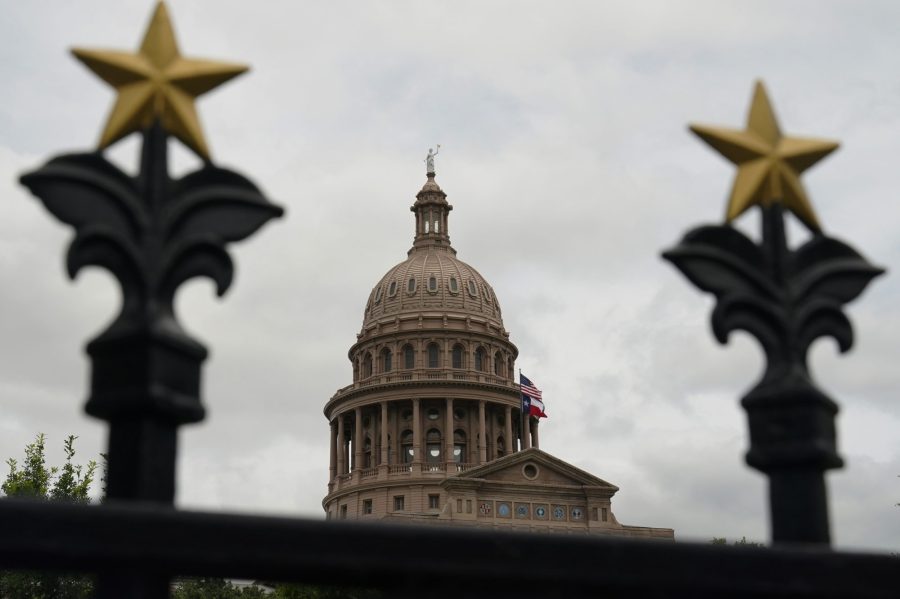
AUSTIN (Nexstar) — Texas could soon have newly drawn congressional maps if lawmakers approve the proposal during the upcoming special session.
After rumors emerged that President Donald Trump was pushing Texas Republicans to redraw the state’s congressional maps to give the GOP an advantage in the 2026 midterms, Gov. Greg Abbott officially added it to the special session agenda Wednesday. One expert said there may be risks in redrawing the maps.
Michael Li is the senior counsel in the democracy program at the Brennan Center for Justice and specializes in voter participation among minority communities in Texas. He said that the only possible way he sees Republicans being able to maximize gains in Texas is by breaking up majority-Black or Latino districts in cities, like Houston and Dallas.
“In Texas, there really isn’t a way to maximize Republican seats anymore without really targeting the political power of communities of color,” Li said. “It’s for districts that are majority non-white and that are all represented by Black or Latino members that have been floated around as districts that might be redrawn or tweaked in some way.”
A statement from the Texas Democratic Party released Thursday identified the Houston-based ninth, 18th and 29th congressional districts, as well as the Dallas-Fort Worth-based 33rd congressional district as the most vulnerable seats in redistricting. All are currently represented by Black or Latino members.
The Voting Rights Act of 1965 requires certain states to have majority-Black or Latino districts, and courts have recently struck down maps for violating that provision. Alabama and Louisiana were forced to draw new maps ahead of the 2024 election that created an additional Black-majority district, and Texas is already facing litigation over its current maps.
The non-white population of Texas is also quickly growing. Texas earned two additional seats in Congress after the 2020 Census, and is currently projected to gain even more if population trends hold.
“This special session and the redrawing of Texas’s congressional map … is coming just as we have census data showing that people of color provided all of Texas’s population growth between 2023 and 2024,” Li said. “The white population of Texas actually fell a little bit for the first time.”
The special session begins July 21 and can last no longer than 30 days. That leaves congressional candidates little time ahead of the December filing deadline, especially if the new maps become tied up in court.
“It’s almost certain that Black and Latino voters, and perhaps other voters, will be in court trying to block these maps, and there will be a fight about whether the maps will be in place for 2026 or not,” Li said. “There isn’t a lot of time to get new maps in place.”
There are also other risks besides legal challenges. Current districts are drawn in a way that minimizes competition and packs cities into just a handful of districts, giving Republicans an edge. Any new map the GOP draws would have to make current Republicans more vulnerable in their seats in order to create gains. That does not come without risks, Li said, because population and demographic changes could upend the map in unpredictable ways.
Li said that Republicans are facing pressure from the president to get it done, but will have to weigh whether or not they want to take a gamble.
“The question really is, are they willing to give that up, particularly the younger and the members who have less time in Congress, are they really willing to have a much more competitive map for the rest of the decade,” Li said.