
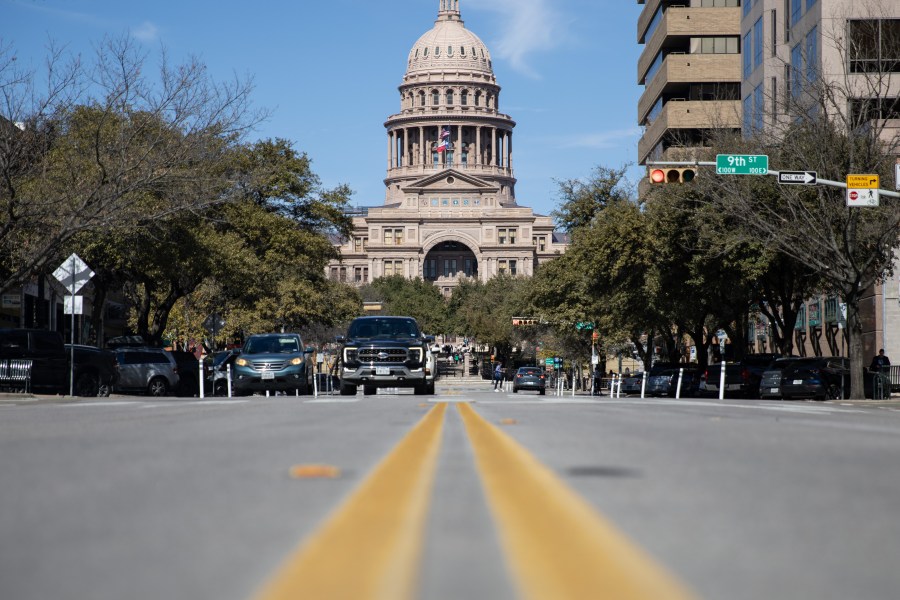
AUSTIN (Nexstar) — Lawmakers head back to the Texas State Capitol in just one week to begin a special session with flood regulation and relief at the top of the agenda. But among the 82 bills filed thus far, none mention the deadly July 4 floods.
So far, the bills filed predominantly focus on election law, property tax reform, abortion, fiscal transparency and campaign finance. Only bills that relate to topics added to the agenda by Gov. Greg Abbott are permitted to be filed. Two of the most noteworthy items added to Abbott’s agenda were related to the floods and to congressional redistricting, though no bills on those topics have been filed yet.
Here is a detailed look at the bills filed Monday.
Election-related bills
House Bill 85, as well as HJR 6 and 7, propose bills and constitutional amendments to clarify the attorney general’s authority in prosecuting election-related offenses. Constitutional amendments require passage of two-thirds of the legislature and the subsequent approval of voters on the November ballot.
HB 40, 50, 67 and 68 raise the threshold for some tax and bond elections to pass, increase transparency about how much bonds will cost taxpayers and require that bond elections be held on the November general election date. HB 49 would prevent those who donate to a political committee which supports the bond’s passage from receiving any of the bond amounts.
HB 52 would change the dates of state and local elections to be held separately from federal elections. HB 73 would allow Texans to register to vote online through a secure portal. If the bill passes, Texas would join 43 other states and the District of Columbia with online voter registration. HB 80 would mandate that the registrar inform a voter registration applicant of where they made a mistake if their application is rejected.
HB 31 requires anyone elected or appointed to public office to be a U.S. citizen.
Tax and bond reform
Rep. Brian Harrison, R-Midlothian, filed a slew of property tax bills for the special session. The most targeted bill filed so far on property tax reform is HJR 8, which would abolish property taxes altogether. This would require a two-thirds majority of the House and Senate and ultimately would need to be approved by voters in November. HB 45 would create a committee to study how to abolish property taxes. HB 43 would change how property taxes are calculated and would require voter approval if local governments raise them. HB 48 would require ballot measures that increase property taxes to include language that clearly states “THIS IS A PROPERTY TAX INCREASE.” Harrison’s HB 47 would require municipalities to use any surplus funds in their budgets to lower residents’ property taxes or pay back existing debts, like bonds.
Rep. Mike Schofield, R-Katy, introduced property tax relief bills aimed at vulnerable or financially struggling groups. HB 57 and HJR 10 would aim to cap property taxes for older persons and the disabled. HB 53 would lower the interest rate of property taxes charged to older people and the disabled.
HB 34, 39, 62 and 71 all attempt to lower property taxes for schools and instead utilize funds from the state’s budget surplus. HB 41 and 60 would repeal and limit some property taxes for schools, replacing them with a value-added tax. HB 82 would change how average school enrollment is calculated for school funding purposes. HB 55 would exclude homestead exemptions when calculating tax rates for state funding, intending to lower tax rates for certain jurisdictions.
HB 35 would create ballot language to make clear the fiscal impact of any constitutional amendment. HB 60 would require any governing body to have a supermajority of votes in favor of creating a tax rate or general obligation bond. HB 54 would prevent a political subdivision from proposing the creation of a general obligation bond for voter approval if that same bond was already rejected by voters within the previous five years.
HB 90 and HJR 13 would exclude the value of newly built or renovated homes when assessing the value of homes which are at least 30 years old.
Abortion
Though abortion is already nearly completely illegal in Texas under most circumstances, lawmakers filed several abortion-related bills, most of them to further restrict the procedure.
HB 37 and 65 would create civil penalties for anyone who distributes abortion medication, allowing private citizens to sue anyone who distributes or aides and abets the distribution. HB 66 and 95 take a similar approach, but also requires internet service providers to block access to any website that promotes abortion medication or that is operated by an entity which carries out abortion services, with enforcement solely through civil lawsuits.
HB 69 would prevent doctors from providing abortion pills unless the woman is present in the state of Texas and is being examined by the doctor at the same time the pills are issued. HB 70 would make it a criminal offense, as well as a civil penalty of a minimum of $100,000, for transporting or funding a minor to leave the state or country to receive an abortion.
HJR 12 would create a constitutional amendment to establish an individual’s right to “personal reproductive autonomy,” but is unlikely to pass in the Republican-controlled House.
Fiscal responsibility
HB 63 and 89 propose spending limits on cities and counties in Texas. The key difference is how they calculate the spending cap. HB 63 would multiply population growth rate by the inflation rate, while HB 89 would add the two rates together.
HB 44 and HJR 9 propose to limit the growth of state and local government spending and return over-collected taxpayer money by reducing taxes.
Lobbying reform
HB 46, 56, 64, 83, 86 and 94 would place regulations on taxpayer-funded government entities hiring lobbyists, aiming to generally prevent those entities from doing so without transparency and restrictions. HB 87 would place similar restrictions on school districts.
Medicaid
HB 72 and HJR 11 would expand Medicaid eligibility in Texas to cover all individuals who qualify for federal matching funds under the Affordable Care Act. HB 76 proposes implementing an “express lane” option for children in Medicaid and the Children’s Health Insurance Program in Texas. It would allow Texas to use information already provided by families in other public programs, such as the Supplemental Nutrition Assistance Program, rather than requiring a new application or full eligibility process.
Other bills
HB 38 would make it a civil penalty to discriminate against someone based on race, color, disability, religion, sex, national origin, age, sexual orientation, gender identity or pregnancy status for the purposes of employment, housing and public accommodations.
HB 51 would ban allowing the state to assist school districts in repaying bonds.
HB 92 proposes to reduce the number of state-required tests, eliminating assessments not required by federal law, including the State of Texas Assessments of Academic Readiness (STAAR) test.
HB 74 would make part-time state employees, not including legislators, eligible for a pay raise of $10,000 over two years.
HB 42 proposes to create a legal defense for people prosecuted for possessing certain hemp products that turn out to contain illegal substances.
HB 81 would require the state to hire a private developer to create high-speed rail along Interstate 35, with stops in Dallas, Waco, Austin and San Antonio.
HB 32, a so-called “bathroom bill,” would require individuals to use the bathroom corresponding to their biological sex, punishable by a civil lawsuit.
HB 91 proposes an act that aims to protect workers from heat-related illnesses. It would establish a heat illness prevention advisory board to help the Texas Workforce Commission develop standards.
HB 58 creates the office of a state special prosecutor.
HB 93 proposes the expansion of the jurisdiction of the County Court at Law in Atascosa County, Texas.
HB 84 proposes a statewide order authorizing licensed pharmacists to dispense ivermectin without a health care practitioner’s prescription order.
HB 75 provides a one-time cost-of-living adjustment for retirees and beneficiaries of the Employee Retirement System of Texas, increasing their benefits to match inflation.
HB 79 increases the minimum notice landlords must give tenants in an eviction order from three days to 14.
HB 77 provides immunity from civil liability for individuals who break into a motor vehicle with an attempt to save a vulnerable person, such as a child, or domestic animal.
HB 59 proposes to provide sheriffs and constables in counties exceeding 3.3 million residents with increased independence in delivering and overseeing contracted law enforcement services.
HB 33 would provide a credit to developers for water impact fees if the development results in water reuse or conservation.
HB 78 proposes to create a new state fund to address affordable housing and homelessness. The money would mostly be allocated to affordable rental housing, with the remaining funneled into rehousing homeless individuals and homelessness prevention.
Just one senate bill was filed Monday, Senate Bill 21, which proposes expanding the enforcement of human trafficking awareness and prevention in commercial lodging establishments.
Visit the Texas Legislature Online for an updated list of bills filed ahead of the 89th Legislature’s special session