
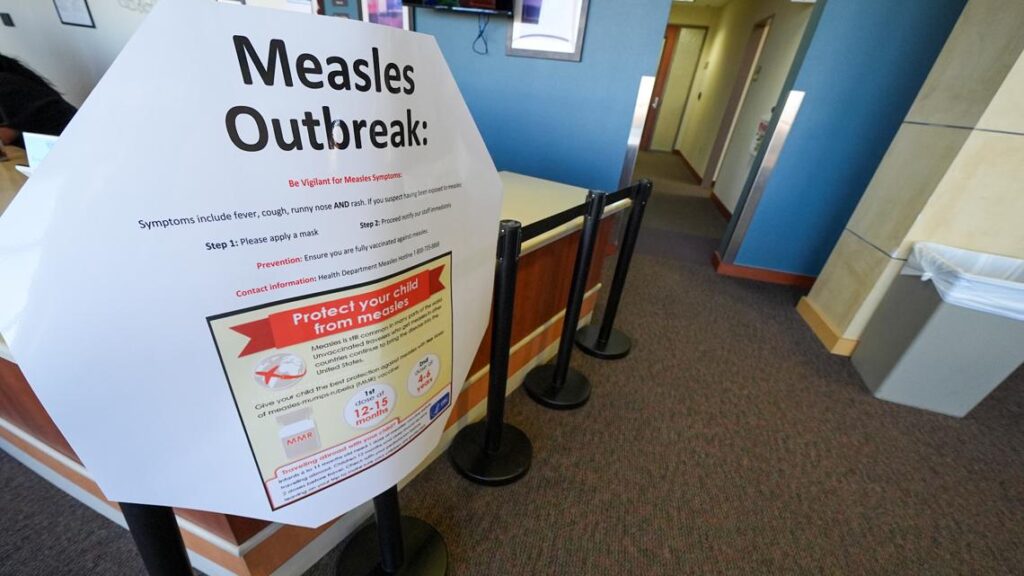
New research suggests official case counts may capture only a fraction of actual measles infections across the U.S.
CLEVELAND — Nearly two thousand measles cases have been confirmed in the United States in the first four months of 2026. But according to new research, that number may only tell part of the story — and possibly, just a small part.
New science presented at the Centers for Disease Control and Prevention’s Epidemic Intelligence Service conference is fundamentally reframing how large these outbreaks actually are. Genomic sequencing from the Arizona-Utah outbreak suggests it was at least six-and-a-half times larger than the reported case count, with transmission likely circulating for weeks to months before the first case was ever confirmed.
Wastewater surveillance is telling a similar story. In Oregon, the measles virus turned up in wastewater 100 times across 23 counties — even though only six cases were officially reported there.
Why So Many Cases Go Uncounted
The gap between reported and actual cases isn’t surprising to public health researchers. Measles doesn’t always announce itself dramatically.
“Not everybody has a severe set of symptoms,” Dr. Scott Hadland, Chief of Adolescent Medicine at Mass General Brigham Children’s Hospital, said. “Sometimes the measles can look like the common cold, and we know that measles is very infectious. People who spend time with somebody who has a measles infection are very likely to contract measles themselves.”
About nine in 10 unvaccinated people exposed to the virus will become infected, making it one of the most infectious diseases known to medicine.
The Vaccination Gap Driving the Spread
The current outbreaks aren’t a mystery. Communities need roughly 95% MMR vaccination coverage to block transmission, which is a threshold called herd immunity. Many communities have slipped below it.
“Measles vaccination rates need to be about 95% in a community to protect that community against transmission,” Hadland said. “What we’re seeing here is transmission of measles because our vaccination rates have dropped down.”
According to Hadland, most American families do choose vaccination, and that matters. But even a small and growing percentage of people declining the vaccine can erode the community-wide protection that keeps everyone safer, including those too young or too ill to be vaccinated themselves.
“People who get two shots of the vaccine have a 97% protection against measles infection,” Hadland said, “and that’s a really critical and very safe intervention available to everybody.”
The Risks Go Beyond the Rash
For most people, measles means fever, rash, and a miserable week or two. But a smaller percentage face far more serious outcomes, including respiratory complications serious enough to require intensive care.
There are also longer-term risks that don’t get enough attention.
“Brain infections, including manifestations that happen sometimes years or even a decade after a measles infection, really is untreatable,” Hadland said. “There are very serious complications from measles that families need to be aware of, even as it might seem that most people who get measles do fine.”
Measles can also cause what researchers call immune amnesia, a process in which the virus wipes out years of immunity the body has built up against other infections.
“When an individual becomes infected with the measles virus, their body will then forget many of the other viruses that that individual has encountered in the past,” Hadland explained, “and they actually become more prone to becoming infected with other illnesses.”
That vulnerability can last up to two to three years. The MMR vaccine prevents not just measles itself, but also this immune amnesia effect, protecting the body’s broader defenses, not just against one virus.
What Families Should Do Now
South Carolina recently declared its measles outbreak over. But with case counts already this high in 2026, and with research suggesting actual spread is far wider than headlines capture, now is not the time to assume your community is in the clear.
If your child is behind on MMR doses, contact your pediatrician. If you are traveling internationally, confirm your vaccination status before you go. And if your community has reported any measles cases, assume circulation may be broader than the official count suggests.
The United States achieved measles elimination status in the year 2000. Maintaining that status — and the community safety it represents — depends on vaccination rates that reflect the seriousness of what’s circulating right now.
Whether the U.S. will lose its elimination status will be determined by the Pan American Health Organization in the fall.
To see more of Monica’s stories, CLICK HERE