
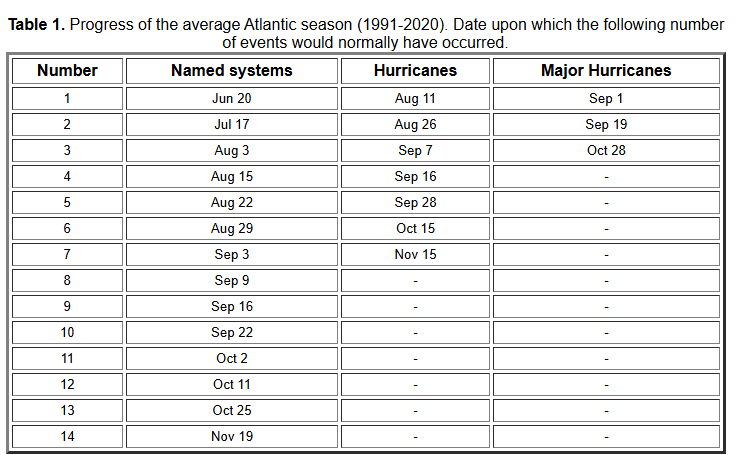
AUSTIN (KXAN) – Decades of data show August as one of the busier months for the Atlantic hurricane season. Averaging around four named storms, two of which typically become hurricanes, August is climatologically our second most active month of the season (second only to September).
The environment necessary for tropical development becomes more favorable in August, particularly with regard to warmer sea surface temperatures. There’s also a slight reduction in wind shear, or unfavorable winds in the upper levels of the atmosphere that typically work against tropical formation.
The first week of August has produced one storm, Tropical Storm Dexter. This system is not likely to impact land or reach hurricane status.
Looking back, some infamous hurricanes have developed in August, including Harvey, Katrina, and Andrew.
Below is a brief summary of each.
Hurricane Harvey (2017)
Hurricane Harvey made landfall on Aug. 25, 2017, in the Coastal Bend of Texas (it reached tropical storm strength Aug. 17). It rapidly intensified to a Category 4 storm before approaching the coast, slowing to a mere 5 mph. The storm’s near-zero forward movement brought significant damage with a storm surge peak of over 12 feet and nearly 60 inches of rain in parts of southeast Texas.
The storm is estimated to have cost $158.8 billion in damage. More than 30,000 people were displaced, 17,000 rescues were performed, and 200,000+ homes and businesses were damaged or destroyed. Unfortunately, Harvey also had 89-related deaths.

Click here for a look back at KXAN’s 5-year anniversary report on Hurricane Harvey.
Hurricane Katrina (2005)
What would become the costliest hurricane in U.S. history, Hurricane Katrina, made landfall near New Orleans, Louisiana, as a Category 3 storm, weakened from its prior Category 5 strength. Unfortunately, it claimed the lives of more than 1,800 people and displaced close to a million Gulf Coast residents. Rainfall was estimated to be between 5-10 inches, isolated totals closer to 12″. The levees meant to hold back the ocean and protect New Orleans broke, leaving ~80% of the city underwater.
Storm surge was estimated to be up to 14 feet in parts of coastal AL and likely closer to 20 feet along the Mississippi-Alabama state line. Maximum sustained winds at landfall near Grand Isle, LA, were around 125 mph.

Hurricane Andrew (1992)
Hurricane Andrew was one of only four Category 5 storms to make landfall in the U.S. The storm came ashore in South Florida with maximum sustained winds of 165 mph. It destroyed an estimated 49,000 homes and damaged another 108,000. The storm led to 15 direct deaths and 28 indirect deaths.

Stay with KXAN’s First Warning Weather team for the latest tropical updates.