
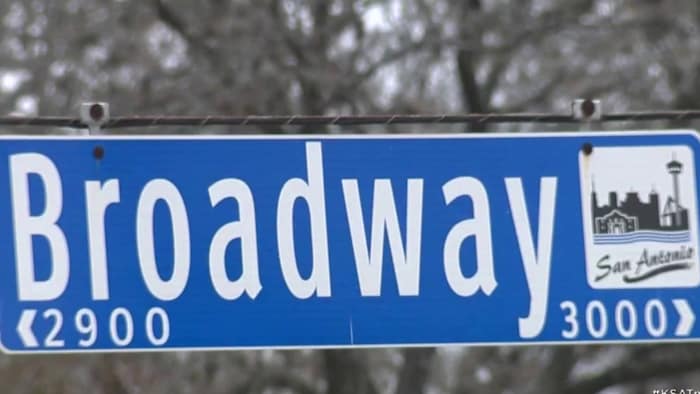
SAN ANTONIO – Broadway is one of San Antonio’s most recognizable stretches today, but nearly 100 years ago, it looked very different.
TheTXLoop is taking a closer look at Broadway’s history, its changes and the people and places that make it unique.
Historic photos from the UTSA Libraries’ Digital Collections show Broadway near Alamo Plaza in the 1920s and 1930s — long before today’s construction, traffic and development.
Back then, Broadway was already a busy main corridor. Streetcars carried people up and down the road, helping connect downtown San Antonio to neighborhoods farther north.
One 1929 photo shows a streetcar stop near Broadway and Patterson Avenue, close to where Central Market sits today. The faux bois, or “false wood,” bus stop was created by artist Dionicio Rodriguez, whose trabajo rústico-style work can still be seen in several places around old San Antonio.
Before major highways existed, Broadway also served as a key route connecting San Antonio to places like Austin and New Braunfels.
Some things, however, have not changed. Historic photos show parades taking over Broadway, much like they still do today.
Buildings including the Moore and Bedell were also rising along the corridor during that time and remain part of the street’s history.
From Brackenridge Park, created in 1899, to Pearl and downtown, Broadway has long been tied to growth and change in San Antonio.
Today, the corridor remains one of the city’s most important and rapidly evolving areas.
Read also:
Copyright 2026 by TheTXLoop – All rights reserved.