
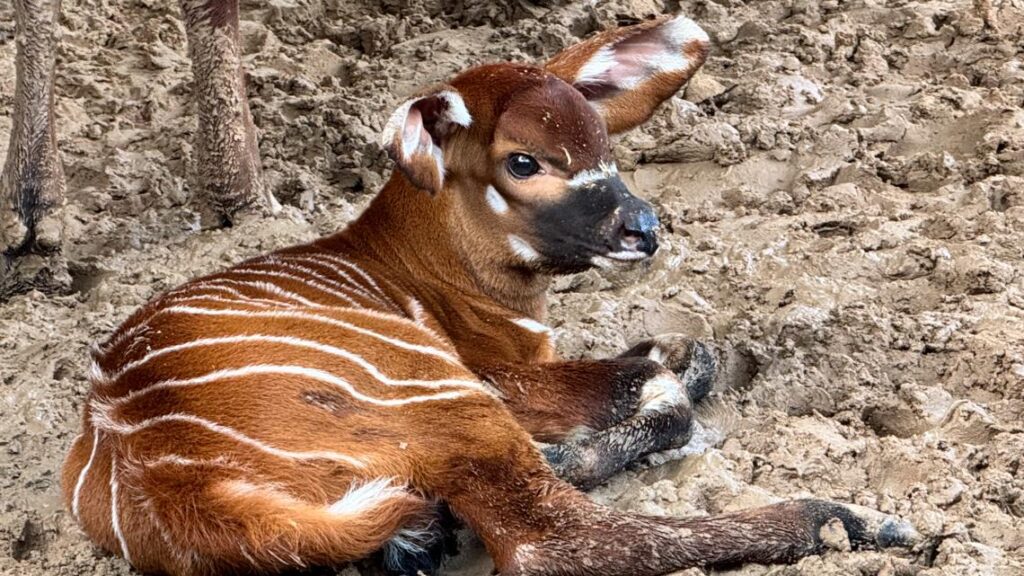
The Houston Zoo celebrates the birth of a male eastern bongo calf, boosting efforts to conserve the endangered species.
HOUSTON — The Houston Zoo celebrated the birth of a male eastern bongo calf on June 25, marking a significant addition to one of Africa’s most endangered antelope species, with an estimated 100 left remaining in the wild.
The healthy 46-pound calf is thriving and bonding with his mother, Bernadette, according to zoo officials. He will join the zoo’s herd of female bongos, including mom Cara and little Franny, while his father Bobby, a 10-year-old male, rounds out the family group.
Visitors can see the zoo’s newest addition in the bongo yard, located next to the okapis in the African Forest area.
The birth comes as the zoo prepares for another significant milestone. The new calf’s older brother, two-year-old Harris, will move to Houston Zoo’s sister facility, Taipei Zoo, this fall to help enhance the genetic diversity of the species in East Asia. The zoo announced this partnership on Thursday, June 26, alongside Taipei Zoo, Houston First, and EVA Air, which is sponsoring Harris’ flight.
About Eastern Bongos
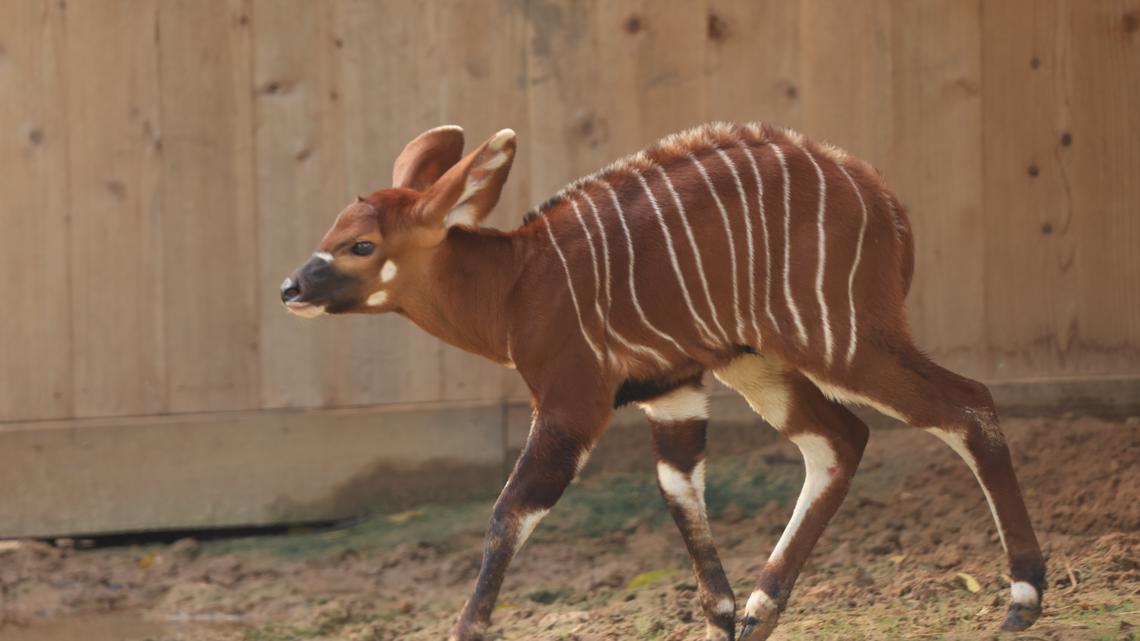
Eastern bongos are native to the forests of central Africa, and despite their name, have no connection to drums. “The common name ‘bongo’ has nothing to do with drums; it is an African tribal name that means antelope,” the zoo explained.
Both male and female bongos feature distinctive spiraled horns made of keratin, the same material found in human fingernails and hair. Their chestnut-colored coats display 12-14 cream-colored stripes that provide natural camouflage from predators.
The species exhibits unique maternal behavior, with baby bongos lying still in the undergrowth for a week or more after birth while their mothers return regularly to nurse.
Zoo visitors can contribute to bongo conservation efforts simply by purchasing tickets or memberships. A portion of each sale supports field partnerships in the Democratic Republic of Congo, where the zoo works with local communities and organizations to protect bongo habitats by removing snares and supporting community-led reforestation efforts.
The new calf will be named soon. His birth represents another success in the Houston Zoo’s ongoing efforts to help save this critically endangered species.