
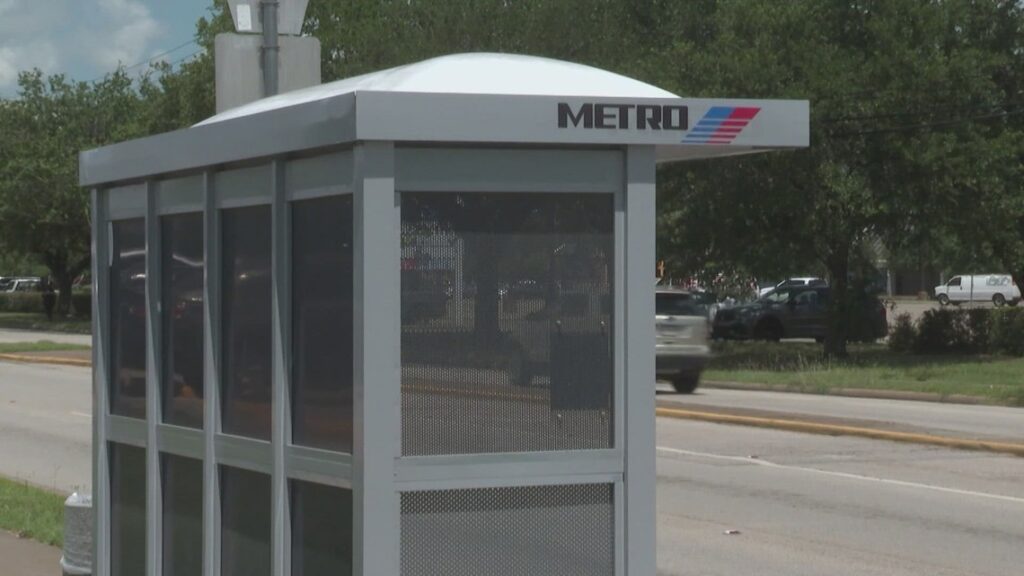
Houston METRO is testing updated bus shelter designs in the Gulfton area to help lower temperatures for riders waiting in the heat.
HOUSTON — Houston METRO has begun testing new bus shelter designs in the Gulfton neighborhood, aiming to reduce temperatures for riders waiting in the heat.
The pilot program involves 12 upgraded shelters that now feature perforated metal panels on the sides. METRO said the change is intended to allow more airflow and lower the temperature inside the shelters.
“The objective is to see if that would accommodate additional airflow through the shelter and potentially reduce temperatures,” said Kenneth Brown, Director of Service Enhancements with METRO.
Brown explained the project was launched in Gulfton because the area has some of the highest recorded surface temperatures in the city. A 2025 heat-mapping study found parts of Gulfton can be up to 14 degrees hotter than other neighborhoods.
According to METRO, other recent studies have shown that some bus shelters can be hotter inside than outside.
“Our chair prompted staff to look at ways to make these shelters a little cooler, so we wanted to see what we could do in the interim to address the issue, or bring some level of comfort to our customers,” Brown said.
Each modified shelter now has a temperature sensor installed to measure the effectiveness of the new design. So far, the METRO said the difference is about one degree cooler inside, but testing is ongoing.
Dr. Kevin Lanza, an environmental health researcher at UTHealth Houston, said METRO’s new shelter design shows promise, but cautioned that airflow and temperature aren’t the only factors to consider.
“This perforated shelter design may be supportive in lowering temperatures if it allows for wind to pass through and radiation to escape outside of the shelter,” Lanza said.
In March, Lanza’s research found the most effective cooling came from shelters shaded by trees or enclosed with glass panels. Still, he believes METRO’s new design could offer broader benefits beyond heat relief.
“Remember that shelters aren’t only made for heat, they’re for people trying to figure out where to go, protection from precipitation, so you could receive some additional support from having those walls,” he said.
Going forward, METRO said it plans to install 2,000 additional shelters of various designs across the city within the next five years.
Health experts said those improvements are critical as temperatures climb. Dr. Benedict Ifedigbo with Memorial Hermann warns that heat exhaustion can set in quickly, even if you’re not physically exerting yourself.
“You can get heat exhaustion just from being outside, even if you’re not exerting yourself,” he said. “Try to remove yourself from the heat if you can, then hydrate.”
Signs of heat exhaustion may include excessive sweating, rapid breathing, increased heart rate, dizziness, fatigue and muscle cramping. If you experience any of those symptoms for a prolonged time while in the heat, you should seek medical attention.