
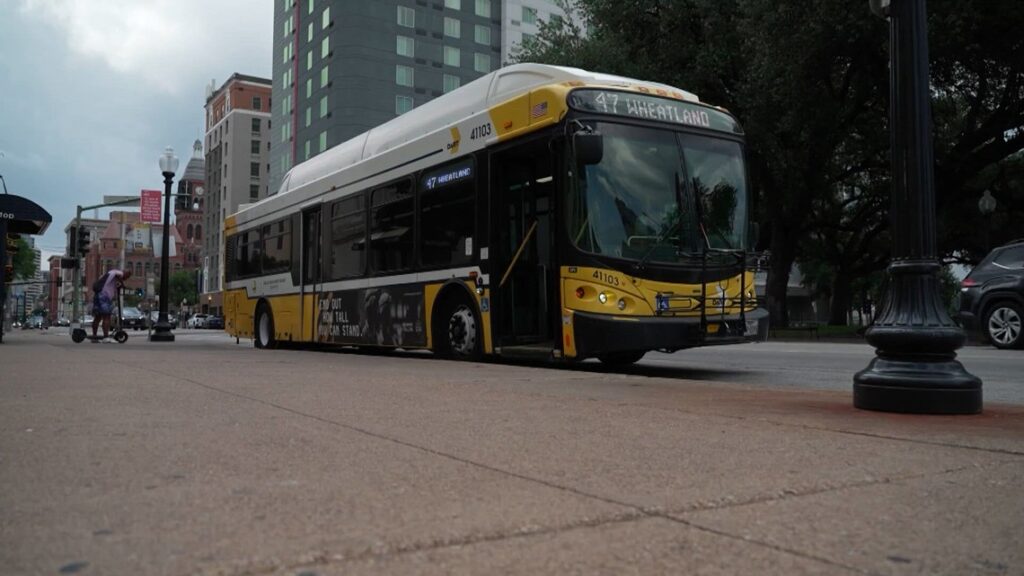
DART service is ending in Highland Park after voters chose to leave the agency. Now the town is testing whether it can replace transit for less.
HIGHLAND PARK, Texas — Signs taped to DART Route 237 bus stops along Preston Road in Highland Park told riders what months of debate, budget fights and a local election had finally made real.
The change became official Wednesday morning after the Highland Park Town Council canvassed the results of the May 2 special election, in which voters approved leaving Dallas Area Rapid Transit.
For riders, the change means DART buses will still travel through Highland Park, but they will no longer stop within town limits.
For town leaders, it marks the start of a new transportation model they say will preserve service at a fraction of the cost.
“This is a big, exciting day,” Town Administrator Tobin Maples said after Wednesday’s meeting.
Highland Park is launching its own replacement service, Highland Park On-Demand, a microtransit system that began Wednesday. The service will run from 5 a.m. to midnight, seven days a week. Riders can book trips through an app or by calling 214-785-4345.
The town had initially proposed charging a $3 base fare, similar to DART’s local fare. But during Wednesday meeting, the council amended the plan to make rides free during the six-month pilot program.
“The logic behind that was they didn’t want DART riders paying twice once they came into Highland Park,” Maples said.
The town is also launching Highland Park Access, its paratransit service. Maples said the service will continue covering trips that begin or end in Highland Park across all 12 DART member cities, similar to the service riders had through DART.
The move makes Highland Park the only one of three cities with DART-related questions on the May ballot to vote to leave. Addison and University Park voters chose to remain in the transit agency.
Highland Park now joins Coppell and Flower Mound as the only DART member cities to leave the agency since it was created in 1983.
The vote followed months of tension between DART and several member cities over funding, governance and whether cities are receiving enough service for the tax dollars they contribute. Highland Park and other cities argued they were paying far more into the system than they were getting back in service.
Maples said Highland Park paid a little more than $8 million into DART last year and was projected to contribute close to $9 million to $10 million this year through sales tax revenue.
By comparison, he said the six-month pilot program for Highland Park On-Demand is expected to cost about $417,000. If extended for a full year, he said it would cost about $750,000.
“It’s significantly less,” Maples said. “It’s a fraction of the cost.”
Maples said reclaiming that sales tax revenue is important for the town’s long-term budget, especially as Highland Park looks to fund infrastructure projects and keep public safety pay competitive.
The town, he said, is one of the few in Texas with no debt and operates on a pay-as-you-go model.
“We wanted to be able to stick with that,” Maples said. “This again was very, very important for Highland Park to get these revenues back.”
But DART leaders have raised concerns about what the withdrawal means for riders who depend on transit in Highland Park — especially people who work in the town but do not live there and could not vote in the election.
DART Board President Randall Bryant previously said the agency’s concern was not limited to Highland Park’s size within the system. The town represents about 1% of DART’s budget, he said, but the decision affects people who rely on the service.
“This was always our fear in this process, which is those that need the services the most, how can their voices be heard specifically in cities where they’re not voters or residents,” Bryant said.
DART said several services will be affected. Route 237, which runs along Preston Road, will no longer make stops in Highland Park. The Park Cities GoLink zone will no longer operate within the town, and DART paratransit trips to, from or within Highland Park will end.
Service in neighboring communities, including Addison and University Park, will remain unchanged.
DART has encouraged riders traveling to or from Highland Park to plan alternative routes and use nearby stops outside the town limits. The agency said riders could see changes to travel times and connections.
Maples said town leaders understand the concerns from riders and critics. He said the goal of the new system is to keep people connected without leaving anyone behind.
“Our goal was to make sure that no rider was left behind,” Maples said. “The council spent a significant amount of time helping shape and frame this program so that everybody that was coming or, or leaving Highland Park using DART services, we believe we’ve got a system in place at a fraction of the cost to do the same thing.”
For decades, Highland Park was part of a regional transit system built around shared tax dollars and shared service. By Thursday morning, that relationship will be over.
What comes next is a test of whether the town can deliver a smaller, cheaper system that still works for the people who relied on the old one.