
Gulf Coast fishermen warn deregulation under Trump’s order may reverse hard-won gains in fish stock recovery.
GALVESTON, Texas — When President Trump signed an executive order in April aimed at reviving the American seafood industry, many hailed it as a long-overdue win for fishermen. But just three months later, Gulf Coast fishermen are raising a red flag, warning that deregulation could do more harm than good.
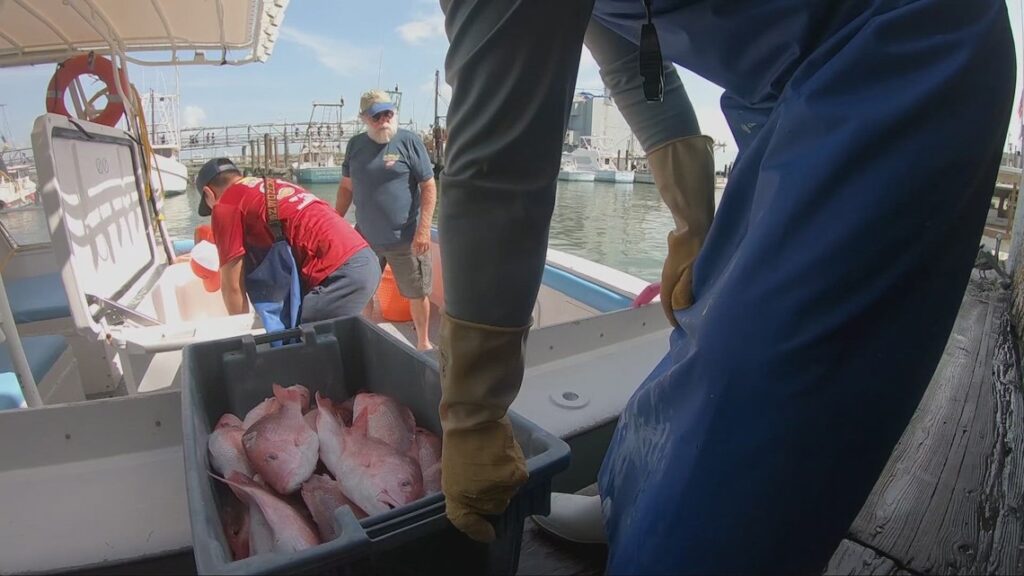
At Pier 19 in Galveston, it’s business as usual for Buddy Guindon, a veteran Gulf fisherman with more than four decades on the water. His market, Katie’s Seafood, is the main destination for red snapper caught in the Gulf and a lifeline for the local seafood economy.
“We were in really bad straits when I started,” Guindon said. “Fish stocks were depleted, and fishing was pretty tough.”
That all changed, he said, thanks to federal oversight. Strict, science-based catch limits helped Gulf fisheries recover. But with Trump’s executive order rolling back regulations and reducing oversight, Guindon fears the progress could be reversed.
“We’re highly regulated and we want to be. We want to be accountable,” Guindon said.
The concern? Overfishing.
Guindon remembers what the industry looked like before regulation and doesn’t want to return to a time of empty nets and uncertain futures.
“When I started fishing, there were no limits. And it wasn’t good.”
The National Oceanic and Atmospheric Administration (NOAA) is responsible for tracking fish populations and managing commercial fishing. But since the executive order, the Department of Government Efficiency, or DOGE, has cut nearly 30% of NOAA’s staff, including key scientists who monitor fish stock data, much of which is already years behind.
“They’ve got fewer people now,” Guindon says. “There’s a worry there. A little bit of a worry.”
And that worry goes beyond the docks. As fish supplies decline, prices are climbing, outpacing inflation and hitting consumers at fish markets and restaurants alike.
For Guindon, the stakes are personal.
“To have a business to pass on to your family, you can’t take all the fish out of the ocean this year and expect them to make a living next year,” said Guindon. “So we want this balance.”
NOAA responds
In a statement, NOAA pushed back against the concerns, saying:
“The President’s Executive Order Unleashing Seafood Competitiveness has and will continue to make a positive impact on the U.S. seafood economy. NOAA data is helping us responsibly increase allowable catch, and NOAA Fisheries will continue to ensure a healthy balance between managing the marine environment and increasing access to abundant resources for our great American fishermen.”
But with reduced staff and limited resources, it’s still unclear how the agency plans to uphold those commitments.