
AUSTIN (KXAN) — Texans know all too well how dangerous summer heat can be. In 2023, more than 300 people in Texas died from heat-related illnesses, according to the Texas Department of State Health Services. Now, local experts are urging families to keep a close watch on elderly loved ones, as extreme heat can significantly increase their risk of serious health complications and even death.
Central Texans are no strangers to 100-degree days. From 1898 to 2023, Austin averaged about 16 triple-digit days per year. The year 2011 was an exception; summer 2011 broke records, hitting a total of 90 100-degree days that year.
Throughout the summer of 2024 in Austin, over 1,300 heat-related illnesses were reported, according to the city of Austin’s heat-related illness morbidity and mortality report. In 2022, the Centers for Disease Control and Prevention (CDC) reported that Texas led the nation in heat-related deaths, and nearly half of those who died were adults aged 65 and older.
Who is most at risk?
Who are those most at risk of heat-related illness or death? The elderly, according to Dr. Balu Natarajan, chief medical officer and executive vice president at AccentCare.
“I am worried that our numbers could be record numbers in terms of illness and death this year,” Natarajan said.
Natarajan compared the human body to a thermostat, explaining every individual has an internal heating and cooling mechanism, the same way your home does.
“But, just like it happens at home, sometimes these systems get overwhelmed. As we get older, all of our systems get overwhelmed more easily than when we are younger,” Natarajan said.
That’s not all. Dr. Aaron Alar Khan, CEO of Family Eldercare, said that while the elderly are at risk, there are other vulnerable populations.
“Older adults, individuals with disabilities or people with chronic medical conditions, of course, low-income families, and those who do not have access to AC and other ways of heat relief,” Khan said.
Why are older adults more at risk?
Natarajan explained that specifically, older adults are more vulnerable to heat because their internal thermostat doesn’t function as well as it does in younger people. Many are also dealing with chronic health conditions, forcing their bodies to juggle even more during extreme temperatures.
“That juggling could include medications, and medications sometimes really can impact our heating and cooling mechanisms,” Natarajan said.
Underlying conditions that can make heat illness worse
Underlying health conditions can impair the body’s ability to regulate temperature, especially during extreme heat. Natarajan said the most concerning conditions include heart disease, lung disease, diabetes and neurologic disorders.
“Neurological diseases are such that if someone has dementia or has had a stroke, then their thermostat is more likely to be off. If someone has diabetes or heart disease or lung disease, then sometimes they don’t have as much volume to manage things,” Natarajan said.
Ways to help you or your elders stay cool in the Texas heat
Staying hydrated is one of the best ways to help your body stay cool or make your body have an easier time regulating body temperature. Natarajan said those individuals with heart failure or diabetes are more likely to be naturally dehydrated and should keep more of a focus on water and electrolyte intake.
“It’s this fine balance that the body is trying to sort out, but if folks have any of those illnesses, then their ability to stay hydrated and then cool with the help of that hydration gets impacted notably, and here in Texas, everyone is at risk, no matter the age,” Natarajan said.
Other ways to stay cool during a Texas heatwave, aside from drinking water, are avoiding alcohol, coffee and sugary drinks before a long day under the sun. Limiting outdoor activity, wearing light, loose-fitting clothing, staying near a fan, a mister or simply inside with air conditioning can also help. Most importantly, keep an eye on the most vulnerable: pets, the elderly, babies and those with underlying health conditions.
Now more than ever, it’s important to check in on elderly family members, friends and neighbors. While Texas heat returns each year like clockwork, our bodies—especially as we age—don’t always adjust right away. Natarajan emphasized that checking in on older adults should be part of our daily routine during extreme heat.
“If there were a terrible storm of some kind, we would have a tendency to be checking in with our loved ones and making sure that they are okay. This we don’t think of as a storm, but from a health perspective, it’s almost exactly like a storm, and so we should be checking in with our loved ones just as often as we would if it were some sort of a terrible rainstorm,” Natarajan said.
35th annual Family Eldercare Summer Fan Drive
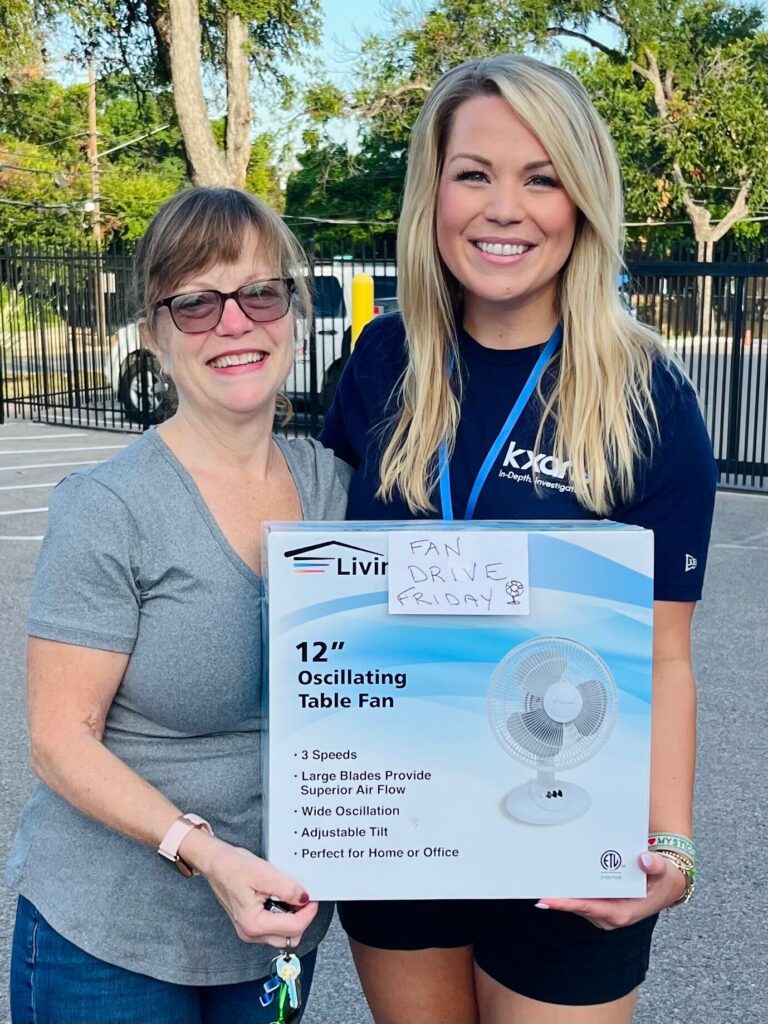
The KXAN and Family Eldercare teams worked hard on the 35th annual Family Eldercare Summer Fan Drive, collecting donations of box fans to help provide Central Texans with relief from the Texas heat.
Fans help save lives, especially among the elderly who are most at risk. With a goal to get 10,000 fans to Central Texans in need, Family Eldercare and the KXAN team collected over 900 donations at multiple locations across Central Texas on Aug. 1.


But that was not the last opportunity to donate and help those in need. Fans and funds are still being accepted through the Family Eldercare website through Sept. 15.
“You know, when we go into the homes of our clients who need a fan, unfortunately, that is not the only assistance that they need. They also need assistance with other needs that they have. So when you donate a fan and or funds, you help us provide heat relief, but also supportive services to help our clients become more self-sufficient,” Khan said.
Need a fan?
Anyone in need of a box fan—or someone you know who could use one to stay cool—can pick one up at any Family Eldercare distribution site. To find the location nearest you, visit their website.