
An affidavit states that all bullets that entered Drew Knowles’ car at angles, indicating he was not a threat to the two bounty hunters.
DALLAS — Two men accused of killing a fugitive during an attempted apprehension in Dallas were not legally allowed to carry firearms under Texas law, raising questions about whether their actions were lawful or reckless.
Rodney Brown, 34, and Jorge Moncivais, 23, are both charged with murder in the shooting death of 33-year-old Drew Knowles. The shooting happened around 9 a.m. on Thursday near Live Oak and Cantegral streets, according to Dallas police.
Authorities said Brown and Moncivais claimed to be bounty hunters attempting to serve a warrant when they boxed in Knowles’ vehicle. According to an arrest affidavit, Brown exited his vehicle with a gun drawn and approached the driver’s side of Knowles’ car. When Knowles tried to flee, Brown opened fire. Moncivais then got out of his vehicle and also fired several rounds, the affidavit states.
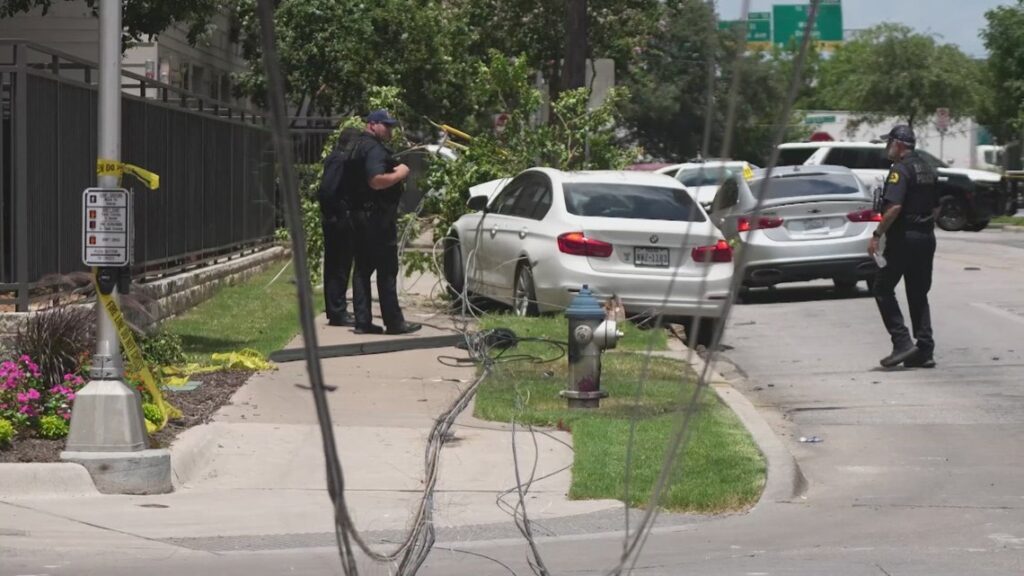
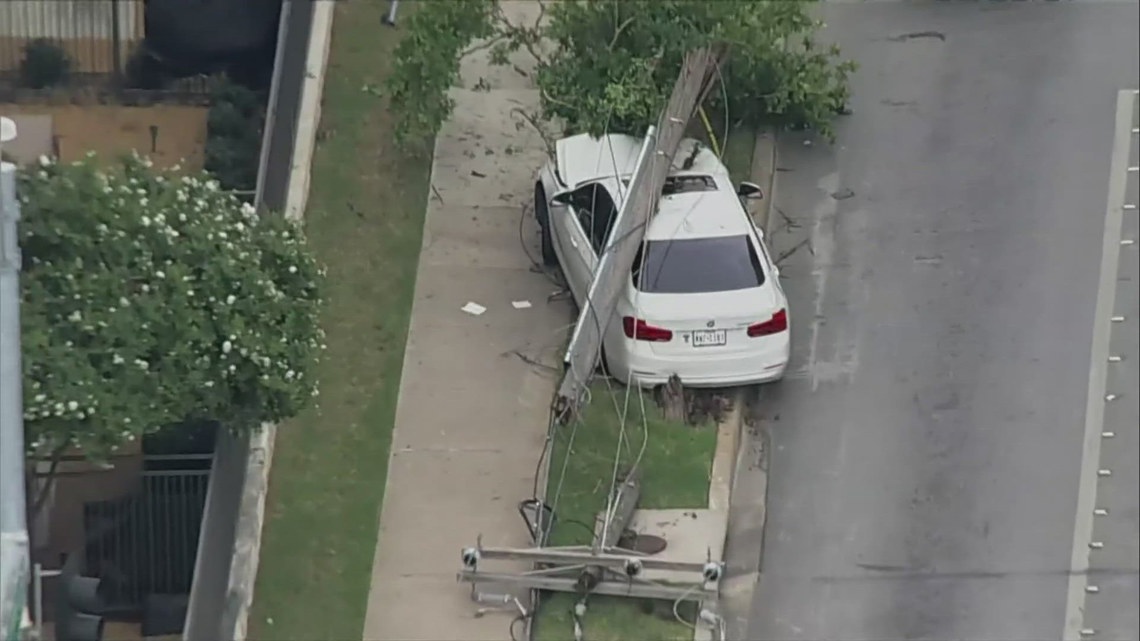
Knowles crashed into a pole a few blocks away and died at the scene from multiple gunshot wounds, police said.
Under Texas law, bounty hunters must be licensed as private investigators. The Texas Department of Public Safety prohibits those license holders from carrying firearms during apprehensions. They are also barred from impersonating law enforcement officers or presenting themselves as agents of the state.
Scott Porter, a former private investigator who previously did fugitive recovery work, said the rules are well known within the industry.
“When I heard these guys may have had a weapon, I know that as a private investigator, we shouldn’t be carrying a weapon, especially in the course of doing our work as a private investigator,” Porter said.
Porter, who stopped doing bounty work more than a decade ago, said he always deferred felony warrant cases to local law enforcement.
“But anytime there was a felony warrant involved, we would call the felony task force that would handle those warrants, whichever department was Dallas, Mesquite, Richardson, or Garland, they’re much better suited and trained for that,” he said.
Witnesses described a chaotic scene with gunfire ringing out during the morning rush.
“It sounded like the wild, wild, west out here,” one resident told WFAA.
Police said Moncivais was not wearing anything identifying himself as a bounty hunter. Brown wore a vest labeled “Warrant Services,” but the shooting still raised alarm.
“To know that he was basically being hunted makes it more sad,” another nearby witness said.
An affidavit states that all bullets entered Knowles’ vehicle at angles, indicating he was not a threat to the suspects.
More than 2,400 Oncor customers lost power after Knowles crashed into a utility pole, including a nearby Tom Thumb grocery store.
Porter said liability issues and insurance restrictions are among the reasons many licensed investigators choose not to engage in bounty work.
“Every licensed investigator needs to have an insurance policy. It’s required and so on those insurance policies, it’s good to know a lot of the exclusions on those are no bail enforcement, no handguns,” he said.
“There are a lot of rules and regulations to follow. And so to me it wasn’t the thing that I wanted to continue to do,” Porter added.
He said there’s a fundamental difference between what law enforcement officers are trained to do and what bounty hunters should attempt.
“We’re not law enforcement and law enforcement is trained to do their job and do it well,” he said.
Both Brown and Moncivais remained in the Dallas County jail as of Friday. The investigation is ongoing.