
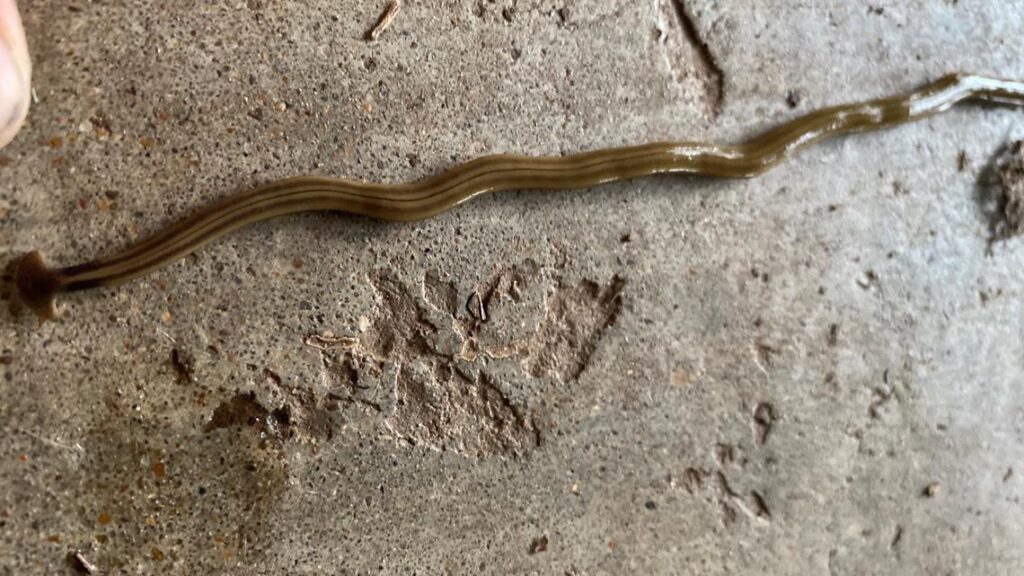
Recent rain has caused the hammerhead flatworm, an invasive species, to emerge from its underground home, experts said.
DALLAS — The invasive, hammer-headed, self-reproducing worm known for eating helpful backyard earthworms has reportedly emerged from its underground hiding space in North Texas, experts confirmed.
Heavy rain this spring washed the invasive hammerhead flatworm out of its underground home and onto our sidewalks, Ashley Morgan-Olvera, director of research and education with the Texas Invasive Species Institute, said.
“We’ve had a very rainy summer, which we haven’t had in forever, it feels like, so it’s definitely increased reporting because again the flatworms are just getting flushed out and they’re so unique looking that almost everybody’s like, what’s that?” Morgan-Olvera said.
The hammerhead flatworm has a head shaped like a rounded hammerhead shark; it is typically light/honey colored, with 1 to 5 dark dorsal stripes. It can be up to 15 inches long and very narrow, according to the Texas Invasive Species Institute.
The worms were first spotted in the Houston area and were later identified as an invasive species, which is harmful to Texas’s fragile ecosystem. The worm was found the eat earthworms, which are important to our agricultural areas and gardens.
“That’s how this worm has kind of gone through this morph of just being a cool creature in the forest to, ‘wait a minute, you need to remove this,'” Morgan-Olvera said.
If you see one, before you get out the garden hoe and start chopping away, be aware that flatworms reproduce asexually. So, instead of chopping them up to dispose of the worms, use any number of household items to kill them, Morgan-Olvera said. Flatworms can regrow their whole body from just a segment.
Salt, vinegar, or a well-sealed container thrown in the trash are good options to dispose of the worm, Morgan-Olvera said.
“Really we just want to make sure that the buck stops with us,” Morgan-Olvera said.
For a full list of invasive species to keep an eye out for, go to texasinvasives.org