
Thursday, residents of South Carolina felt a strong rumble and thought it was a powerful earthquake. But seismologists said it came from the air, not the ground.
COLUMBIA, S.C. — The revelation that a mysterious rumble heard across South Carolina Thursday night was a sonic boom, rather than an earthquake, has left more questions than answers.
Thursday evening, residents of the South Carolina Midlands felt a strong rumble and thought it was a powerful earthquake — which is already a rare occurrence in the state.
South Carolina regularly gets small earthquakes, with about 10 to 15 recorded each year by state seismologists. Most of those are below magnitude 3, and can’t even be felt by people.
But Thursday was different.
Hundreds of reports of a “boom” came in just before 5:30 p.m., with some coming in from several areas, including Irmo, Sumter and even Florence. At least some reports suggested that the incident shook their roofs, and multiple recordings shared with News19 show the camera physically jolting in response to the powerful sound and vibration.
News19 contacted several agencies, including the South Carolina Emergency Management Agency, the American Meteor Society and NASA. At the time, no agency had a definitive answer regarding the incident.
However, around 7:30 p.m., the U.S. Geological Survey, which had not reported an earthquake in the area, issued a special notice about a “sonic boom” in the area. The USGS added that its equipment is not calibrated to measure the magnitude of such an event, so it was given a magnitude of 0.0.
However, dozens of people across a wide area had already reported the incident through the agency’s self-reporting tools.
The notice didn’t elaborate on what may have caused this boom. Sonic booms are caused by a shock wave when an object passes the speed of sound, which the U.S. Air Force states is just above 750 miles per hour at sea level.
NASA appeared to confirm Friday morning that whatever caused the sonic boom wasn’t a meteorite streaking through earth’s atmosphere.
“We have no eyewitness reports of a fireball and no satellite detections of a meteor over the area at the time,” said Bill Cooke, lead for NASA’s Meteoroid Environments Office.
The American Meteor Society collaborated the lack of space-based evidence, saying it’s more likely the boom had a terrestrial cause.
“It’s still possible that this was caused by a large meteor and no one saw it. This could be the case if your area was completely overcast or that the meteor occurred near the sun and the sunlight obscured the meteor,” said Robert Lunsford, the AMS’s Fireball Program Monitor, in an email. “I would think it’s more likely caused by a military aircraft.”
South Carolina is home to a number of military installations, including Fort Jackson, the Army’s largest basic training center, and a joint Navy-Air Force base.
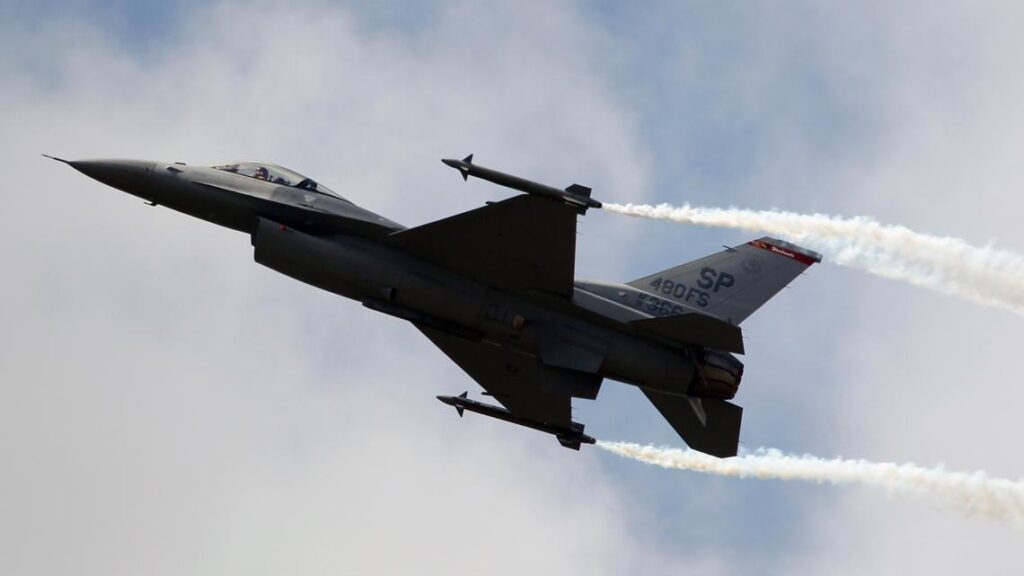
It’s also home to Shaw Air Force Base, which is the home of the 20th Fighter Wing. That wing is the largest combat-ready group of F-16 fighter jets in the Air Force.
F-16 jets are the most common plane in the U.S. military, and are more than capable of breaking the sound barrier with a top speed surpassing Mach 2 (approximately 2x the speed of sound).
What is a sonic boom?
A sonic boom is, as the name suggests, a loud booming sound similar to thunder. It’s produced by the shock waves when an object, such as a spacecraft or plane, reaches and surpasses the speed of sound.
As an aircraft moves through the air, it pushes the air out if its way incredibly quickly, creating waves of pressure that ripple out at the speed of sound — around 767 mph. When a plane flies faster than those pressure waves, it effectively outruns its own sound.
The pressure waves then pile up and compress, creating a large cone-shaped shock wave. When that cone passes over an area, it releases a massive blast of sound and pressure strong enough to rattle buildings and shatter glass.