
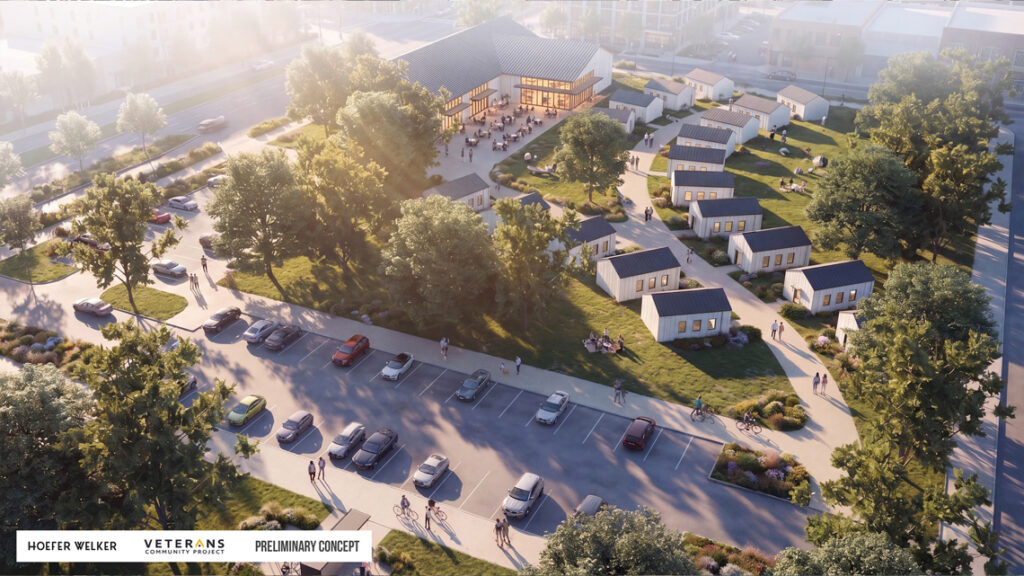
The project, called the Veterans Community Project Village, will be built on roughly 7.33 acres of city-owned land.
DALLAS, Texas — An empty stretch of land in Dallas could soon become a new beginning for veterans experiencing homelessness in North Texas.
On Wednesday, the Dallas City Council approved an agreement with Veterans Community Project to build a transitional housing community for veterans near the Dallas VA Medical Center.
The project, called the Veterans Community Project Village, will be built on roughly 7.33 acres of city-owned land west of South Lancaster Road, south of Mentor Avenue, and east of Denley Drive in District 4.
“When I look out here I see a lot of potential,” Veterans Community Project CEO and co-founder Bryan Meyers said while standing on the property.
Plans call for roughly 50 small transitional homes, along with a community center and on-site support services designed to help veterans transition out of homelessness.
Services will include housing assistance, counseling, healthcare support and job resources.
“Veteran homelessness exists in every city, every community across the United States,” Meyers said.
As a veteran himself, Meyers said the project is deeply personal. “We’re going to see veterans from Dallas get back on their feet and find that dignity and pride,” he said.
According to the city, the land has been owned by Dallas since 2015. Officials issued multiple requests for proposals over the last decade, but none resulted in a completed development project.
Over the last six months, the city’s Office of Economic Development worked with Dallas City Council member Maxie Johnson to explore a nonprofit-led housing development focused on veterans.
“I believe that no veteran should be homeless,” Johnson said during Wednesday’s council meeting.
Dallas City Manager Kimberly Bizor Tolbert called the project “more than a housing project.” She added the project represents an investment in “a proven model” that helps veterans find stability and long-term housing.
The Veterans Community Project model has gained national recognition for reducing veteran homelessness through wraparound support services tailored to individual needs.
Mark Solomon, a co-founder involved with the project and a Navy Veteran, said flexibility is one of the reasons the model works.
“We can adjust to whatever the veteran needs,” Solomon said. “That’s what’s unique about our program it’s not one size fits all.”
Project leaders say the next major step is raising approximately $15 million to bring the Dallas village to life.
The nonprofit already operates similar communities in other cities, including Kansas City.
“This is what building a community with the community looks like,” Johnson said. For the veterans behind the project, the mission is simple: making sure no one who served is left behind.