
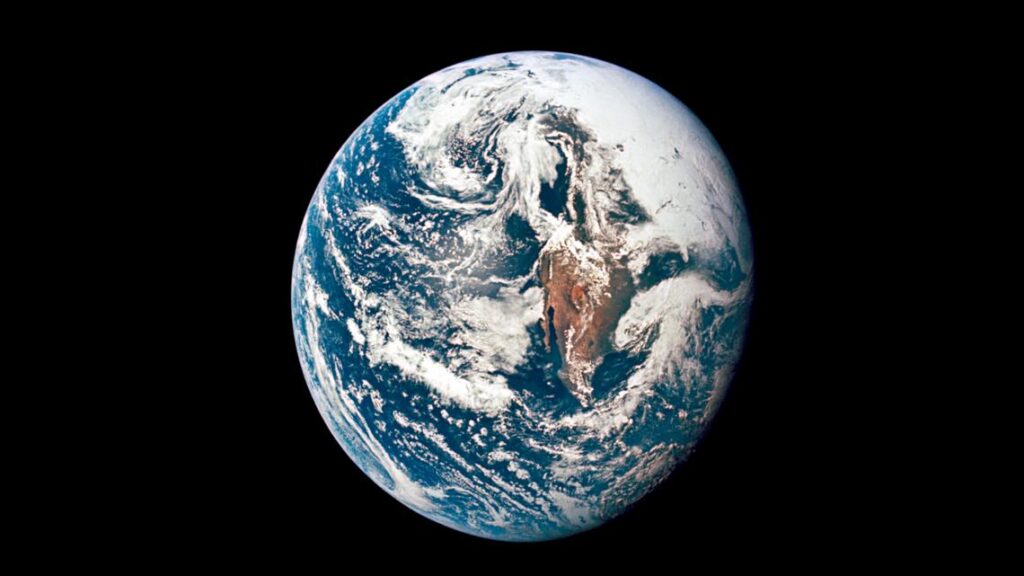
Newly discovered asteroid 2026 JH2 will pass close to Earth on May 18, offering a rare chance to observe a near-Earth object.
WASHINGTON — A newly discovered asteroid will make a “close” pass by Earth on Monday, May 18. It will happen just after 5 p.m. ET.
The asteroid, designated 2026 JH2, will first pass by the Moon around 2 p.m. and then the Earth at a distance of about 57,000 miles, which is within the distance of some communication satellites. It’s also less than a quarter of the distance to the Moon.
The asteroid was recently discovered by astronomers from the Mount Lemmon Survey in Arizona and the Farpoint Observatory in Eskridge, Kansas. It was first observed on May 10.
Scientists estimate the asteroid measures between 50 and 115 feet across — about the size of a blue whale. It is also roughly the same size as the object responsible for the Chelyabinsk airburst over Russia in 2013. That asteroid produced a shockwave that shattered windows across a wide swath of Siberia and injured more than 1,000 people, even though the asteroid itself disintegrated in the atmosphere before reaching the ground.
NASA’s Jet Propulsion Laboratory classifies 2026 JH2 as an Apollo-class near-Earth object, meaning its orbit crosses Earth’s path around the sun.
How to watch as newly discovered asteroid makes close pass by Earth
For those without access to a telescope, the Virtual Telescope Project will broadcast the flyby live online, beginning at 21:45 UTC (5:45 p.m. ET) on May 18, just after closest approach when the asteroid will be near peak brightness. The asteroid will not be visible to the naked eye.
Asteroid 2026 JH2 circles the Sun every 3.7 years. It will not pass by Earth again until 2060 — at a much greater distance, according to the European Space Agency.
The flyby arrives three years before an even more closely watched event: on April 13, 2029, near-Earth asteroid 99942 Apophis — a 1,230-foot-wide rock once feared as a potential impact risk — will pass just 20,000 miles from Earth. Astronomers have ruled out any collision risk from Apophis for at least a century.