
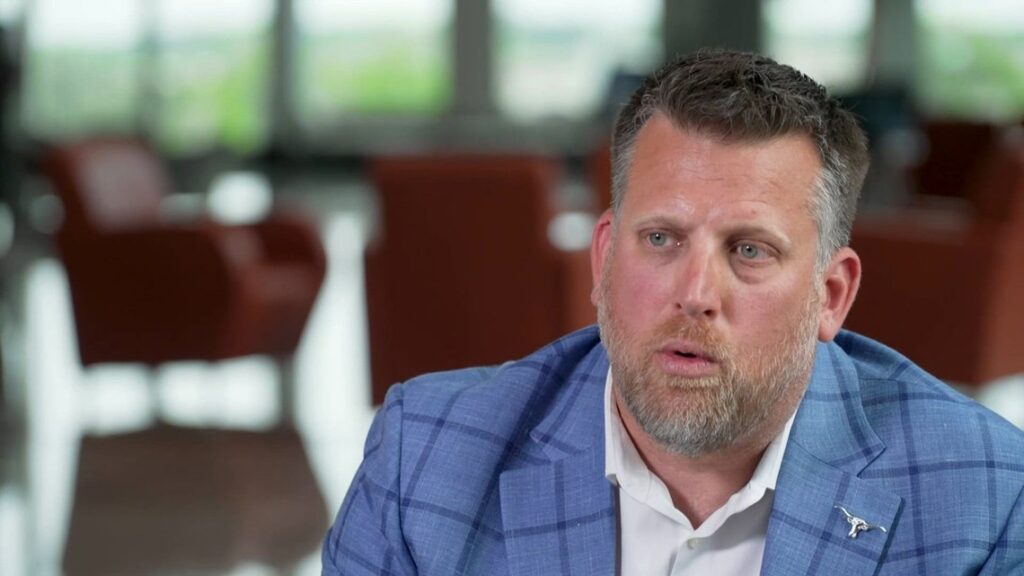
Newly elected City Councilman Chris Jamieson said he hopes to target the need for infrastructure in what he calls one of the cities fastest-growing districts.
FORT WORTH, Texas — Ramon Castaneda remembers when you could count cars in his Dorado Ranch neighborhood. When he began tending his garden in front of his far north Fort Worth home in 2005, traffic was sparse enough that a passing vehicle was a minor event.
“We could count the cars that would pass by,” Castaneda said. “Every 15 to 30 minutes a car would pass by.”
That is no longer the case. The area has grown exponentially and so has the traffic — to the point where Castaneda says counting vehicles has become impossible.
“You can’t even count the cars that pass by, there’s so much traffic out here,” he said.
Despite the growth, Castaneda says the infrastructure has not kept pace. Road improvements that were promised when he and his neighbors moved in never materialized.
“We asked if they were going to work on the highway and all this. They say ‘yes, we are.’ We say ok, we move in, and nothing has happened,” said Castaneda.
His frustration is widely shared in District 10, a sprawling area that surrounds Haslet on the city’s northern edge — one of Fort Worth’s fastest-growing corridors and, resident say, one of its most infrastructure-neglected.
Newly elected City Councilman Chris Jamieson, who represents District 10, acknowledges the headaches.
“I would believe we need to do better. We can do better,” District 10 Council Member Chris Jamieson said.
Jamieson points to about $500 million in road and infrastructure bonds as a vehicle for change. Among the projects on the city’s to-do list for the district: expanding Wagley Robertson Road from Bonds Ranch Road to U.S. 287.
Fort Worth voters approved roughly $500 million in road and infrastructure bonds to address projects across the city. District 10 is among the areas slated to receive funding, though council members acknowledge the district will see only a portion of that total.
“The city, especially in ten, has been very reactive,” said Jamieson. “It’s a whole lot more expensive when you’re reactive instead of proactive.”
Jamieson is a businessman and newcomer to local politics, though he has lived in the district for years. He says his background in construction, building and planning — along with an ability to forge relationships — distinguishes him.
“I have a lot of years in business, I have extensive knowledge of construction, building, planning, the ability to build relationships,” he said.
For Castaneda, who has watched the area transform around him for nearly 20 years, change can’t come soon enough.