
A look at the nursing shortage, how therapy dogs help burned-out caregivers cope, and why your pillow might be hurting your sleep.
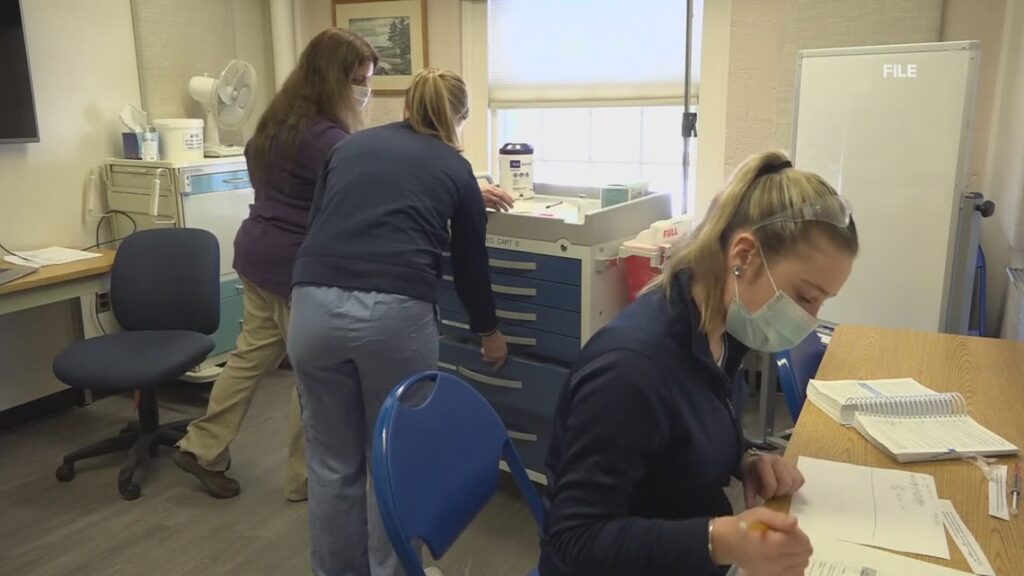
CLEVELAND — The nursing shortage in the United States is not a new problem — but health systems across the country are working harder than ever to solve it, and they are rewriting the playbook on who a nurse can be.
Gone is the notion that nursing means a lifetime at the bedside. Today’s nursing career spans research, education, leadership, advanced practice and executive roles. Health systems are actively recruiting not just new graduates, but adults in their 30s and 40s looking for a second career — people who might never have considered nursing before.
“I think one of the beauties of nursing is there’s many different ways to enter this career,” said Meredith Foxx, MSN, MBA, APRN, Senior vice president and chief nursing officer at Cleveland Clinic. “You can come in with an associate’s degree, you can come in with a bachelor’s degree. It is a licensed profession, so you have to sit for an exam to be licensed by the state of Ohio or the state you’re in. And there’s different funding. We in our organization do offer tuition assistance and loan forgiveness for those that are interested in pursuing it.”
Foxx, who has spent more than 25 years in nursing, said the career is often understated.
“The opportunities are truly endless in terms of specialty, geography, and roles,” she said. “You can be in the same specialty for an entire career. You can go to different geographies. You can go into research, leadership, advanced practice.”
Some health systems are also looking inward — offering their own employees resources and support to explore nursing as a career path for the first time. Cleveland Clinic recently launched programs giving current caregivers the opportunity to pursue nursing degrees they might never have considered without institutional support.
As for the role of artificial intelligence, Foxx said it is coming to health care — but it will not replace nurses.
“It’s not going to replace humans having to take care of patients,” she said. “We look forward to using that as an advantage.”
Even as health systems work to recruit more nurses, keeping the ones they have healthy and engaged remains a challenge. Nursing burnout accelerated during the pandemic — driving high rates of turnover and early retirement — and the pressure has not fully lifted.
Cleveland Clinic developed a program called Paws for Caregivers to address it, bringing a specially trained facility dog named Walker to round on nurses and staff every day.
The science supports it. Studies show that just a few minutes with a dog lowers cortisol — the body’s primary stress hormone — and boosts oxytocin, the bonding hormone tied to relaxation.
“Walker likes to visit our critical care areas and our emergency department frequently,” said Shannon Pengel, MSN, RN, NE-BC, VP and chief nursing officer at Cleveland Clinic. “When Walker comes in the unit, all of a sudden nurses are kneeling on the floor, talking in those doggie voices. It’s just amazing to see that moment of joy that our caregivers get to experience in the midst of the critical care they’re providing.”
Walker’s handler, Michael Curry of Paws for Caregivers, attends the nursing huddle each morning to identify areas of need before heading out on rounds. The visits range from a quick 45-second check-in to a 10-minute or longer session with a team that has experienced a traumatic event.
“I get calls and texts almost every day,” Curry said. “There may have been the loss of a long-term patient. We’ve actually gone and supported teams when we’ve lost a caregiver unexpectedly, as well.”
Last year, Walker completed nearly 2,000 visits — covering 10 to 12 units a day. Cleveland Clinic said Walker is currently the only facility dog of his kind serving its Northeast Ohio hospitals, and the program is supported entirely through philanthropic donations. Walker trained with an organization called Canine Assistance in Atlanta, beginning his preparation at just 8 weeks old.
Cleveland Clinic says it is actively looking to expand the program. Walker can be followed on Instagram at @PawsForCaregivers.
One more thing before you sleep
Nurses — and the rest of us — need good rest to function. And while most people focus on their mattress, sleep specialists say your pillow deserves equal attention.
A pillow that does not properly support your head and neck can cause muscle tension, discomfort, and even morning headaches. Most pillows need to be replaced within one to two years because the material breaks down and loses its support over time.
Not sure if yours is past its prime? Try the fold test: fold your pillow in half. If it bounces back, you are good. If it stays flat or folded, it is time for a new one.
And when you shop, do not let price drive the decision. What matters most is finding a pillow that fits your body and your sleep style.
To see more of Monica’s stories, click here and subscribe for free.