

The tiny wasp is the latest creature to be named after the prolific conservationist.
LONDON, UK — What do you get for the centenarian conservationist who has everything?
Sir David Attenborough turns 100 years old on Friday, and scientists have prepared a gift befitting the man who spent a lifetime celebrating our planet: a tiny, flesh-eating parasitic wasp named in his honor.
The new species, Attenboroughnculus tau, is native to Chile and was formally described by researchers at the Natural History Museum in London. The findings were published in the Journal of Natural History ahead of his birthday on May 8.
The species name “tau” refers to a striking T-shaped marking on the insect’s abdomen. The creature measures just 3.5 millimeters long, with toothlike structures on its egg-laying organ and a distinctive polished groove on its hind legs, features that set it apart from all known relatives.
What makes the discovery especially remarkable is how long this tiny insect waited to be found. The specimen was originally collected in Chile’s Valdivia Province in 1983 and spent more than 40 years sitting unexamined in a museum drawer before a volunteer noticed it looked different from the others.
When Augustijn De Ketelaere brought the specimen to Dr. Gavin Broad, the museum’s principal curator of wasps, it became clear the wasp came from an entirely new genus. In taxonomy, that means the creature is so distinct from its closest known relatives that it doesn’t logically fit anywhere in the existing classification system.
Broad said the naming was personal. Attenborough, a prolific conservationist who became known to many through his books and documentaries, was a major influence, he said.
“When I was young, 5 or 6 maybe, I was given the Life on Earth book. In it, he mentions taxonomists and what they do, and I was hooked,” Broad said. “I decided from a far too early age I was going to be a taxonomist, thanks to David Attenborough, and weirdly I’ve ended up as a taxonomist. So I’ll pay something back.”
Attenborough has famously highlighted parasitoid wasps in his documentaries, including memorable sequences in “The Trials of Life,” where he described them as “body-snatcher wasps.” So while a parasitic wasp that devours other insects alive might not be everyone’s idea of a flattering tribute, it’s a deeply fitting one for Attenborough.
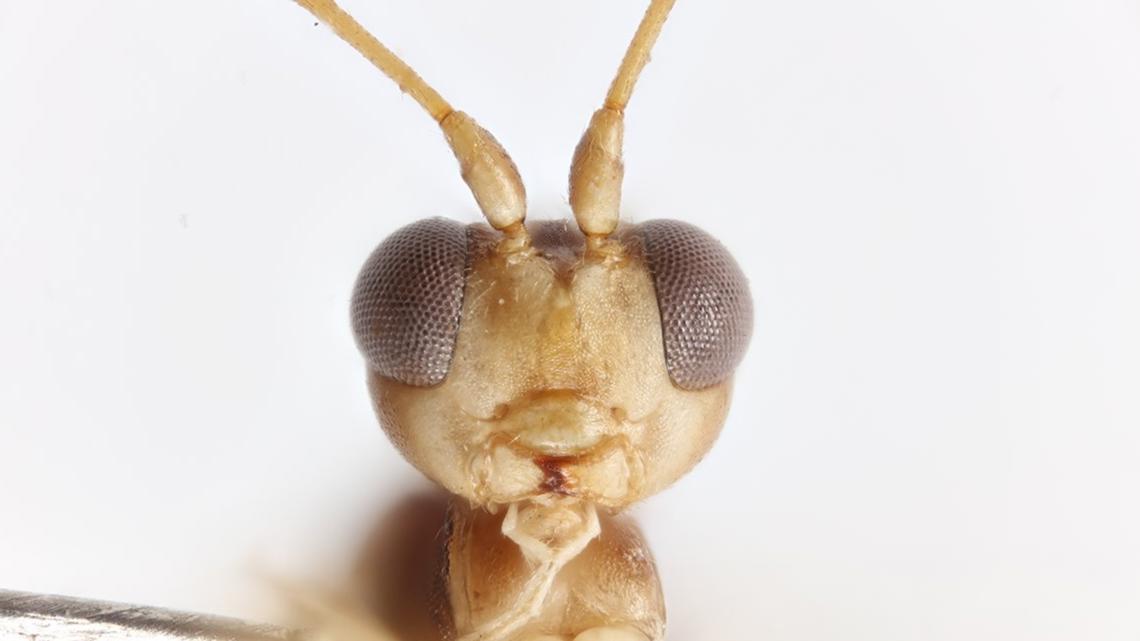
Attenboroughnculus tau joins more than 50 species named in Attenborough’s honor, according to National Geographic, including an echidna, a semi-slug and a tiny Peruvian frog.
“We hope to inspire global scientists to take another look in their collections to see if there is something small that could contribute to our collective understanding and therefore the future of our natural world,” said Jennifer Pullar, science communications manager at the Natural History Museum and co-author of the study.