
AUSTIN (KXAN) — Texas summers can be deadly. In 2023, deaths caused by dehydration soared to record numbers. According to the Texas Department of State Health Services, 334 people died that year from heat-related causes, like dehydration. The previous year, that number reached 306.
Engineers at the University of Texas are looking to help address this and other medical issues through high tech wearables.
“It’s really cool to be able to work on, basically, like at the cutting edge of wearable devices,” said Hyonyoung Shin, a Ph.D. student with the Department of Electrical and Computer Engineering at UT Austin.
Think Apple Watches but instead of counting steps, they are monitoring the water in your body or taking pictures of your heart.
Shin is part of a team working on an e-tattoo. This paper-thin electronic device is a sticky pad that attaches to a small heart monitor. The monitor takes various readings of the heart. Shin is working on using AI to interpret data from the device, which can then feed information to patients and doctors via a smart phone.
“You can even get like blood pressure from just this sensor,” Shin said about the sensor.
The latest from the lab is a wearable sensor that detects dehydration. Previously, doctors typically tested hydration levels using blood or urine samples. The new device can provide data instantly and non-invasively.

“Our body overall is composed of 70% of water,” said Professor Nanshu Lu with the Cockrell School of Engineering. Lu leads the wearable team, but also is the Carol Cockrell Curran Chair in Engineering.
The hydration sensor is a thin ribbon strip that wraps around the bicep. The team chose this muscle because it is large and muscles have a lot of water in them.
The sensor passes an electrical charge through the muscle. If the charge passes easily through the muscle, that means it is full of water. Water is an excellent conductor of electricity. If there is little water in the muscle, due to dehydration, then electricity passes poorly through the muscle.
Similar technology has been used in the past to test hydration levels, but that technology passed the current through the whole body and not just one muscle.
“What we found is [passing the current through the bicep has] a 99% correlation with the full body,” Lu said.

Placing the device around the wrist isn’t viable due to the smaller muscles in that area. Skin and bone don’t contain as much water as a muscle does.
Lu said the technology is still in the early phases. They plan to test how diets might affect the conductivity. This includes testing something like creatine, a bodybuilding supplement, that assists in hydrating muscles.
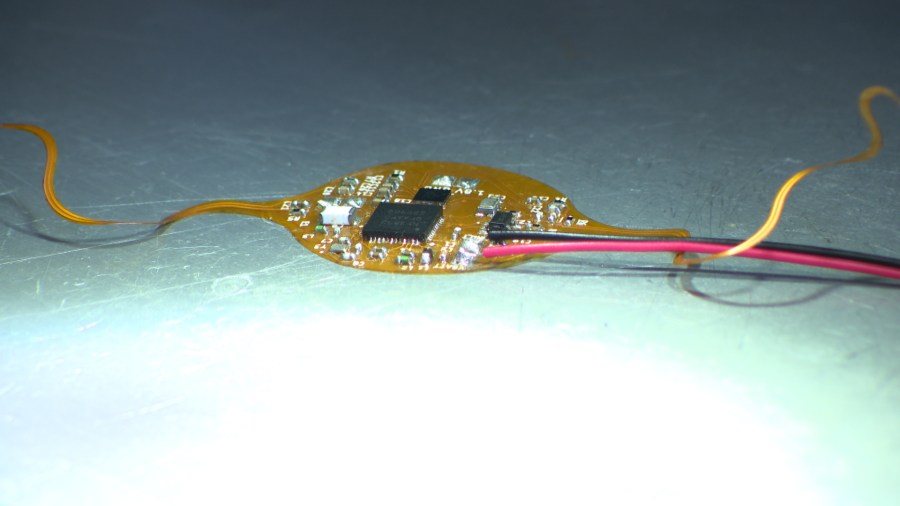
A small Bluetooth device on the sensor beams the results back to a phone.
Companies have already shown interest in the tech, but Lu says they’re still in the development phase. Next, they would like to test the technology out with local partners like UT Athletics.