
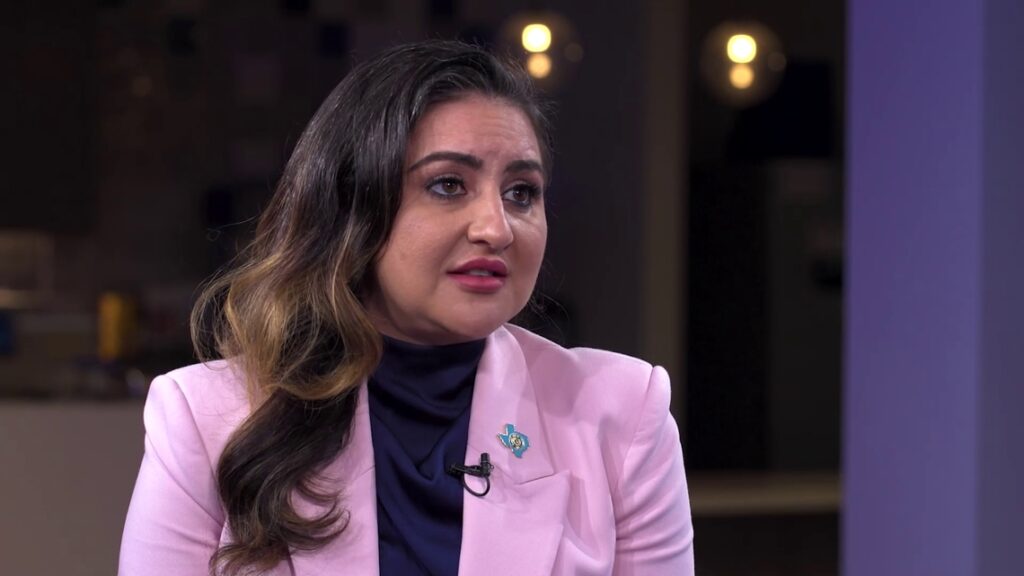
State Rep. Mihaela Plesa says she’s concerned about some of the items on the agenda when Texas lawmakers return for a special session.
DALLAS — Long gone are the days when lawmakers were merely going to concentrate on a possible THC ban in Texas during the special session.
Gov. Greg Abbott has since dramatically expanded the special session agenda, which now includes 18 items.
The first four items were added after the catastrophic flooding in the Texas Hill Country on July 4.
Lawmakers will consider legislation to improve early warning systems and emergency communications in flood-prone areas of Texas. They’re also being asked to provide relief funding for response and recovery for the July storms. And finally, lawmakers will explore ways to streamline regulations to speed up response to and recovery from natural disasters.
State Representative Mihaela Plesa, D-Plano, says all are excellent reasons for lawmakers to return to Austin, and they should be there.
The Democrat, though, says a special session costs Texas taxpayers at least $1.5 million. And that’s only including every lawmaker’s per diem. Once you add in the cost of staff and operations, the final tab is between $2 and $3 million.
Plesa argues that instead of a special session, lawmakers could have already used those dollars to beef up preparedness for natural disasters.
“For the amount that we’re going to be spending to call 150 state Reps back, 30+ state Senators back, we could have already made those investments in warnings, in sirens, launching more weather balloons so we had more accurate data on the flood that happened,” the Democrat told us on Inside Texas Politics.
Plesa says it is the rest of the special session agenda that concerns her.
It also calls for “Protecting Women’s Spaces,” “Attorney General Election Powers,” and to “Protect Unborn Children.” But the lawmaker instead sees those items as an “attack” on election workers, women’s healthcare, and the LGBTQ community.
“It’s definitely not a special session,” she said, emphasizing the word special.
One of the more controversial additions to the agenda is congressional redistricting.
Typically, redistricting efforts happen at the beginning of a decade when census data is released. It last happened in Texas in 2021.
Plesa said she thinks it’s all political because Republicans are afraid they will lose seats during next year’s midterm election. That party only holds a seven-seat majority in the U.S. House, with two vacant seats formerly held by Democrats. The tax and spending bill, for example, only passed by four votes in the House.
“And we are talking about targeting communities of color and silencing their voice. This is unprecedented. It is unusual for us to go back in and redraw congressional lines, any lines, in a mid-decade,” Plesa argued. “We need to have transparency. We need to have community input. We need to have accountability for what we’re doing.”